
Last updated: August 20, 2026
A bucket seat is the default helm and companion seat on most runabouts, bowriders and center consoles, which is why it is also the first thing owners replace. The foam collapses, the vinyl cracks along the seam where the sun hits it hardest, and the swivel underneath develops a wobble that no amount of tightening fixes.
The replacement decision is simpler than the listings make it look. There are really two questions: do you want a plain back or a bolster that lets you lean while standing, and does the seat’s base match the mount already bolted to your deck. Everything else is upholstery color and armrest preference.
This article contains affiliate links. If you buy through them, we may earn a commission at no extra cost to you. Learn more.
Quick Answer
Which boat bucket seat should you buy?
- Standard back: cheapest, lightest, fine for a passenger seat or a boat you mostly sit in.
- Bolster seat: the cushion flips up so you can lean while driving standing, the usual choice at the helm.
- Fold down back: lets the seat sit under a cover or a tonneau without fighting the fabric.
- Check the bolt pattern under the seat against your existing mount before anything else.
Bottom line: bolster at the helm, standard back elsewhere, and confirm the bolt pattern matches your pedestal or slide.
Bolster or Standard Back
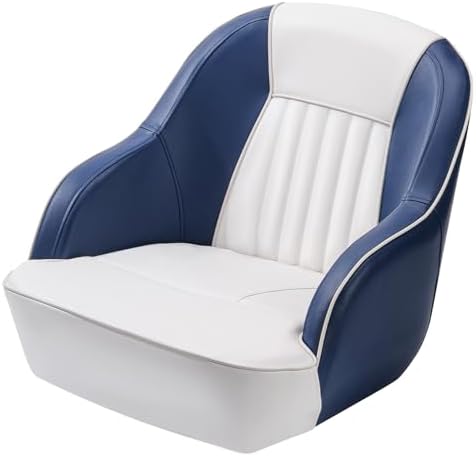
A bolster seat has a flip up front cushion that turns the seat into a padded lean rest, which is what you want at the helm of any boat you drive standing in chop. A standard back seat has a fixed cushion and a fixed backrest, which is lighter, cheaper and perfectly good for a companion seat or a boat driven sitting down.
The trade is height and cost. Bolster seats sit taller and carry more mechanism, so they cost more and put your head closer to the windshield frame on a low bowrider. If your helm has limited headroom under a top, measure before you commit.
Fold Down Backs
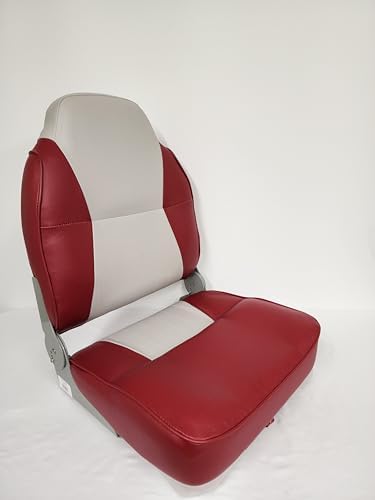
A third style folds the backrest flat, which matters if your cover or tonneau has to pass over the seats. Fixed high backs push the fabric up into a tent shape that collects water, while a folding back lets the cover lie closer to the deck. Owners who store outdoors under a cover usually end up preferring the folding style for that reason alone.
Folding backs also make sense in small aluminum boats where the seats have to come out for transport. Fewer parts to unbolt is worth something on a boat you load and unload often.
Materials and Why Seats Fail
Marine seats fail at the vinyl first, then the foam, then the frame. Sun degrades the topcoat on cheap vinyl until it cracks along the stitch lines, water gets into the foam, the foam holds it, and the plywood or particleboard base underneath softens. A seat built on a molded polymer shell instead of wood sidesteps the last part of that chain entirely.
Look for marine grade vinyl with a UV rated topcoat, closed cell or quick draining foam, stainless or coated fasteners, and a shell that is not raw plywood. Those four things separate a seat that lasts several seasons from one that looks tired after two.
Vinyl Weight and Stitching
Heavier vinyl resists cracking longer, and marine seat vinyl is usually quoted by ounce weight. Stitching matters just as much: seams sewn with UV stable marine thread survive where standard thread powders and lets go, and a seat whose seams have opened is finished even if the vinyl itself looks fine.
Drain holes are the third detail. A seat that traps rainwater in the cushion cavity grows mildew from the inside, and there is no cleaner that fixes that once the foam is saturated.
Bucket Seat Picks by Situation
The Helm Seat You Drive Standing
This is the bolster case. You want the flip up cushion, a supportive backrest that reaches the shoulder blades, and ideally armrests that fold out of the way when you swing your legs out. Height matters more here than anywhere else on the boat.

A Companion Seat or a Second Position
Standard back buckets are the right answer for a seat that gets sat in rather than driven from. Molded shell, decent foam, no mechanism to fail, and a much easier item to replace when it eventually gives up.
Boats That Live Under a Cover
Fold down backs keep the cover profile low and stop the fabric tenting over the seat backs. This is the practical choice for a trailerable boat stored outside from fall to spring.
Aluminum Fishing Boats and Jon Boats
Smaller hulls want a smaller seat. Compact folding buckets with a narrower base fit the bench spacing in aluminum boats and are light enough to lift out at the end of the day. Our jon boat seat guide covers the mounting options for benches without a pedestal.

The Part Under the Seat
A new seat on a worn swivel still wobbles. If the existing swivel has play in it, replace it at the same time, because getting to the bolts twice is the annoying part of this job.

Comparing the Styles
| Style | Best position | Cover friendly | Main drawback |
|---|---|---|---|
| Bolster bucket | Helm, driven standing | No, sits tall | Heaviest and most mechanism |
| Standard high back | Companion, second row | Partly | No lean position when standing |
| Fold down back | Boats stored under a cover | Yes | Hinge is a wear point |
| Compact folding | Jon boats, small aluminum hulls | Yes | Less support on long runs |
Making Sure It Bolts On
Boat seats mount to a swivel or a slide plate, and that plate has a bolt pattern the seat has to match. Tempress publishes a universal square bolt hole pattern of five and a quarter inches under its seats, and other established brands quote the same pattern, but the only reliable check is to measure the plate on your boat and compare it to the seat’s published pattern.
If the pattern does not match, the fix is an adapter plate rather than drilling new holes in a molded shell. Our guide to boat seat mounts and bolt patterns covers the adapter options and how to measure the plate you already have.
Pedestal Height and Post Diameter
The other half of the fitment question is the pedestal itself. Springfield, one of the larger pedestal makers, builds its posts to a standard diameter that most swivels and bases are bored for, which is why pedestals and seats from different brands usually interchange. Confirm the post diameter your base accepts before ordering, particularly on an older boat with mixed parts.
Height is a comfort decision rather than a compatibility one. A helm seat that is too low leaves you looking through the windshield frame instead of over it, and a seat that is too high puts your head into the bimini bow.
Frequently Asked Questions
What is a bolster seat on a boat? It is a bucket seat with a front cushion that flips up, turning the seat into a padded lean rest so you can drive standing without giving up support.
Are boat bucket seats universal? The seat itself is not, but the mounting is close to standardized. Most quality seats use a common square bolt pattern that fits standard swivels and slides, so measure your plate and match it.
Can I put a car seat in a boat? It is a bad idea. Automotive seats use fabrics and foams that hold water, frames that corrode in salt air, and mounting hardware not built for the loads a boat deck sees in chop.
How long should a marine seat last? That depends almost entirely on sun exposure and whether water gets into the foam. A quality seat kept under a cover commonly outlives an uncovered one by several seasons.
Do I need to replace the swivel too? If the old one has play in it, yes. A new seat on a worn swivel still moves under you, and you only want to reach those bolts once.
What weight can a boat seat take? Manufacturers publish a weight rating per model, and that published figure is the one to go by. Do not assume a rating that is not printed on the listing.
The Bottom Line
Buy the bolster at the helm if you ever drive standing, a plain high back everywhere else, and a fold down back if your boat spends winter under a cover. Then spend two minutes measuring the bolt pattern on the plate that is already on your deck, because that is what decides whether the seat you order bolts straight on. For the wider range of seat styles see our boat seats guide, and for what holds the seat up, our pedestal guide.