Last updated: August 20, 2026
Seal Skin shows up constantly in boat cover searches, partly because the brand runs a lot of listings and partly because owners keep asking the same question about it: is this a genuine step up from a generic universal cover, or is it a marketing name on the same imported fabric everyone else sells? The answer sits somewhere in the middle, and it depends heavily on which tier you buy and how carefully you measure before you order.
This guide covers what the brand actually offers, how its sizing logic works, and the fit issues owners report most often. It also flags the situations where a Seal Skin cover is the wrong tool, because no universal cover, whatever the label says, behaves like a factory pattern cut for your hull.
This article contains affiliate links. If you buy through them, we may earn a commission at no extra cost to you. Learn more.
Quick Answer
Are Seal Skin boat covers worth buying?
- They are semi-custom universal covers sold by hull style, length range and beam width, not patterned to your exact boat.
- The heavier fabric tiers are the ones owners report best about for trailering and long outdoor storage.
- Fit complaints almost always trace back to a beam measurement taken at the wrong point on the hull.
- A support pole and tight straps matter more to cover life than the fabric grade does.
Bottom line: buy on the correct length and beam class, add a support pole, and treat any universal cover as a good compromise rather than a custom fit.
What Seal Skin Covers Actually Are
Seal Skin Covers sells universal and semi-custom boat covers grouped by hull style and size class rather than by boat make and model. You pick a category such as V-hull runabout, bass boat, center console or pontoon, then a length range and a maximum beam. The brand markets several fabric tiers, with the Supreme line positioned as its heaviest.
That structure is worth understanding before you shop, because it is the same structure Attwood, Taylor Made and Seachoice use for their universal lines. What separates the tiers within any of those brands is fabric weight, coating, seam finishing and hardware, not a pattern cut for your particular boat.
Where the Fabric Tiers Differ
The lighter tiers use a thinner polyester with a water repellent coating, which is fine for a boat that lives under a carport and goes out on weekends. The heavier tiers use a denser weave with a stronger coating, which is what you want if the cover has to survive highway airflow or sit outside from November to April.
Seal Skin describes its Supreme tier as built on a proprietary fabric it calls Seal-Tec and positions it above 1200 denier covers on its own product pages. Treat that as the manufacturer’s claim rather than an independent measurement, and weigh it against the fabric weight numbers the brand publishes for each tier.
Sizing: The Part That Decides Everything
Universal covers fail on beam far more often than on length. The listing asks for centerline length and maximum beam, and the beam it wants is the widest point of the hull including any rub rail, not the width printed on the manufacturer brochure. Get that measurement wrong by a few inches and the cover either bunches at the transom or will not reach the rub rail at all.
Measure the boat itself rather than trusting spec sheets. Run a tape along the centerline from the tip of the bow to the transom, ignoring the swim platform and the outboard, then measure the beam across the widest point of the hull with the tape held level. If your reading lands close to the top of a size class, move up rather than down.
Hardtops, Towers and Anything That Sticks Up
Universal covers are drawn for an open boat. A T-top, a wakeboard tower, a radar arch or a tall bow rail changes the shape the cover has to stretch over, and a standard cover pulled over a hardtop will strain at the seams and pool water in the gaps. Seal Skin sells separate T-top covers for exactly this reason, and the beam figure on those listings is measured differently.
If your boat has a top, shop the top-specific category and read the listing measurements twice. Our five minute measuring guide walks through the tape positions that these listings assume.
Picks by Situation
Open Runabouts and Fishing Boats Kept Outside
The most common Seal Skin purchase is a trailerable cover for an open V-hull that lives in a driveway. The heavier fabric tier is the one that matters here, because the cover deals with sun all summer and standing water all winter, and thin fabric gives up at the seams first.

Center Consoles With a T-Top
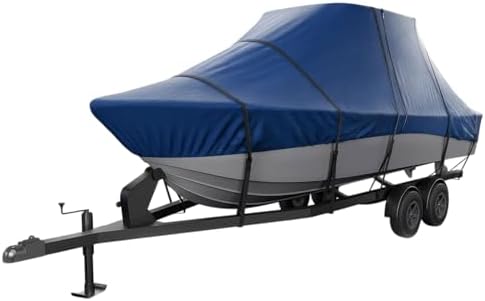
A hardtop needs a cover cut to go over it or under it, never a standard cover forced over the frame. The T-top versions use a different measuring reference, so check whether the listing wants the beam at the hull or at the top frame before ordering.
Pontoon Decks
Pontoons follow their own sizing logic. The cover is sized to the deck length rather than overall length including the fence, and it needs a way to secure under the deck rail without the fabric flogging at highway speed.

Whatever Cover You Buy, Add This
Water pooling in the cockpit is the single largest killer of boat covers, and no fabric grade prevents it. A support pole system raises the middle of the cover so rain and snow run off instead of collecting into a pond that stretches seams and snaps buckles.

Comparing the Tiers
| Tier | Fabric character | Suits | Watch for |
|---|---|---|---|
| Entry polyester | Lighter weave, water repellent coating | Garage or carport storage, occasional trailering | Seam stress after a season outdoors |
| Mid weight | Denser weave, reinforced stress points | Regular trailering, seasonal outdoor use | Beam class must be exact or it flogs |
| Supreme tier | Heaviest offered, brand’s own coated fabric | Year round outdoor storage, highway miles | Heavier to handle solo on a tall hull |
| T-top specific | Cut to clear a hardtop frame | Center consoles with a fixed top | Different measuring reference than hull covers |
What Owners Report Most Often
Two themes dominate owner feedback on universal covers from this brand and its competitors. The first is that the fabric itself generally holds up better than the hardware, with buckles and strap stitching giving out before the panel does. The second is that fit runs snug at the top of each size class, which is why the advice to size up near a boundary keeps coming back.
The third theme is less about the cover and more about how it is used. Covers left slack, trailered without a bow tie down, or stored wet report problems far more often than the same cover treated properly, and that pattern holds across every brand in this category.
Custom Fit Versus Universal, Honestly
A custom cover patterned for your make, model and year fits closer, sheds water better and lasts longer, and it costs a multiple of what a universal cover costs. That is the honest trade. What a good universal cover buys you is most of the protection for a fraction of the outlay, provided you pick the right size class and keep it tensioned.
If your boat is a common trailerable size and lives on a trailer, universal is a reasonable choice. If it sits in a slip year round or has an unusual profile, the custom route earns its keep.
Frequently Asked Questions
Are Seal Skin covers custom fit? No. They are universal and semi-custom covers sold by hull style, length range and maximum beam. A custom cover is patterned from your specific make and model, which these are not.
How do I know which size to order? Measure centerline length from bow tip to transom and beam at the widest point of the hull including the rub rail. If your numbers sit near the edge of a size class, choose the larger class.
Can I trailer with one at highway speed? The trailerable tiers are designed for it, but only with every strap tensioned, a bow tie down in place and no loose fabric flapping. Loose fabric at speed is what tears covers.
Will it fit over my T-top? Only if you buy the T-top version. A standard hull cover pulled over a hardtop stretches at the seams and traps water in the gaps around the frame.
Do I still need a support pole? Yes. Pooled rain and snow stretch fabric and break hardware regardless of fabric grade, and a support pole is the cheapest insurance against it.
How should I store the cover in the off season? Dry and loosely folded, never damp and never compressed in a sealed bag. Trapped moisture is what starts mildew on the underside of the panel.
The Bottom Line
Seal Skin covers are a reasonable universal option as long as you shop them for what they are: size-class covers that reward an accurate beam measurement and punish a guessed one. Pick the heaviest tier your budget allows if the boat lives outside, add a support pole before the first storm, and keep every strap tight. For the wider field of options see our boat cover buying guide, and for cold season protection start with winter boat covers.