Last updated: August 20, 2026
Every fall the same argument runs in every boat forum. One camp shrink wraps because it holds a shape, sheds snow and comes off in one satisfying afternoon. The other camp buys a heavy winter cover because it is reusable, adjustable and does not end up in a landfill. Both camps have stories about the other camp’s boat filling with water.
The honest answer is that neither method fails because of what it is made of. They fail for the same two reasons: water was allowed to pool, or the enclosed air had nowhere to go. This comparison lays out where each approach genuinely wins, what a winter-rated cover has that a summer cover does not, and how to tell which one your storage situation is asking for.
This article contains affiliate links. If you buy through them, we may earn a commission at no extra cost to you. Learn more.
Quick Answer
Winter boat cover or shrink wrap, which survives the season?
- Shrink wrap holds a tight shape and sheds snow well, but it is a single-season product and needs vents built in.
- A winter-rated cover is reusable and adjustable, and it only works if it sits over a real support structure.
- Heavy snow load favors shrink wrap or a cover with a serious frame or pole system underneath.
- Indoor or covered storage makes the whole debate easier, and a lighter breathable cover is usually enough.
Bottom line: both work. Both fail the same two ways, pooling water and trapped moisture, so support and ventilation matter more than which one you pick.
What a Winter Cover Has That a Summer Cover Does Not
A winter-rated cover is built around load rather than sun. That means heavier fabric weight, reinforced seams and stress points, more tie-down attachments, and a cut that expects a support structure underneath. A summer or trailering cover is optimized for wind at highway speed and UV exposure, which is a different set of stresses entirely.
The practical difference shows up under snow. A summer cover stretched over a boat in a snow belt distorts, ponds and eventually tears at a seam or a grommet. A winter cover over proper support keeps its shape, and just as importantly keeps the fabric off the gunwales and windshield where abrasion happens.

How Shrink Wrap Actually Works
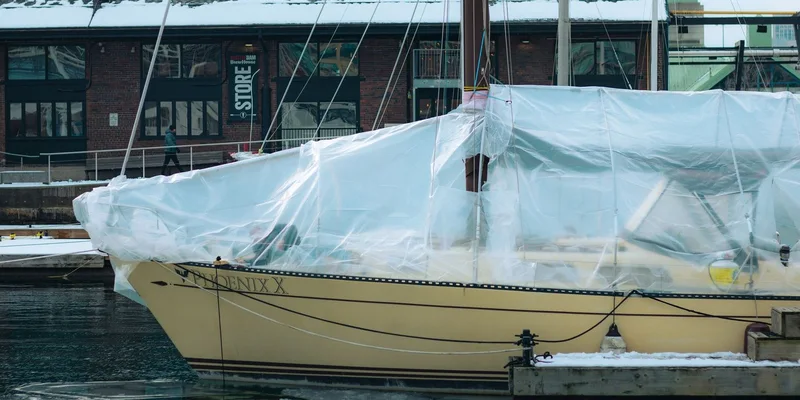
Shrink wrap is a polyethylene film pulled over a temporary frame and heated so it contracts into a tight, boat-shaped skin. Because it conforms rather than drapes, it has fewer flat spots to pond in, and a properly built peak sheds snow well. Dr. Shrink, a common supplier, sells 7 mil film and kits sized for runabouts and pontoons up to 24 feet.
The catch is that shrink wrap is a consumable. It is cut off in spring and, unless your marina runs a recycling program, thrown away. It also requires a heat tool and some technique, which is why a lot of owners buy the job rather than the kit. Our shrink wrap guide covers what a DIY kit contains.
Support Is Not Optional Either Way
Water finds the lowest point in whatever you put over the boat. Without something forcing a ridge, a cover sags in the cockpit, collects rain, freezes, and then holds a load of ice that no fabric was designed to carry. Shrink wrap gets its shape from a built frame for the same reason.
What Support Looks Like on a Cover
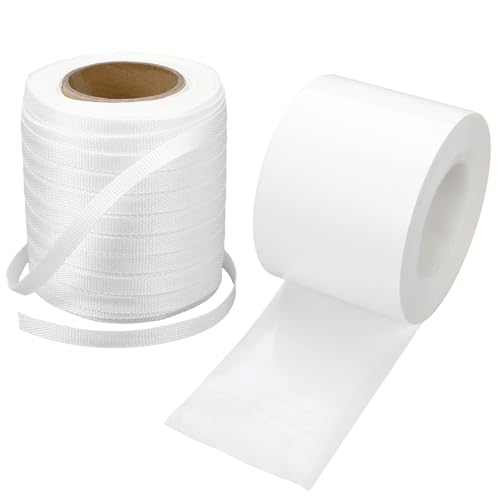
The minimum is an adjustable pole from the deck to the underside of the cover, with a padded tip so it does not push through the fabric. A full system adds webbing straps that run over the cover and pull it into a tent shape. Taylor Made publishes support systems in this format, with adjustable poles and polypropylene webbing sized by boat length. Our support pole guide compares the setups.

Ventilation Is the Other Half
A sealed cover or an unvented wrap traps the moisture already inside the boat. Over months, that air condenses on cold surfaces and settles into carpet, upholstery and lockers, which is how a boat that never saw a drop of rain still opens up in spring smelling like a basement.
Both methods solve this the same way, with vents. Shrink wrap jobs get vents installed as part of the process. Covers either come with vents built in or accept add-on vents. Pair either one with a moisture absorber inside the boat and you address both the air exchange and the humidity that is already aboard.
Cover Versus Shrink Wrap Compared
| Factor | Winter cover | Shrink wrap | What decides it |
|---|---|---|---|
| Reuse | Multiple seasons | Single season | How long you keep the boat |
| Snow shedding | Good with real support | Very good when peaked | Your snow load |
| Effort to install | An afternoon, no tools | Frame plus heat tool | DIY comfort level |
| Access during winter | Easy, unstrap and lift | Requires a zipper door | Whether you need to get in |
| Ventilation | Built-in or add-on vents | Vents installed in the film | Must be planned either way |
| Waste | None per season | Film disposed each spring | Local recycling options |
Which One Fits Your Storage
Outdoors in a heavy snow region, with the boat left alone until spring, shrink wrap is hard to beat for shape retention, and a winter cover works if you commit to a real support system and check it after storms. Outdoors in a mild region, a reusable winter cover on poles is usually the sensible answer.
Indoor or covered storage changes the priorities completely. There is no snow load and no rain, so the job becomes keeping dust off and air moving. A lighter breathable cover does that better than a sealed one, and shrink wrap is generally overkill.
Mistakes That Ruin Either Option
Using a summer or trailering cover as a winter cover is the most common. It is built for wind and sun, not for a hundred pounds of wet snow sitting in the cockpit, and the failure usually starts at a seam or a grommet. The second is skipping support entirely and trusting the fabric.
The third is covering a boat that is not dry. Whatever moisture is aboard when the cover goes on stays aboard for months. Get the water out of the bilge, dry the interior, prop lockers open, and only then cover. Our boat cover buying guide covers fit and tie-down systems for the rest of the year.

Frequently Asked Questions
Can I use my regular boat cover for winter? Only if it is rated for it and you add real support. Standard trailering covers are built for wind and UV, not snow load, and they typically lack the fabric weight and reinforced tie-down points a winter cover has.
Does shrink wrap damage the boat? Not when it is done correctly, with padding at contact points and vents installed. Problems come from film pulled tight against sharp edges without protection, or from a wrap with no ventilation trapping moisture inside all winter.
How do I stop water pooling on a boat cover? Force a peak. An adjustable support pole down the centerline, or a full pole and webbing system, makes water run to the sides instead of collecting in the cockpit. Then check it after heavy storms rather than assuming it held.
Do I need vents under a boat cover? Yes, whichever method you use. Sealed covers trap the humidity that is already in the boat, and that moisture condenses and settles into upholstery and carpet over a long winter. Vents plus a moisture absorber address both sides.
Is shrink wrap recyclable? In some regions, yes, through marina or supplier take-back programs, but availability varies a lot by area. Check locally before assuming, since the film otherwise goes in the trash each spring.
Can I shrink wrap a boat myself? Owners do it with a kit and a heat tool. It takes technique and care around heat, and a poorly executed wrap is worse than a good cover. If you are not comfortable with the heat tool, a cover on poles is the safer DIY route.
The Bottom Line
Choose shrink wrap for heavy snow and a boat you will not touch until spring. Choose a winter-rated cover for reuse, mild climates and any boat you might need to open during the off season. Then do the part that actually determines whether either works: build in support so water sheds, install vents so air moves, and put the cover on a dry boat. See our shrink wrap kit guide for the DIY route, or our support pole guide if you are going the cover route.