Last updated: August 20, 2026
A jon boat is a flat aluminum tray with a motor on the back, and there is nothing on it that casts a shadow. Anyone who fishes one through a southern summer has thought about a bimini, usually somewhere around eleven in the morning when the aluminum bench starts to burn through a pair of shorts.
The question is whether a shade top actually works on a boat this narrow and this light, or whether it turns a handy little hull into something that sails sideways in a breeze. The honest answer is that it depends on the beam, the mounting surface and how you fish. This guide covers when a jon boat bimini is a genuinely good purchase, when it is not, and how to size one for a hull that was never designed with a canopy in mind.
This article contains affiliate links. If you buy through them, we may earn a commission at no extra cost to you. Learn more.
Quick Answer
Is a bimini top worth it on a jon boat?
- Worth it if you sit still in open sun, on ponds, flats and slow rivers where wind stays modest.
- Less worth it on a narrow hull that already feels tender, or if you run long distances at speed.
- Measure gunwale to gunwale at the mounting point; jon boat widths sit at the small end of universal sizing.
- Mounting is the real decision: clamp on brackets versus bolting through a thin aluminum gunwale.
Bottom line: on a wider jon boat used for anchored or drifting fishing, a small two or three bow top pays for itself; on a narrow hull run hard, it is a compromise.
Where a Jon Boat Bimini Genuinely Helps
The case is strongest for anglers who spend hours in one place. Anchored on a flat, drifting a river bend or working a pond in July, shade is the difference between a full day on the water and a half day. A jon boat offers no other shade at all, so the top carries the entire job.
It also helps with gear. Electronics screens, tackle, drinks and anything vinyl all last longer out of direct sun, and so does the person steering. For an owner who fishes mornings only and trailers home by ten, the value drops sharply, which is a fair reason to skip it.
When to Skip It
Two situations argue against a top. The first is a narrow hull that already feels tender when someone stands up, because a canopy adds windage well above the waterline and gives a crosswind something to push against. The second is running long distances at speed, since the top has to come down anyway.
There is also a practical annoyance nobody mentions in listings. On a small boat the frame ends up in the middle of where you cast, stand or move past someone, and a top that constantly gets in the way eventually gets left at home. Consider where the bows actually land before you commit to a mounting position.
Sizing a Top for a Narrow Aluminum Hull
Measure gunwale to gunwale at the exact spot the brackets will mount, inside face to inside face. Jon boat beams put most owners at the small end of universal bimini sizing, and buying a top whose width range is centered on your number tensions far better than one at the edge of its range.
Bow Count on a Small Boat
Two and three bow tops cover the useful range here. A shorter top over the console or the middle bench gives shade where you actually sit without turning the whole boat into a sail. Longer four bow spans are usually more coverage than a jon boat can carry sensibly.
Height and Headroom
On a low freeboard aluminum hull, a tall top raises the center of windage more than most owners expect. Choose a height that clears you sitting comfortably rather than standing tall, unless you genuinely fish standing up and are prepared for the extra wind load.
Jon Boat Bimini Options by Situation
Small Boat With a Modest Beam
A compact aluminum framed top sized for narrow hulls is the straightforward buy. Look for a kit with the deck hinges, straps and a boot included, since sourcing small hardware separately for an odd width is more hassle than it is worth.

Bolting Into Thin Aluminum Is a Problem
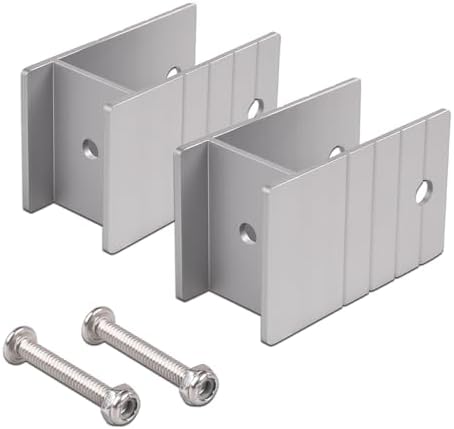
Clamp on mounting brackets grip the gunwale rail rather than putting fasteners through thin sheet, which suits boats where you would rather not drill. They also make the whole top removable in a couple of minutes, which matters on a boat that gets used for different jobs.
Keeping the Canvas Alive Between Trips
Small tops live rough. They get folded fast, stuffed under a cover and trailered wet. A storage boot keeps the folded canvas from chafing on the frame and stops the flogging that wears out stitching along the fold lines.

Comparing the Realistic Choices
| Option | Mounting | Best for | Watch for |
|---|---|---|---|
| Two bow compact top | Clamp or hinge | Narrow hulls, minimum windage | Shade patch is small |
| Three bow top | Deck hinge | Wider jon boats, anchored fishing | Frame lands where you cast |
| Clamp on brackets | Grips the rail | Owners who will not drill | Rail profile must suit the clamp |
| No top, use shade elsewhere | None | Short morning trips at speed | Full sun exposure all day |
Mounting Without Wrecking the Gunwale
Jon boat gunwales are thin extruded aluminum, and a bracket that puts point load on that section will eventually work the metal. Backing plates or large washers spread the load, and mounting at a rib or a reinforced section is better than in the middle of an unsupported span.
Test fit the whole frame loosely and sit in the boat before you drill anything. Check that the folded top does not land on top of a hatch, that the straps reach a real anchor point, and that the bows do not sit exactly where your rod tip goes on a cast. Holes in aluminum are permanent, and moving a bracket six inches later means two more of them.
Handling Changes Once a Top Is Up
Expect the boat to feel different in a crosswind. A canopy on a light hull acts like a small sail, and at anchor the boat will hunt around more than it used to. On windy days folding the top down is the fix, which is another reason to favor a design that collapses quickly.
At speed the top must come down entirely. That is true on every boat, but on a jon boat it matters more, because there is less structure holding the frame and the mounting points are in thinner material.
Frequently Asked Questions
Will a bimini top make a jon boat tippy? It adds windage above the waterline rather than weight down low, so the boat becomes more sensitive to crosswind rather than genuinely unstable. On a narrow hull that already feels tender, that difference is noticeable and worth taking seriously.
What size bimini fits a jon boat? Measure gunwale to gunwale at the mounting point and buy a top whose width range is centered on that number. Jon boats sit at the small end of universal sizing, so shop the narrow ranges rather than standard runabout sizes.
Can I mount a bimini without drilling? Clamp on brackets that grip the gunwale rail avoid fasteners through thin aluminum and make the top removable. Check that the clamp suits your rail profile before ordering.
Two bows or three bows on a small boat? Two bows keeps windage and the folded stack small, three bows gives more usable shade on a wider hull. Both are common on jon boats; four bow spans usually are not.
Can I run with the top up on a jon boat? No. Fold and secure it before you run at speed and before you tow, the same rule that applies to any bimini, and more so on a light hull with thin mounting material.
Does a bimini interfere with fishing? It can. On a small boat the frame ends up near where you cast and move, so plan the mounting position around how you actually fish before you drill or clamp anything.
The Bottom Line
A jon boat bimini is worth it when you fish anchored or drifting in open sun and the hull is wide enough to carry the extra windage without feeling nervous. Measure at the mounting point, keep bow count and height modest, and favor clamp mounts if drilling thin aluminum makes you uneasy. If seating is the next thing on the list, our jon boat seat guide covers clamp on and swivel options, and the general sizing logic lives in the bimini top buying guide.