Last updated: August 20, 2026
Trailer wheel bearings are the reason boat owners end up standing on a highway shoulder in the dark with a smoking hub and a boat they cannot move. They fail for one reason above all others: a hot hub gets backed into cold water, the air inside contracts, and water gets pulled past the seal into the grease. Then it corrodes quietly until the day it does not.
This guide covers what actually happens inside a trailer hub, how to tell a bearing is going before it strands you, and how greasing works on both grease-cap and bearing protector setups. It is a maintenance job most owners can handle, and the warning signs are easy to read once you know them.
This article contains affiliate links. If you buy through them, we may earn a commission at no extra cost to you. Learn more.
Quick Answer
How do you keep boat trailer bearings from failing?
- Keep water out. Bearing protectors hold slight pressure in the hub so water is pushed away from the seal instead of drawn in.
- Use marine grade wheel bearing grease and add it slowly, checking the indicator rather than pumping until something moves.
- Feel the hubs at every fuel stop. A hub noticeably hotter than its partner is the earliest reliable warning.
- Repack or replace on a schedule you set by use, and carry a spare hub kit for the axle size your trailer runs.
Bottom line: water in the hub is the enemy, heat is the warning, and a spare hub kit turns a ruined weekend into a roadside hour.
Why Boat Trailer Bearings Fail Differently
A utility trailer bearing lives a dull life. A boat trailer bearing gets driven to the ramp, arrives hot from highway miles, then gets submerged in cold water within a minute or two. The air trapped inside the hub cools and contracts, and the resulting drop in pressure pulls water past the rear seal.
Water and grease do not mix into anything useful. The mixture loses its film strength, the rollers start to score their races, and rust forms on the polished surfaces that were supposed to carry the load. The failure that strands you months later usually started at a ramp.
What a Bearing Protector Changes
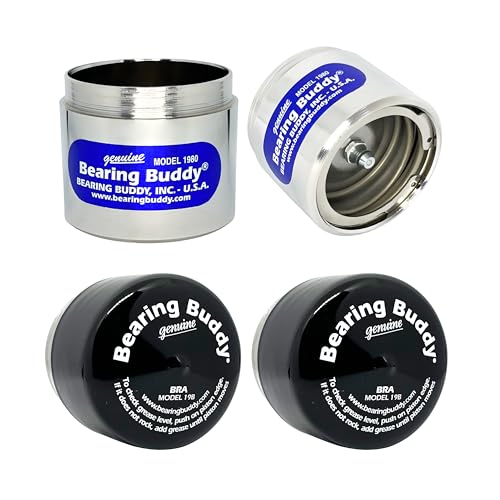
A spring-loaded bearing protector replaces the plain grease cap and keeps a slight positive pressure inside the hub. Bearing Buddy states its protectors hold around three pounds per square inch in the hub, which is enough to push outward at the seal rather than letting the hub draw water in as it cools.
The Warning Signs Worth Acting On
Bearings announce themselves before they seize, and the signals are simple. Heat is the clearest: a hub that is noticeably hotter than the one on the other side has friction it should not have. Noise is next, usually a growl or rumble that changes with speed rather than with the road surface.
Play is the third. With the wheel jacked clear of the ground, grab it at the top and bottom and rock it. A small amount of movement can be normal depending on adjustment, but obvious clunking or wobble means the bearing or the adjustment needs attention before the next trip.
The Fuel Stop Habit
Put the back of your hand against each hub every time you stop for fuel. It costs ten seconds, needs no tools, and catches almost every developing failure while it is still a maintenance job. Warm is normal after highway miles. Too hot to keep your hand on is not.
Grease Caps, Bearing Protectors and Grease Guns
Trailer hubs come with either a plain dust cap, a bearing protector with a grease fitting, or an EZ-lube style spindle that takes grease through the axle end. Each is greased differently, and the one on your trailer determines the tool and the technique rather than the other way around.
Whatever the system, use a marine grade wheel bearing grease rated for the job and stick to one product. Mixing greases with different thickeners can break down the mixture, so if you are switching brands, the honest answer is to repack the hub rather than pump a new grease in on top of the old one.
Adding Grease Without Blowing a Seal
Add grease slowly and watch the indicator. On a bearing protector the piston moves outward as the hub fills, and that movement is the signal to stop. Continuing past it pushes the rear seal out of its bore, which turns a five minute top-up into a hub full of water on the next launch.
Gear for the Job
Keeping Water Out in the First Place
Bearing protectors are sized by the inside diameter of the hub bore, so they are a measured purchase rather than a universal one. Measure the bore or read the size off the existing protector, since a size that almost fits will either fall out or refuse to seat.
The Spare That Saves the Weekend
A complete hub assembly with bearings, races and a seal already fitted turns a roadside bearing failure into a wheel swap. Hub kits are specific to axle size and bolt pattern, so buy the one that matches your trailer and keep it with the spare tire rather than in the garage.

Grease and the Gun to Apply It
Marine grade wheel bearing grease resists water washout in a way general purpose grease does not, which is the whole point on a trailer that gets dunked. A compact grease gun stores easily in the tow vehicle and makes a top-up at the ramp realistic instead of theoretical.

Hub Systems Compared
| System | How it greases | Water resistance | Watch out for |
|---|---|---|---|
| Plain dust cap | Hand repack only | Lowest, no pressure in the hub | Needs full disassembly to service |
| Bearing protector | Grease fitting on the cap | Holds slight positive pressure | Overfilling pushes out the rear seal |
| EZ-lube spindle | Through the axle end fitting | Good when greased correctly | Fast pumping can unseat the seal |
| Oil bath hub | Sealed oil reservoir | Good, with a visible level window | Any leak means immediate attention |
How Often to Service Trailer Bearings
Set the interval by use rather than by the calendar alone. A trailer that launches most weekends in salt water needs attention far more often than one that goes to a freshwater lake twice a summer. Follow the trailer or axle manufacturer’s published service interval as the baseline, then shorten it for salt water and heavy mileage.
A useful rhythm for most owners is a full inspection and repack before the season starts, a mid-season check of grease and heat, and a look at the seals before winter storage. Anything that gets stored wet deserves a check before the first trip of the following year.
Repack or Replace
If the bearings come out clean, roll smoothly and show polished, unmarked races, they can be repacked. If the grease looks milky or gray, or the rollers and races show pitting, scoring or discoloration from heat, replace the bearing and the race together as a set. Reusing a bearing on a new race is a false economy.
Common Mistakes With Trailer Bearings
Backing a hot trailer straight into cold water is the biggest one, and the fix is free: let the hubs cool for a few minutes in the staging area while you rig the boat. That pause alone does more for bearing life than any product on this page.
The second is pumping grease until it appears somewhere, which is exactly the point at which the seal has usually failed. The third is ignoring a hub that runs warmer than its partner because the trip is nearly over. Bearings do not recover once they start running hot.
Frequently Asked Questions
How often should boat trailer bearings be greased? Follow the interval published by your trailer or axle manufacturer, then shorten it for salt water and high mileage. Many owners inspect and repack before each season and check grease and hub temperature mid-season.
What does a failing trailer bearing sound like? Usually a growl or rumble that rises and falls with road speed rather than with surface texture, sometimes with a click. Combined with a hub that runs hotter than the other side, it is a stop-driving signal rather than a wait-and-see one.
Are bearing protectors worth fitting? On a boat trailer, yes. They hold slight pressure inside the hub so water is pushed away from the seal rather than drawn in as a hot hub cools. Bearing Buddy publishes the pressure its protectors maintain, and sizing is by hub bore diameter.
Can I use automotive grease in trailer bearings? Use a grease rated for marine wheel bearing service. General purpose grease can wash out when water gets in, and mixing incompatible greases can break the mixture down. If you are changing products, repack rather than adding on top.
Why is one hub hotter than the other? Common causes are a bearing starting to fail, an over-tight adjustment, insufficient grease, or a brake dragging on that wheel if the trailer has them. Any of those means inspecting before you drive further.
Should I carry a spare hub? A pre-assembled hub kit matched to your axle size and bolt pattern is one of the more useful things in a tow vehicle. It turns a failure that would otherwise need a tow truck into a wheel change on the shoulder.
The Bottom Line
Boat trailer bearings fail because water gets into a hot hub, and everything useful you can do follows from that. Let the hubs cool before launching, keep water out with a correctly sized protector and marine grease, check hub temperature at every stop, and service on an interval your use justifies. Carry a spare hub kit and the failure becomes an inconvenience. For grease and gun choices our marine grease guide covers what to buy, and our trailer tire guide covers the other component that strands people on the shoulder.