Last updated: August 20, 2026
Millennium Marine seats look wrong the first time you see one. Instead of a foam cushion wrapped in vinyl, there is a tensioned fabric sling stretched over an aluminum frame, which reads more like a camp chair than a boat seat. Then you sit in one after a rain shower and understand the point: there is nothing there to hold water.
The brand came out of treestand seating and brought the same sling construction to the water in its B series. This guide covers what ComfortMAX actually is, which model suits which boat, and the honest limitations of a sling seat compared with a conventional padded one.
This article contains affiliate links. If you buy through them, we may earn a commission at no extra cost to you. Learn more.
Quick Answer
Is a Millennium ComfortMAX boat seat worth it?
- The sling fabric does not absorb water, so the seat dries almost immediately after rain or spray.
- B100 has a folding backrest with lumbar support; B200 is a casting seat without the fold.
- Millennium states its B series uses a standard bolt hole pattern that fits standard pedestals.
- You are paying for the frame and fabric, not for cushioning, so it feels firmer than padded vinyl.
Bottom line: excellent for open fishing boats that live outdoors, less compelling if you want the soft feel of a padded helm seat.
What ComfortMAX Actually Is
ComfortMAX is Millennium’s name for the contoured tensioned sling used across its B series seats. Instead of foam, a breathable fabric is stretched over a frame so your weight is carried by tension rather than compression. Millennium states the material resists mold, mildew and ultraviolet exposure and that no plastic components are used in B series seats.
The practical result is a seat that drains and breathes. Rain runs through, spray does not soak in, and on a hot day you are not sitting on a heat-absorbing vinyl panel. For a boat that sits uncovered between trips, that alone changes the ownership experience.
Frame and Construction
The frames are aluminum rather than molded polymer, which is why the seats look slim and weigh less than they appear they should. There is no plywood substrate anywhere in the design, which removes the failure mode that eventually claims most conventional boat seats.
Millennium publishes a one year warranty on B series seats. That is shorter than some competitors advertise, so read it against the construction rather than as a proxy for expected life.
B100 Versus B200
The B100 is the folding version. It has a backrest with lumbar support that folds down flat, armrest straps that support the seat back when it is up, and Millennium publishes a seat bottom of twenty inches wide by sixteen and a half inches deep with a four hundred pound capacity rating. It is the model most people mean when they say Millennium boat seat.
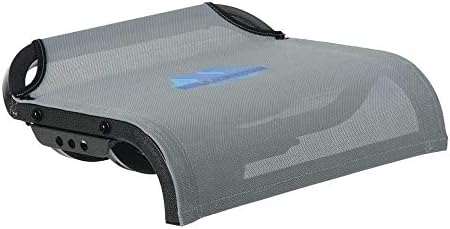
The B200 is the casting version. Same sling, no folding backrest, and the front of the seat curves down more so you can lean forward comfortably while casting, with a short upturned lumbar support at the rear. It is a deck chair for fishing rather than a seat for riding.
Which One for Your Boat
If the seat has to fold under a cover or come out for transport, the B100 is the answer. If it lives on a casting deck and you spend the day standing and perching rather than sitting, the B200 does that job better and takes up less room.
Millennium offers B series seats in gray, green and tan, plus camouflage patterns, so matching an existing interior is usually possible without going to a custom order.
Picks by Situation
The All Round Choice for an Open Boat
A folding sling seat on a standard pedestal is the setup that makes the most sense for a bass boat, aluminum fishing boat or center console that spends its life outdoors. Fold it for the cover, unfold it at the ramp, and stop thinking about wet cushions.

Casting Deck Seating
The non folding casting version puts less structure in the way when you are working the front deck, and the forward curve of the seat suits leaning into a cast rather than sitting back.
What You Will Also Need
The seat is the top of the stack, not the whole stack. If you are moving from an old padded seat you may need a fresh swivel underneath, and Millennium also sells pedestals designed around its seats.

Millennium Compared With Conventional Seats
| Aspect | Millennium B series | Padded vinyl seat | Which wins |
|---|---|---|---|
| Wet weather | Sling drains, dries fast | Foam holds water | Millennium, clearly |
| Ride comfort in chop | Firm, supported by tension | Softer, more cushion | Padded, for long runs |
| Long term durability | Aluminum frame, no wood | Substrate can soften | Millennium |
| Look on a runabout | Utilitarian, fishing oriented | Matches factory interiors | Padded |
The Honest Limitations
A sling seat is firmer than a foam one. In flat water nobody notices, but on a long run in chop a well built padded seat absorbs more of the shock. If your main use is covering distance in open water rather than fishing, that difference is worth weighing.
The second limitation is aesthetic. On a bass boat or an aluminum fishing rig a Millennium looks entirely at home. On a bowrider with matching upholstery it looks like the aftermarket part it is, and there is no vinyl option that solves that.
Where the Value Sits
What you are paying for with a Millennium is the frame and the fabric, not thickness of padding. That is worth understanding before you compare listings, because a conventional seat with a thick cushion can look like better value on a spec line while carrying the plywood substrate and foam that eventually end the seat’s life.
Judged on years of service in an open boat that gets rained on, the sling design has a genuine structural argument. Judged on how it feels in the first five minutes in a showroom, it does not, and that mismatch is why owner opinions on these seats tend to split along how people actually use their boats.
Fitment Before You Order
Millennium states that B series seats use a standard bolt hole pattern that mounts on any standard boat seat pedestal, which is the same claim most established seat brands make. Measure the square pattern on your existing swivel center to center before ordering anyway, because older boats accumulate mismatched parts.
Our guide to seat mounts and bolt patterns explains how to take that measurement and what to do if your plate does not line up.
Frequently Asked Questions
What is ComfortMAX on a Millennium seat? It is the tensioned contoured sling fabric used across the B series. It carries weight by tension rather than foam compression, and Millennium states it resists mold, mildew and ultraviolet exposure.
What is the difference between the B100 and the B200? The B100 has a folding backrest with lumbar support. The B200 is a casting seat without the fold, with a more downward curved front edge for leaning while casting.
Do Millennium seats fit standard pedestals? Millennium states its B series uses a standard bolt hole pattern for standard boat seat pedestals. Measure your existing plate center to center to confirm before ordering.
How much weight does a B100 hold? Millennium publishes a four hundred pound capacity for the B100. Treat the manufacturer’s published rating as the figure, not a number quoted secondhand.
Are sling seats comfortable in rough water? They are supportive but firm. In chop a padded seat absorbs more shock, so if long open water runs are your normal use, that is a real consideration.
Do they work on a pontoon? They fit a pedestal on a pontoon fine, but they will look nothing like the factory furniture around them. Most pontoon owners replace furniture as matching groups instead.
The Bottom Line
Millennium’s B series solves the specific problem of seats that stay wet, and it solves it well by removing foam and plywood from the design entirely. Choose the B100 if the seat must fold, the B200 if it lives on a casting deck, and check your bolt pattern before ordering. Compare against the padded field in our boat seats guide, against dedicated bass boat seats, or against the other big name in this space in our Tempress review.