
Last updated: August 20, 2026
The weight question comes up for one of two reasons: you are working out whether your truck can tow the boat, or you are working out whether a lift, a dock or a driveway can take it. Both need a real number, and the number in a forum thread is almost always somebody’s dry weight quoted as if it were the towed weight.
The good news is that pontoon builders publish dry weight per model, so the base figure is easy to find. The work is in adding the things the spec sheet leaves out, which is where owners underestimate by a wide margin. This guide walks through the published numbers and then through everything you have to add to them.
This article contains affiliate links. If you buy through them, we may earn a commission at no extra cost to you. Learn more.
Quick Answer
How much does a pontoon boat weigh?
- Builders publish a dry weight per model. Sun Tracker, for example, lists 1,310 lbs. for the Bass Buggy 16 XL Select and 2,080 lbs. for the Party Barge 20 DLX.
- Dry weight excludes the motor on many listings, and always excludes fuel, batteries, gear and passengers.
- The number that matters for towing is boat plus motor plus fuel plus gear plus the trailer itself.
- Look up your own model on the builder’s site rather than using a general average, because weights vary a lot between single toon and tri toon builds.
Bottom line: start from the builder’s published dry weight for your exact model, then add motor, fuel, batteries, gear and trailer before comparing to a tow rating.
What Pontoon Builders Actually Publish
Every major pontoon builder publishes a specification page per model with an overall length, a beam and a dry weight. Those figures are the only weights you should build on, because they come from the company that assembled the boat. Sun Tracker, Bennington and the other volume builders all list them model by model.
The table below uses Sun Tracker’s own published specifications for three of its models, to show how quickly weight climbs with length and deck width. Look up your model on your builder’s site rather than reading across from these.
| Model | Overall length | Beam | Published dry weight |
|---|---|---|---|
| Sun Tracker Bass Buggy 16 XL Select | 18 ft. 5 in. | 8 ft. | 1,310 lbs. |
| Sun Tracker Bass Buggy 18 DLX | 20 ft. | 8 ft. 2 in. | 1,470 lbs. |
| Sun Tracker Party Barge 20 DLX | 21 ft. 11 in. | 8 ft. 6 in. | 2,080 lbs. |
Figures as published by Sun Tracker on suntrackerboats.com. Specifications change by model year, so check the page for your own boat.
Why Dry Weight Understates the Real Number
Dry weight is the boat as it leaves the factory floor, and on many listings that excludes the outboard entirely. It also excludes fuel, batteries, the bimini if that is an option, furniture upgrades, the ladder, the cover, and every piece of gear you have added since. None of that is dishonest, it is just a different question from the one a tow vehicle asks.
Fuel is the item people forget. Gasoline weighs roughly six pounds per gallon, so a tank in the thirty gallon class adds a meaningful amount on its own, and water in a livewell adds more. A deep cycle battery bank for a trolling motor is another substantial figure that never appears on a spec sheet.
Tri Toon Versus Two Log
A third log adds structure, a wider deck and usually a bigger motor, so tri toon versions of the same nominal length are consistently heavier than the two log version. If you are comparing models, compare the exact configuration you are buying rather than the model family.
Performance packages compound that. Lifting strakes, underskinning and larger motors all add weight in the same direction, and a heavily optioned boat can sit well above the base figure in the brochure.
Working Out the Towed Weight
The number your truck cares about is everything behind the hitch. That is the boat, the motor, fuel, batteries, gear and the trailer itself. Trailer manufacturers publish the trailer’s own weight and its rated capacity on the trailer’s certification label, so use that label rather than an estimate.
Once you have a total, compare it to your vehicle’s tow rating from the manufacturer, not to a figure from a forum. Tow ratings vary by drivetrain, axle ratio and equipment within the same model name, so the owner’s manual or the door jamb sticker is the authority.
The Only Number That Settles It
If the math lands anywhere near a limit, weigh the rig. A public scale at a truck stop or a grain elevator gives you the actual axle weights with the boat loaded the way you tow it, and that ends the argument in five minutes. Owners who do this are routinely surprised by how much gear has accumulated.
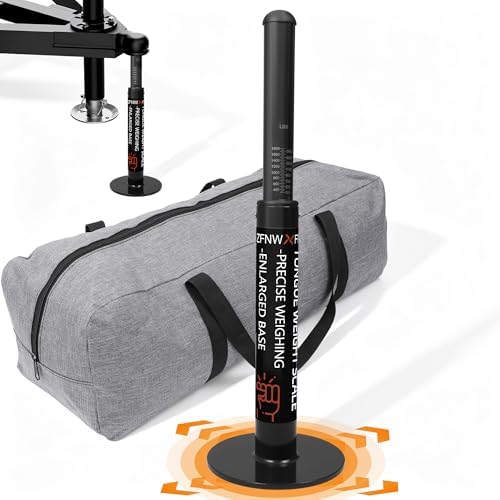
Tongue weight is the other figure to check, and it is set by how the boat sits on the trailer. Follow the tongue weight range your trailer manufacturer specifies in its documentation, and adjust by moving the boat’s position on the bunks rather than guessing.
Weight Beyond Towing
Weight also decides lift and dock questions. Boat lifts are rated by capacity by their own manufacturer, and that rating covers the whole loaded boat rather than a dry weight, so the same additions apply. A lift chosen against a brochure figure can be under specified once fuel and gear are aboard.
Draft and shallow water behavior follow weight too. A heavier tri toon with a big motor sits deeper than a light two log boat, which matters on lakes with sandbars and on ramps that get shallow at low water. Our lift or trailer comparison looks at that choice in more detail.
Capacity Is a Separate Question
How much your pontoon weighs and how much it can carry are different numbers. Carrying capacity is stated on the boat’s own capacity plate, fitted by the manufacturer, and that plate is the only source you should use for persons and weight limits. Do not calculate it, read it.
If the plate is missing or unreadable, the builder can usually supply the figures for your hull identification number. Federal requirements around capacity information are published by the Coast Guard at uscgboating.org, and state agencies enforce their own rules on top of that.
Frequently Asked Questions
How much does a 20 foot pontoon boat weigh? It depends on the build. Sun Tracker publishes 2,080 lbs. dry for its Party Barge 20 DLX, while other builders and tri toon versions of a similar length differ. Look up your exact model on the builder’s specification page.
Does dry weight include the motor? Often not. Many published dry weights are for the boat alone, so check the footnotes on the specification page and add the outboard’s own published weight if it is excluded.
What size truck do I need to tow a pontoon? Compare your total towed weight, meaning boat plus motor plus fuel plus gear plus trailer, against your vehicle’s tow rating from the manufacturer. Ratings vary within the same model depending on drivetrain and equipment, so use the owner’s manual.
How much does a pontoon trailer weigh? The trailer manufacturer states the trailer’s own weight and its rated capacity on the certification label attached to the trailer. That label is the number to use rather than a generic figure.
Are tri toons heavier than regular pontoons? Generally yes. A third log adds structure and usually comes with a wider deck and a larger motor, so a tri toon of the same nominal length sits above the two log version on the same builder’s spec sheet.
How much weight can a pontoon boat carry? Read the capacity plate fitted to your boat by the manufacturer. That plate is the authoritative source for persons and weight, and federal capacity information requirements are published by the Coast Guard at uscgboating.org.
The Bottom Line
Pontoon weight starts with the builder’s published dry weight for your exact model and configuration, and then grows with the motor, fuel, batteries, furniture and every accessory you have added. For towing, add the trailer from its own certification label, compare to your vehicle’s rating from the manufacturer, and weigh the rig if it is close. For capacity, read the plate on the boat rather than calculating anything. See our pontoon trailer guides for loading a heavy toon solo, and boat trailer tires for the load range side of the same question.