
Last updated: August 20, 2026
Few trailering accessories generate as much argument as the transom saver. One camp says an outboard hanging on its hydraulic tilt over a thousand miles of expansion joints is asking for trouble. The other camp points out that a rigid bar between the motor and the trailer ties two things together that move independently, and asks what happens to the transom then.
Both camps are describing something real, and the answer depends on your motor, your trailer and what your engine manufacturer says in the manual. This guide separates the two different products people call a transom saver, explains what each one supports, and tells you where to find the answer that actually applies to your rig.
This article contains affiliate links. If you buy through them, we may earn a commission at no extra cost to you. Learn more.
Quick Answer
Does your outboard need a transom saver?
- If the motor tucks up and clears the ground with the trailer level, many owners simply trailer it down and need nothing.
- If the motor must ride tilted to clear driveways and ramps, it needs support of some kind rather than hanging on the tilt system.
- A bar style transom saver braces the lower unit against the trailer frame. A wedge style support locks the trim ram itself.
- Your engine manufacturer’s owner manual is the authority on which method is acceptable for your motor.
Bottom line: read your engine manual first, then choose a bar or a wedge based on ground clearance and how your trim system is built.
What the Two Products Actually Do
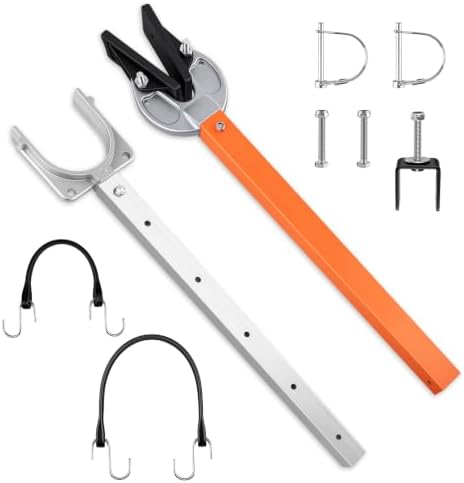
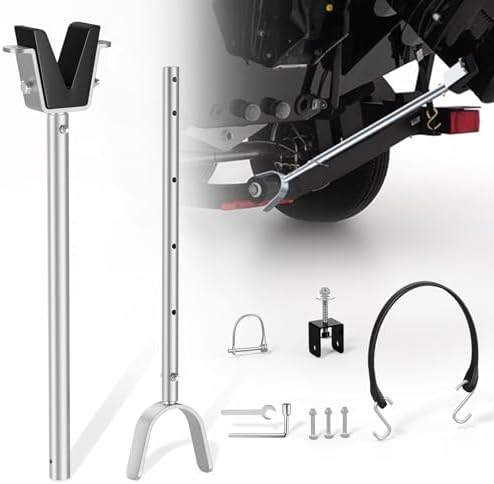
The term covers two different tools. A traditional transom saver is an adjustable bar that runs from a bracket on the trailer frame up to a padded or rollered cradle under the outboard’s lower unit, carrying the motor’s weight on the trailer instead of on the tilt mechanism and the transom.
A wedge style support does something else entirely. It clamps onto the exposed trim and tilt ram and prevents the motor from dropping or bouncing on that ram, without connecting to the trailer at all. M-Y Wedge lists its single ram universal trailering support for outboards with single ram trim and tilt assemblies, made from EPDM rubber and described as UV and saltwater resistant.
Why That Difference Matters
The bar transfers load into the trailer, so the motor and the trailer move as one unit. The wedge leaves the motor attached only to the boat, so motor and hull move together and the trailer moves separately underneath. Which behavior you want depends entirely on what your engine maker specifies.
Read the Engine Manual Before You Buy
Outboard manufacturers publish trailering guidance in the owner manual for each engine, and that guidance is not identical across brands or across models within a brand. Some specify trailering with the motor in the fully down position where clearance allows. Others describe an acceptable support method for trailering tilted. Follow that document rather than a general rule.
If you no longer have the manual, the engine maker publishes them online by model and serial range, and a dealer service department can tell you what applies to your specific unit. This is the one question in the whole topic where a definitive answer exists, and it is worth five minutes to get it.
When You Do Not Need One at All
Plenty of boats never need either product. If the outboard is small and light, or if the motor sits fully down and still clears the pavement with the trailer hitched and level, trailering it down is the simplest arrangement there is. Nothing to fit, nothing to forget, nothing to remove at the ramp.
Check clearance properly rather than by eye. Hitch the trailer to the tow vehicle so the trailer sits at towing angle, put the motor fully down, and look at the gap between the skeg and the ground. Then remember that driveway aprons, ramps and speed humps all reduce that gap temporarily.
Transom Support Picks by Situation
Standard Bar Style Support
The familiar adjustable bar from trailer frame to lower unit remains the most common approach on mid size outboards, and it is what most owners picture when they hear the term. Attwood lists heavy duty transom savers in adjustable length ranges, so check that the range covers the distance from your frame to your lower unit.
Single Ram Trim Systems
Where the engine has an exposed single trim ram, a wedge that clamps to that ram supports the motor without linking it to the trailer, which is the arrangement several owners of single ram outboards prefer.

Rollered Trailer Frames
Some transom savers use a roller where the bar meets the trailer, which allows a little fore and aft movement rather than a hard connection. Owners who worry about tying motor and trailer rigidly together often pick this style.
Protecting the Motor on the Road
Whatever supports the weight, road grit and rain still hit the cowling for the whole tow. A trailering cover over the powerhead is a separate, cheap piece of protection, covered in our guide to the outboard motor cover.

Bar Versus Wedge at a Glance
| Support type | What carries the load | Connects to the trailer | Suits |
|---|---|---|---|
| Bar transom saver | Trailer frame via an adjustable bar | Yes | Motors trailered tilted, longer tows |
| Wedge on the ram | The trim ram itself, on the boat | No | Single ram trim and tilt outboards |
| Motor fully down | The engine bracket as designed | No | Small motors with ground clearance |
Fitting and Removing Without Damage
A bar style support only helps if it is set to the right length. Too short and it does nothing; too long and you are jacking the motor upward and preloading the tilt system. Adjust it with the trailer hitched and level, so the geometry matches how the rig sits on the road rather than how it sits in the driveway.
Then build a habit around removing it. A transom saver left in place when you drop the motor is the classic way to bend a bracket, and the ramp is a bad place to discover it. Many owners hang it on the winch post or drop it in the tow vehicle the moment it comes off, so it cannot be forgotten.
Corrosion and Contact Points
The cradle contacts the lower unit and the trailer end contacts the frame, and both points chafe paint if they are dry and gritty. Keep the pads intact, rinse the assembly with the rest of the trailer after saltwater use, and replace worn rubber before it exposes bare metal to your skeg.
Frequently Asked Questions
Do I need a transom saver for a small outboard? Often not. If the motor is light and clears the ground fully down with the trailer hitched and level, trailering it down is the simplest option. Support becomes relevant when clearance forces you to tow with the motor tilted.
Is a transom saver bad for the transom? The concern people raise is that a rigid bar ties motor and trailer together while the hull moves separately. Whether that matters for your engine is answered in your outboard manufacturer’s owner manual, which sets out the trailering method they consider acceptable for that model.
What is the difference between a transom saver and a motor support wedge? A transom saver braces the lower unit against the trailer frame and puts the motor’s weight on the trailer. A wedge clamps to the trim ram and stops the motor moving on that ram without touching the trailer at all.
What length transom saver do I need? Measure from the trailer frame mounting point to the underside of the lower unit with the trailer hitched and level, then buy a model whose adjustment range covers that distance with room in the middle rather than at either end.
Can I leave the transom saver on at the ramp? No. It has to come off before you tilt or lower the motor, and forgetting it is one of the more common ways owners bend a bracket. Give it a fixed home in the tow vehicle so its absence is obvious.
Will a transom saver fit any outboard? Bar style supports are sold as universal within a length range and a cradle size, but the fit still depends on your motor’s lower unit shape and your trailer’s frame. Wedge style supports are specific to the trim ram configuration, so check which one your engine has.
The Bottom Line
Start with the engine manual, because it is the only source that speaks about your motor specifically. If clearance lets you trailer with the motor down, do that and skip the whole debate. If you tow tilted, choose a bar style support for its adjustability or a ram wedge if your outboard has a single exposed trim ram, set it with the trailer level, and take it off before you touch the tilt switch. The straps holding the rest of the boat matter just as much: see our guide to boat tie down straps.