Last updated: August 20, 2026
The winch is the part of a boat trailer nobody thinks about until the day it slips. A worn strap, a ratchet pawl that no longer catches, or a winch rated for a lighter boat than the one you actually own, and suddenly you are standing on a wet concrete ramp cranking against a hull that will not come the last two feet onto the bunks. It is a cheap part with an expensive failure mode, because everything behind it depends on the boat sitting fully forward against the bow stop.
This guide covers how to choose between a manual crank winch and an electric one, how to read a capacity rating without guessing, and why the strap versus cable question changes how the ramp feels when you load alone.
This article contains affiliate links. If you buy through them, we may earn a commission at no extra cost to you. Learn more.
Quick Answer
Which boat trailer winch should you buy, manual or electric?
- Small aluminum boats and jon boats: a single speed manual winch with a strap is usually all the trailer needs.
- Mid size fiberglass boats: a two speed manual winch gives you a low gear for the last hard pull onto the bunks.
- Heavy boats, steep ramps or a bad shoulder: an electric winch removes the cranking, at the cost of wiring and a power source.
- Match the rated capacity to your loaded boat weight, using the number the winch maker publishes, not a guess.
Bottom line: buy for your loaded boat weight and your worst ramp, then choose strap or cable based on how you load.
Manual or Electric: Which One Actually Fits Your Setup
Most trailerable boats are fine on a manual winch, and a two speed manual handles almost everything a single family boat asks of it. An electric winch earns its place when the boat is heavy, the ramp is steep or shallow, or cranking is physically hard for whoever is on the tongue. That convenience comes with a power connection and more parts to corrode.
The honest way to decide is to think about the last twenty launches rather than the best one. If the boat drives most of the way onto the bunks and the winch only takes up the final slack, a manual crank is not a burden. If your local ramp is shallow enough that you are winching the hull a long way up dry bunks, that changes the math quickly.
What Electric Adds and What It Costs You
An electric trailer winch replaces the handle with a motor and a remote or a switch, which is genuinely useful for solo loading because you can stand where you can see the bow instead of where the handle is. It also introduces a circuit that lives inches from the water on every launch, so corrosion protection and a sensible power source matter more than the motor rating does.
Connecting a winch to a vehicle or trailer power source is work for a marine or trailer technician if you are not already comfortable with it, so this guide covers what to buy rather than how to wire it.
Winch Capacity Is Not the Same as Your Boat Weight
Winch makers publish a rated pulling capacity in pounds for every model, and that published rating is the only number worth using. Fulton, for example, lists its F2 two speed marine winch at a 3,200 pound capacity in the product listing. Your job is to match that published figure to your loaded boat weight, then leave headroom.
Loaded weight is where people underestimate. The hull dry weight on the manufacturer’s spec sheet does not include the outboard, fuel, batteries, coolers, anchors, or the water still in the bilge. If you do not know your real number, a certified scale at a truck stop or a landfill will weigh the whole rig and let you subtract the tow vehicle.
Read the Trailer Sticker Too
Your trailer carries a capacity plate or VIN sticker stating what it is rated to carry. That plate is the authority on your trailer, and it is worth photographing before you shop.
Strap or Cable: What Changes at the Ramp
Most boat trailer winches now ship with a polyester strap rather than steel cable, and for good reason. A strap will not develop the fishhook wire barbs that shred gloves, it lies flat on the drum, and it is easy to inspect. Steel cable resists abrasion better and is still preferred by some owners of heavier boats and rougher ramps.
The failure modes differ. A strap degrades from UV exposure and from abrasion where it crosses the bow roller, and it usually shows that damage as fraying or a bleached, stiff section you can see. Cable fails from broken strands and kinks, which are easier to miss and considerably less pleasant to grab.
Inspect It Like a Wear Item
Whichever you run, treat the strap or cable as a consumable rather than part of the trailer. Look at the full length once a season with the winch unspooled, check the hook and its safety latch, and replace anything with visible damage instead of adding one more trip to the list. Rinse the winch with fresh water after every saltwater launch and put a marine grease on the gears once or twice a season, since the two speed shift is usually the first thing to seize.
Trailer Winch Picks by Situation
Small Aluminum Boats and Jon Boats
A light hull that floats on and off the bunks with almost no winching does not need gearing or a motor. A single speed manual winch with a strap and a reliable ratchet pawl covers it, and the simpler the mechanism, the less there is to seize.

Mid Size Fiberglass Boats That Need a Low Gear
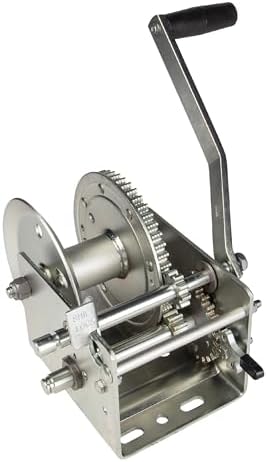
Once the boat is heavy enough that the last stretch onto the bunks takes real effort, a two speed winch is the upgrade that matters. High gear takes up slack quickly, then you shift down for the short, hard pull against the bow stop without turning it into a wrestling match.
Loading Alone or Cranking Is Hard on You
An electric winch is the right answer when the physical act of cranking is the problem, whether that is a heavy boat, a shoulder that objects, or wanting both hands free while you watch the bow line up. Look for a marine rated housing and a remote lead long enough to stand where you can actually see the bow eye.

Replacing Just the Strap or Cable
If the winch body still turns smoothly and the pawl catches, replacing the strap is a far smaller job than replacing the whole unit. Match the width and length to what came off, and buy the hook with a working safety latch rather than reusing a worn one.

The Winch Stand and Bow Roller
The winch is only as solid as what it bolts to. A bent or rusted winch post lets the boat sit slightly off, which puts the bow eye at the wrong height and makes every load harder than it needs to be. A fresh bow roller and a straight post are cheap fixes with an outsized effect on how the boat seats.

Comparing the Three Winch Types
| Winch type | Best suited to | Effort at the ramp | Watch out for |
|---|---|---|---|
| Single speed manual | Jon boats, small aluminum hulls, light utility trailers | Fine while the boat floats most of the way on | Runs out of leverage on heavier boats |
| Two speed manual | Most mid size fiberglass runabouts and bowriders | Low gear handles the final pull comfortably | Shifting mechanism needs rinsing and grease |
| Electric | Heavy boats, steep or shallow ramps, solo loading | Push a button and watch the bow | Needs a power source and corrosion protection |
Common Mistakes When Buying a Trailer Winch
The most common mistake is treating the winch as the thing that pulls the boat all the way up. The trailer should be deep enough that the boat floats onto the bunks and the winch takes up the last of the travel. If you are grinding a dry hull up dry carpet, the fix is ramp depth rather than a bigger winch.
The second is leaving the winch strap as the only thing holding the bow. The winch holds the boat forward, but a separate bow safety chain or strap from the bow eye to the trailer is what keeps the boat on if the winch lets go, and a strap across the transom keeps the stern from walking. Our guide to boat tie down straps covers how those pieces work together.
Frequently Asked Questions
What size winch do I need for my boat? Match the winch maker’s published capacity rating in pounds to your loaded boat weight, which includes engine, fuel, batteries and gear, then leave headroom. If you do not know your loaded weight, weigh the rig on a certified scale rather than estimating from the hull spec sheet.
Is a two speed winch worth it? For most mid size boats, yes. High gear takes up slack fast, low gear gives you the leverage for the final pull against the bow stop, and that combination is what makes loading manageable on a shallow ramp without going electric.
Should I use a strap or a steel cable? Strap for most trailerable boats. It is easier to inspect, will not produce wire barbs, and lies flat on the drum. Steel cable resists abrasion better and is still chosen by some owners of heavier boats on rough ramps.
Can I add an electric winch to my existing trailer? Usually yes, if the winch post and bolt pattern suit the model. The power connection is the part to be careful with, and that is work for a marine or trailer technician if you are not confident.
Does the winch alone hold the boat while towing? No. The winch holds the boat forward against the bow stop, and a separate bow safety chain or strap plus transom tie downs are what actually secure the boat for the road.
The Bottom Line
Buy the winch for your loaded boat weight and your worst local ramp, not for the boat as it left the factory. A two speed manual covers most trailerable boats comfortably, electric earns its keep when cranking is the limiting factor, and the strap is a wear item you replace before it surprises you. Once the winch is sorted, straight loading is the next piece of the puzzle: our guide to boat trailer guides covers the posts that let you center the hull without a spotter.