
Last updated: August 20, 2026
Nobody is born knowing how to back a trailer, and almost everybody learns in the worst possible classroom: a busy ramp on a Saturday morning with six trucks waiting and at least one person offering advice. The skill itself is not difficult. The pressure is what makes it feel difficult, and most of that pressure comes from doing your learning in front of an audience.
This guide breaks the technique into the handful of things that actually matter, gives you a way to practice where nobody is watching, and covers the ramp etiquette that keeps the line behind you patient. Get the technique in an empty parking lot first and the ramp stops being an event.
This article contains affiliate links. If you buy through them, we may earn a commission at no extra cost to you. Learn more.
Quick Answer
How do you back up a boat trailer?
- Put one hand at the bottom of the wheel and move it toward the side you want the trailer to go.
- Make tiny steering inputs and go slowly. Everything happens later than you expect, then all at once.
- Use both mirrors rather than turning around, so you can see both sides of the trailer.
- Straighten the wheel as soon as the trailer starts turning, or you will overshoot.
- Pull forward and reset whenever it goes wrong. It is not a failure, it is the technique.
Bottom line: slow, small inputs, hand at the bottom of the wheel, and reset without embarrassment when the angle gets away from you.
The One Trick That Makes It Click
Place your hand at the bottom of the steering wheel. Now move that hand in the direction you want the back of the trailer to go. Want the trailer to swing left, move your hand left. That is the whole mental translation, and it removes the mirror image problem that makes people steer confidently in exactly the wrong direction.
It works because with your hand at the bottom of the wheel, the hand movement and the trailer movement match. Some drivers eventually stop needing the trick and just see it. Until then, it is a reliable crutch, and there is no prize for not using it.
Small Inputs and Slow Speed
The single most common beginner mistake is too much steering, too fast. A trailer responds to steering input with a delay, so a large correction feels like nothing for a second and then produces a swing you cannot catch. Small movements of the wheel, applied slowly, keep the trailer inside a range you can still correct.
Speed is the other half. At walking pace you have time to see the trailer start to move and take the correction out before it becomes a jackknife. Idle speed with your foot covering the brake is fast enough for any ramp.
Straighten Early
Once the trailer begins turning the way you want, start unwinding the steering. If you hold the input until the trailer is pointed where you want it, you are already too late and it will keep rotating past the target. Steer, watch it begin, straighten.
Use Your Mirrors, Not Your Neck
Turning around to look over your shoulder gives you one side of the trailer and a stiff neck. Mirrors give you both sides at once, which is what you need to keep the trailer centered between the ramp edges or between two parked rigs. Set both mirrors before you start so the trailer sides are visible.
The useful habit is watching for the trailer to appear in one mirror. When the trailer starts showing more of itself in the left mirror, it is drifting left, and that is your cue to correct while the correction is still small. Waiting until the angle is obvious means the angle is already too big.
Backing Curved Versus Straight
Backing in a straight line is a series of tiny corrections rather than one setup. Backing around a curve is easier if you set the initial angle while pulling forward, so you begin the reverse already pointed roughly where you need to be. Setting up the approach well is most of the job.
Practice Somewhere Nobody Is Watching
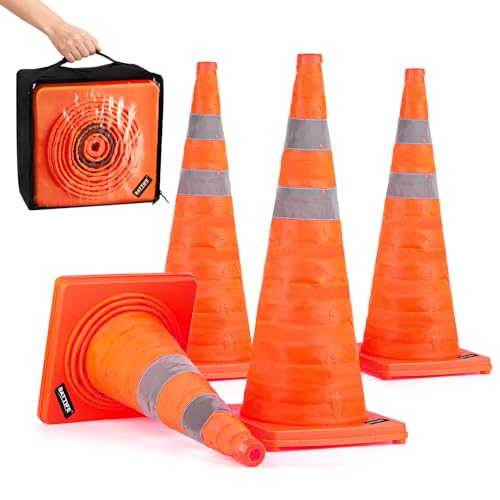
An empty parking lot on a weekday evening is the best trailer school there is. Bring a couple of traffic cones or a pair of buckets, set them wider than the trailer, and practice backing between them from different starting angles until it stops feeling like guesswork.
Practice with the boat on the trailer if you can, because an empty trailer behaves differently from a loaded one and is far more twitchy. Twenty minutes of this does more for your ramp confidence than a whole season of learning under pressure.
Get a Backup Camera If Sightlines Are Bad
On a truck with a tall bed or a boat that blocks the rear view completely, a camera aimed at the coupler and the trailer removes a lot of guesswork, particularly for hitching up alone. It supplements mirrors rather than replacing them.

Ramp Etiquette That Keeps Everyone Calm
Do your preparation in the staging area, not on the ramp. Straps off, plug in, gear loaded, fenders and lines ready, cooler aboard. The ramp is for backing down, floating the boat off, and driving away, and everything else done there is time the line behind you is watching.
Then move the tow vehicle promptly. Park it, walk back, and take the boat off the courtesy dock rather than leaving it tied there while you find a spot. Nobody minds a slow driver who is clearly prepared, and everybody minds a fast driver who then blocks the ramp for ten minutes.
The Plug
Put the drain plug in before the trailer goes near the water, and make it a fixed part of the staging routine rather than something you check when you remember. It is the most common and most preventable boat ramp story there is.
Step by Step at the Ramp
| Step | What you do | What to watch | Common error |
|---|---|---|---|
| 1. Stage | Plug in, straps off, gear aboard, lines ready | Bow safety chain stays on until launch | Doing all this on the ramp |
| 2. Line up | Set the approach angle while pulling forward | Both mirrors show the trailer sides | Starting the reverse from a bad angle |
| 3. Back down | Idle speed, hand at the bottom of the wheel | The trailer appearing in one mirror | Big steering inputs, too much speed |
| 4. Launch | Deep enough to float, not deeper | Rear tires stay above the slime line | Burying the trailer or the tow vehicle |
Common Mistakes When Backing a Trailer
The biggest is refusing to pull forward and reset. Every experienced trailer driver resets, and often. Once the angle between vehicle and trailer gets past a certain point, correcting it in reverse is impossible, and pulling forward to straighten out is the actual technique rather than an admission of defeat.
The second is backing too far. On a bunk trailer the boat should float off with the trailer only partly submerged, and dropping the tow vehicle’s rear tires onto the algae covered concrete below the waterline is how people lose traction on the way back up. Guides make it much easier to judge, and our guide to boat trailer guides covers the posts that mark where the trailer actually is once it disappears.
Frequently Asked Questions
Which way do you turn the wheel to back a trailer? Put one hand at the bottom of the steering wheel and move it toward the side you want the back of the trailer to go. That converts the mirror image problem into a direct, matching movement.
Why does my trailer jackknife? Usually too much steering input applied too quickly, or too much speed. Once the angle between vehicle and trailer exceeds what steering can pull back, the only fix is to pull forward and straighten out, then start again.
Should I look over my shoulder or use mirrors? Mirrors, because they show both sides of the trailer at once and let you spot drift while the correction is still small. Set both mirrors so the trailer sides are visible before you start backing.
Is a short trailer harder to back than a long one? Yes. Short trailers respond faster and swing further for the same steering input, so they need smaller corrections and more attention. A long trailer under a big boat is more forgiving to reverse, if harder to place.
How deep should I back the trailer into the water? Deep enough that the boat floats off a bunk trailer with the winch taking up the slack, and no deeper. Keeping your tow vehicle’s rear tires above the slippery growth below the waterline is what keeps traction on the way out.
How do I practice without an audience? An empty parking lot with two cones set wider than the trailer, on a weekday evening. Practice with the boat loaded if possible, since an empty trailer is far twitchier than a loaded one.
The Bottom Line
Hand at the bottom of the wheel, tiny inputs, idle speed, both mirrors, and pull forward to reset whenever the angle gets away from you. Practice in an empty lot before the pressure of a busy ramp, do all your preparation in the staging area, and put the plug in first. When the trailer is submerged and you are aiming at something you cannot see, our guide to the best boat trailer winch and to trailer guides covers the gear that makes loading straight far easier.