Last updated: August 20, 2026
There is a particular silence that falls over a fuel dock when somebody comes in too fast. Everyone stops talking, nobody makes eye contact, and one guy quietly stands up in case he needs to catch something. If you have been on the receiving end of that, you already know that docking is the single most public thing you do with a boat.
The good news is that docking badly is almost always the same handful of fixable mistakes: too much speed, fenders in the wrong place, no plan for which line goes on first, and crew who were not told anything. This guide walks through the approach in the order it actually happens.
This article contains affiliate links. If you buy through them, we may earn a commission at no extra cost to you. Learn more.
Quick Answer
How do you dock a boat cleanly?
- Set up before you arrive: fenders hung at the right height, lines coiled and ready, crew told what to do.
- Read the wind and current first, then plan an approach that lets them push you onto the dock rather than off it.
- Come in slowly at a shallow angle, use short bursts of throttle rather than steady power, and let the boat glide.
- Get one line on first, usually a spring, and let the boat settle against it before anyone chases the rest.
Bottom line: never approach the dock faster than you are willing to hit it.
Set Up Before You Are in the Fairway
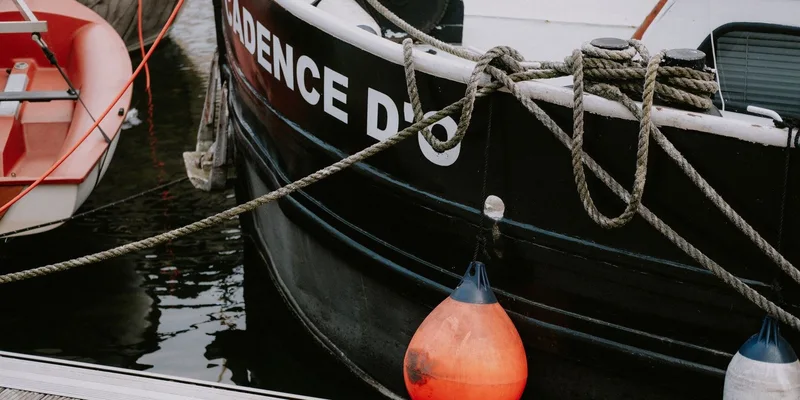
Every good docking starts a few hundred yards out. Hang the fenders at the height the dock will actually contact, run the dock lines outside the rails and clear of anything they can snag, and decide which side you are tying to. Doing this while idling in the fairway is how boats end up drifting into other boats.
Tell the crew the plan out loud, including the part where they do not jump onto the dock. Fending off with a hand or a foot between a moving hull and a piling is the single most common way people get hurt at a dock, and a boat hook exists so nobody has to.

Read the Wind and the Current
Before you commit, work out what is moving the boat when you take the engine out of gear. Look at flags, at how other boats lie in their slips, at weed or debris drifting past a piling. Wind and current do not care about your plan, and the one pushing hardest is the one to plan around.
Where you can, arrange the approach so the wind or current sets you gently onto the dock rather than off it. If it is pushing you off, you need a slightly steeper approach angle and a line on quickly. If it is pushing you on, come in shallower and let it do the last few feet of work for you.
The Approach
Aim for a shallow angle, roughly a twenty to thirty degree approach to the dock, at the slowest speed that still gives you steering. On a single outboard or sterndrive, steering only works when water is moving over the drive, so short bursts in gear followed by neutral keep control without adding speed.
Speed Is the Whole Game
The old dockmaster line applies: never approach the dock faster than you are willing to hit it. Almost every ugly docking is a speed problem wearing a different costume, and almost every recovery from a bad approach starts with backing off and going around for another try.
Go Around Without Embarrassment
Aborting an approach is a normal, competent thing to do. Nobody at the fuel dock remembers the boat that circled once. Everybody remembers the one that came in hot and bounced off a piling.
Which Line Goes On First
Get one line on and let the boat settle before anybody worries about the others. On most boats that first line is a spring, run from a midship or bow cleat back to a dock cleat, because a spring stops the boat moving fore and aft and lets you use gentle engine pressure to pull the hull alongside.
Once the spring is on and the boat has stopped moving along the dock, bow and stern lines are a calm job rather than a scramble. Our dock line guide covers what those lines should be, including the published guidance on diameter and length.

Docking Situations and What Changes
| Situation | Approach | First line | Watch for |
|---|---|---|---|
| Alongside a floating dock | Shallow angle, slow, into wind if possible | Spring line | Dock edge height at low load |
| Fixed dock with tide | Same, but plan line lengths for the range | Spring line | Fenders riding above or below contact |
| Slip, bow in | Straight and slow, use reverse to stop | Bow line, then springs | Prop walk pulling the stern sideways |
| Wind blowing off the dock | Steeper angle, more decisive | Bow or forward spring, fast | Being blown clear before a line is on |
Fenders in the Right Place
Fenders only protect at the height where contact actually happens, and that height changes with tide, load and dock type. Hanging them at the height that worked last weekend at a floating dock will do nothing at a fixed dock two hours after high water.
Placement matters as much as height. Put fenders where the hull is widest and where the dock hardware sits, not evenly spaced for symmetry. Our fender guide covers the published sizing rules, including Taylor Made’s recommendation of one fender per 10 feet of waterline per side with a minimum of three.

Ramp and Fuel Dock Etiquette
Do your preparation in the staging area, not on the ramp or against the fuel dock. Plugs in, lines and fenders ready, gear stowed, cooler aboard. The people behind you are not judging your docking, they are judging how long you spend blocking the only lane.
At a fuel dock, tie up, fuel, pay, and move the boat to a waiting area before anybody makes lunch. It costs nothing and it is the difference between being the boat everybody waves at and the boat everybody talks about.
Frequently Asked Questions
What speed should I approach a dock at? The slowest speed that still gives you steering, which on most single engine boats means short bursts in gear followed by neutral. The old rule stands: never approach the dock faster than you are willing to hit it.
Which dock line should go on first? Usually a spring line, because it stops the boat moving fore and aft and lets you hold the hull alongside with gentle engine pressure while the rest of the lines go on calmly.
How do I dock when the wind is blowing me off the dock? Use a slightly steeper approach angle and get a bow or forward spring line on quickly, because a shallow approach gives the wind time to push you clear before anyone can reach the dock.
Should crew jump off onto the dock? No. Stepping across a gap while the boat is still moving is how people get hurt between a hull and a piling. Pass the line instead, or use a boat hook to reach the cleat.
How many fenders do I need for docking? Taylor Made publishes one fender per 10 feet of waterline per side, with a minimum of three, and describes the chart as a minimum recommendation rather than a target.
What is prop walk and does it matter when docking? It is the sideways push a propeller gives the stern, most noticeable in reverse. It matters because it can either help swing your stern in toward the dock or fight you, so it is worth learning which way your boat walks.
The Bottom Line
Docking cleanly is preparation plus patience: fenders and lines ready before the fairway, a read on wind and current, a slow shallow approach, and one spring line on before anybody chases the rest. Aborting and going around again is a sign of competence, not the opposite. Get the gear right too, with correctly sized dock lines and fenders, and keep a boat hook where somebody can actually reach it.