Last updated: August 20, 2026
Hanging fenders is the part of docking nobody practices. You are coming in with a crosswind, somebody is holding two fenders and a rope, and the knot they tie to the nearest cleat either slips down until the fender floats uselessly or ends up so short that the fender rides above the dock. By the time it is adjusted, the boat has already touched.
Fender holders exist to make that adjustment happen once, in the driveway, instead of every time you dock. This guide covers the hanger types for boats with rails, the options for boats without any rail at all, and the fender line details that decide whether a holder works or slides.
This article contains affiliate links. If you buy through them, we may earn a commission at no extra cost to you. Learn more.
Quick Answer
Which fender holder fits your boat?
- Round rail? A twist on rail hanger clamps to the tube and locks the line at a set height.
- Square pontoon rail? Buy a hanger made for square rail, not a round rail clip.
- No rail at all? Use a cleat mounted adjuster or a hook that goes over the gunwale.
- Match the holder to your fender line diameter, commonly one quarter or three eighths of an inch.
Bottom line: identify your rail shape and your fender line diameter first, then buy the holder built for that combination.
Why Tying Fenders to a Cleat Goes Wrong
A cleat is designed to hold a dock line under steady horizontal load. A fender line hangs vertically off it, gets nudged sideways every time the boat rolls, and works loose. On top of that, the cleat you want the fender near is usually the same cleat you need free for a spring line.
Fender holders move the attachment point off the cleat and onto the rail or gunwale, where it belongs. They also let you preset the drop, so the fender hangs at dock height without anyone measuring it while the boat is moving.
Rail Hangers for Round Tube Rails
The most common design clips over a round rail, twists a quarter turn to lock, and grips the fender line in built in teeth so you can set the height. Extreme Max sells this pattern in its BoatTector line for one inch rails, and the same idea appears across the accessory aisle in various tube sizes.
Measure the Rail, Not the Boat
Rail diameter is what determines fit, and it varies between builders. Measure across the outside of the tube before ordering, and check whether the listing quotes an outside diameter or a nominal pipe size, because those are not the same number. A hanger that is slightly loose on a rail rotates under load and lets the fender walk along the boat.
Square Rails and Pontoon Fencing
Pontoon rails are usually square or rectangular extrusion rather than round tube, so a round rail clip either will not fit or will not lock. Extreme Max publishes a BoatTector pontoon rail fender hanger and adjuster sized for square pontoon rails, made from high impact plastic so it will not scratch or stain the fencing.
The other pontoon specific detail is that the fender needs to hang outside the fencing, not inside it. Adjusters designed for pontoon rail account for that offset, which is one reason a generic hook improvised for the job tends to let the fender swing under the deck instead of against the dock.
No Rail? Here Is What Works
Plenty of boats have nothing to clip to. Bowriders, center consoles, jon boats and bass boats often have a bare gunwale, a rub rail and a few cleats. Three approaches solve it, and they suit different boats, so match the solution to how your gunwale is shaped.
Cleat Mounted Adjusters
An adjuster that loops onto an existing cleat and grips the fender line lets you preset the height without tying a knot each time. It keeps the cleat usable and is the simplest retrofit on a boat with no rail.

Over the Gunwale Hooks
A molded hook that hangs over the gunwale or rub rail supports the fender without any hardware. It is the fastest to deploy and the easiest to knock off, so it suits day use at a fuel dock more than an overnight slip.

Rail Clips for Boats That Do Have a Rail
If your boat has a bow rail or a grab rail anywhere near where fenders need to hang, a twist lock rail hanger in the right tube size remains the tidiest answer. Two per side is the usual count on a boat that regularly ties up.

The Fender Line Itself
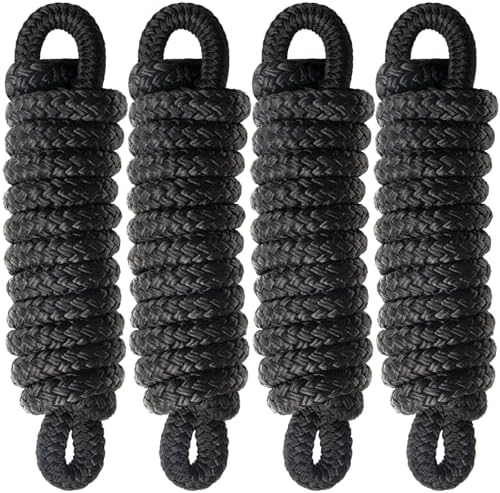
Holders grip a specific line diameter, and a fender line that is too thin slips through the teeth while one that is too thick will not seat. Twisted nylon with a spliced loop end is the standard, commonly sold in one quarter and three eighths inch diameters by Extreme Max and others.
Which Holder for Which Boat
Use this as a shortlist by rail type. The fender line diameter should be confirmed against whichever holder you choose, because that is the specification that most often causes a returned part.
| Boat setup | Holder type | Fits | Watch out for |
|---|---|---|---|
| Round bow or grab rail | Twist lock rail hanger | Round tube, sized by diameter | Measuring nominal instead of actual |
| Pontoon fencing | Square rail hanger and adjuster | Square extrusion rail | Fender hanging inside the fence |
| Bare gunwale, cleats only | Cleat mounted adjuster | Standard deck cleats | Occupying a cleat you need |
| Rub rail, day use | Over gunwale hook | Most rub rail profiles | Knocking loose in a chop |
Setting the Drop So You Never Adjust It Again
The fender should sit with its widest point at the height of whatever it will touch, usually the dock edge or a piling face. Tie up once at your home slip in normal water level, set each fender where it lands correctly, and mark the line with a whipping or a piece of tape at the holder.
On tidal water that setting changes through the day, which is the argument for an adjuster you can slide with one hand rather than a knot you have to retie. On a lake with stable levels you can genuinely set it once at the start of the season and leave it.
How Many and Where
Fenders do nothing if they are hung where the boat does not touch. Look at where the hull actually contacts the dock, usually the widest part of the beam and one point aft, and put your fenders there rather than spacing them evenly for looks.
Frequently Asked Questions
How do I hang fenders on a boat with no rail? Use a cleat mounted fender adjuster or an over the gunwale hook. Both let you preset the drop without tying to a cleat you need free for dock lines.
What size fender line do fender holders take? Most grip one quarter or three eighths inch line, and the listing states which. Buy the line and the holder to match rather than using whatever rope is already on the boat.
Will a round rail clip work on a pontoon? Usually not. Pontoon fencing is square or rectangular extrusion, and hangers made for square rail exist specifically because round clips do not lock onto it.
Do fender holders scratch the rail? Good ones are molded from high impact plastic for exactly that reason. Metal clips on an anodized or painted rail are the ones that leave marks over a season.
How many fender holders do I need? One per fender, and most owners hang at least two per side on the dock side. Place them where the hull actually contacts the dock rather than evenly along the boat.
Should I leave fenders hanging while underway? No. Fenders left over the side while running are the classic sign of a boat in a hurry, and they can be torn off or slap the hull at speed. Pull them aboard once you are clear of the dock.
The Bottom Line
A fender holder is a small part that removes an entire step from docking. Measure your rail shape and diameter, or accept that you have no rail and go with a cleat adjuster, then match the holder to your fender line size. Once the hanging is sorted, fender covers keep those same fenders from marking the hull, and pontoon owners will find more rail mounted upgrades in our pontoon accessories guide.