Last updated: August 20, 2026
Loading a pontoon alone is a different problem from loading a V-hull alone. A V-hull has a keel that finds the center of the trailer by itself once the bow touches the bunks. A pontoon has two or three flat-bottomed tubes that will happily settle wherever the current and the crosswind put them, including half a tube up on one bunk and the other tube floating free.
Guides are the fix, and pontoon trailers use a different kind from the tall bunk guide-ons you see on bass boat trailers. This guide covers what actually works on a toon trailer, how the tube spacing determines what you can fit, and the loading technique that makes solo loading routine instead of a spectacle.
This article contains affiliate links. If you buy through them, we may earn a commission at no extra cost to you. Learn more.
Quick Answer
What guides fit a pontoon trailer?
- Guide poles mounted outboard of the tubes give you a visual target and stop the boat sliding sideways.
- Bunk guides that run alongside each tube center the toon as it comes up the trailer.
- Measure your tube center to center spacing and the trailer frame width before ordering anything.
- Guides help you aim; the winch and the trailer setup still decide whether the boat sits right.
Bottom line: measure the tube spacing first, then choose between tall poles for aiming and bunk guides for centering.
Why Pontoons Load Differently
A pontoon trailer supports the boat under the tubes rather than under a keel, usually on bunks or on a set of pads. There is no natural centering action, so the boat does not self-align as it drives on. Whatever angle you approach at is roughly the angle it will sit at, and correcting it once the tubes are on the bunks is difficult.
Wind makes it worse. The tall deck and bimini catch a breeze that pushes the whole boat sideways in the last few feet, which is exactly where you need precision. Guides give you both a target to steer at and a physical barrier that keeps the tube from wandering off the bunk.
Guide Poles Versus Bunk Guides
Guide poles are vertical posts mounted at the rear of the trailer, outboard of the tubes, tall enough to stay visible above the water line. Their main value is as a sight picture: you can see where the trailer is from the helm and aim between them. They also stop a tube from sliding off sideways in a crosswind.
Bunk guides are horizontal or angled bunks mounted alongside the tubes that funnel the boat into position as it comes forward. They do more actual centering work but need to be set precisely for your tube spacing, and they are less useful as a visual reference because they sit low.
Many Owners Use Both
The combination that works best on a windy ramp is tall poles for aiming and guide bunks for the final alignment. If you are buying one at a time, start with the poles, because the aiming problem is the one that causes the missed approaches.
Measure Before You Buy
Three numbers decide what fits: the center to center distance between your tubes, the width of the trailer frame where the guides will mount, and the diameter of the tubes themselves. Take all three with a tape before looking at any listing, because pontoon trailer geometry varies far more than V-hull trailer geometry does.
Also check what the mounting surface actually is. Some pontoon trailers have a square cross member that takes a standard clamp bracket, others use a channel or an angled rail where a universal bracket will not sit flat. Photographing the mounting area before you order saves a return.
Tri-Toons Need a Second Look
A third center tube changes the geometry and often the bunk layout underneath. Guides that are set for the outer tubes still work, but the trailer may already have a center bunk arrangement that limits where brackets can go. Check clearance for the center tube before assuming an outer-tube guide kit fits.
What to Buy
Aiming From the Helm on a Busy Ramp
Tall guide poles with reflective covers are the upgrade that most changes the solo loading experience. They stay visible in chop and in low light, they show you exactly where the trailer sits under the water, and they keep the tube from sliding off in a crosswind.

Centering the Tubes on the Bunks
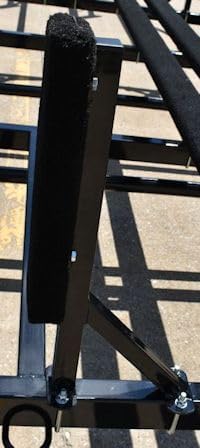
Bunk style guides mounted alongside each tube do the final alignment work as the boat comes forward. Look for adjustable brackets, since getting the spacing right for your specific tube centers is the whole point.

Protecting the Tubes
Carpeted or padded guide surfaces matter more on a pontoon than on a fiberglass boat, because aluminum tubes scuff and dent more easily than gelcoat. Check that anything the tube can touch is carpeted, padded or covered rather than bare steel or hard plastic.
Comparing the Options
Match the row to the problem you actually have at the ramp. Most owners who describe loading as stressful have an aiming problem rather than a centering problem.
| Type | Main benefit | Limitation | Best for |
|---|---|---|---|
| Tall guide poles | Visible target from the helm | Limited centering action | Windy ramps, solo loading |
| Bunk guides | Funnels the tubes into position | Low profile, hard to see | Getting the boat straight |
| Poles plus bunk guides | Aiming and centering together | More to mount and adjust | Frequent solo launching |
| Padded guide surfaces | Protects aluminum tubes | Pads wear and need replacing | Any pontoon trailer |
The Loading Technique That Uses Them
Back the trailer in only as far as the setup wants, which on most pontoon trailers is less deep than owners assume. A trailer backed in too far lets the boat float over the bunks and settle crooked, and the guides cannot correct a boat that never touched the bunks at all.
Approach slowly, straight on, using the poles as your sight line, and let the boat come up onto the bunks under its own gentle way rather than powering on. Then use the winch to bring it the last stretch to the bow stop. Power loading is discouraged or prohibited at many ramps because it scours the ramp, so check the posted rules where you launch.
Prepare Off the Ramp
Everything except the actual launch belongs in the staging area: straps off, plug in, lines and fenders ready, gear stowed. The queue behind you is the reason ramp etiquette exists, and a pontoon takes longer than a bass boat no matter how good your guides are. Our solo loading guide covers the sequence in detail.
Frequently Asked Questions
Do pontoon trailers need guides? They are not required, but a pontoon has no keel to self-center and a large profile for the wind to push, which makes solo loading much harder without them. Guides give you both a visual target and a physical stop.
Are bass boat guide-ons the same as pontoon guides? Not quite. Standard guide poles can work if the mounting brackets fit your trailer frame and the spacing suits your tube centers, but guide kits sold for pontoons account for the wider spacing and the flat-bottomed tubes.
How far apart should pontoon trailer guides be? Set them to your boat’s tube center to center measurement plus enough clearance that the tubes do not rub in normal loading. Measure your own boat rather than working from a general figure, since spacing varies by builder and model.
Will guides scratch my pontoon tubes? Bare metal or hard plastic can. Choose guides with carpeted or padded contact surfaces and check the pads for wear each season, since aluminum marks more easily than gelcoat.
How deep should I back a pontoon trailer in? Less deep than most owners expect. If the boat floats freely over the bunks it can settle crooked, and the guides never get a chance to work. Follow the trailer manufacturer’s guidance and adjust to what loads straight at your usual ramp.
Can I install trailer guides myself? Most bolt or clamp onto the trailer frame with basic hand tools, provided the bracket suits your frame shape. Check the mounting surface before ordering, and have someone confirm the alignment before you tighten everything down.
The Bottom Line
Measure the tube spacing and the trailer frame first, then pick tall poles for aiming, bunk guides for centering, or both if you launch alone regularly. Keep every surface the tubes can touch padded, back in shallower than feels right, and let the winch do the last stretch. Read also our trailer guides guide for the general comparison, our pontoon weight guide for matching trailer to boat, and our solo loading guide for the ramp sequence.