Last updated: August 20, 2026
Anchor sizing is where boat forums produce the most confident wrong answers. Somebody says a pound of anchor per foot of boat, somebody else says double it for wind, and a third person points out that an aluminum anchor half the weight of a steel one outholds it. All three are talking past each other, because anchor weight on its own does not tell you what an anchor holds.
The honest answer is that the manufacturers publish sizing tables, those tables are free, and they are the only numbers worth trusting for your specific hull. This guide explains how to read them, which variables actually shift you a size, and where the published recommendations stop and your judgment starts.
This article contains affiliate links. If you buy through them, we may earn a commission at no extra cost to you. Learn more.
Quick Answer
What size anchor do you need for your boat length?
- Use the maker’s own table. Fortress and Lewmar both publish anchor selection charts keyed to boat length overall.
- Length is the starting point, not the answer. Displacement and windage move you up a size.
- Anchor type matters more than weight. A fluke anchor and a plow of the same weight hold very differently.
- Size for the worst conditions you plan to sit in, not for a calm afternoon on a sandbar.
Bottom line: find your boat length in the manufacturer’s published chart for that specific anchor model, then size up if your boat is heavy, high sided or often anchored in wind.
Why Boat Length Alone Does Not Size an Anchor
Length is a proxy for the loads an anchor sees, and it is a rough one. Two boats of the same length can differ enormously in weight and in how much surface the wind pushes on. A low aluminum fishing boat and a pontoon with a full bimini are not the same anchoring problem, even at identical lengths.
That is why the published charts ask for more than a number. Lewmar notes in its anchor selection material that you consider both hull length overall and displacement, light, medium or heavy, and that boats of medium and heavy displacement at the upper limit of a model’s range should choose the next size up. Fortress states its recommendations assume average windage and proportions, roughly 30 knots of wind, average bottom conditions and moderate protection from open seas, and advises going one or two sizes larger for storm conditions.
How to Read a Manufacturer Sizing Chart
Every reputable anchor maker publishes a table with model numbers down one side and boat length ranges across the other. Find your length, read across, and you have the recommended model for that line. The tables are model specific, so a chart for one anchor family tells you nothing about another family.
Where to Find the Real Tables
Fortress publishes its selection guide at fortressanchors.com, covering the FX series with boat length recommendations that run from the smallest model, listed for boats in the sixteen to twenty seven foot range, up through models intended for vessels far larger than anything on a trailer. Lewmar publishes selection and dimension sheets for its Delta, CQR and Claw anchors at lewmar.com, with boat length overall given in both feet and meters alongside anchor weight. Both are free downloads, and both are the number to quote back to yourself when a forum post disagrees.
The Variables That Push You Up a Size
Four things justify going heavier than the table’s baseline: displacement, windage, exposure and bottom type. A heavy boat loads the rode harder. A tall freeboard or a full canvas enclosure turns wind into pull. An exposed anchorage adds wave surge. And a bottom that resists setting rewards a bigger fluke area.
None of these justify going lighter. If your table says a given model and you are between sizes, the larger one costs a little more locker space and buys margin on the one afternoon the wind pipes up while you are eating lunch. Undersizing shows up as dragging, which is the expensive kind of surprise.
The Pontoon Exception
Pontoons deserve a separate note because their sizing intuition is usually wrong. A pontoon is light for its length but presents a large flat side, a bimini and often a full enclosure to the wind. Owners regularly report dragging with an anchor that a length based chart said was adequate, which is why fast setting designs and a step up in size are common recommendations for toons.
Anchor Type Changes the Answer
Weight is not holding power. A fluke style anchor develops its hold from blade area buried in sand or mud, so a light aluminum fluke can outperform a much heavier anchor in the right bottom and underperform badly in rock or weed. A plow or scoop style trades some sand performance for better behavior across mixed bottoms.
That is why the sizing question is really two questions asked in order. Pick the anchor type that suits your usual bottom first, then look up your length in that model’s own table. Our fluke anchor guide covers the type most trailer boat owners end up with.
Matching an Anchor to Your Setup
Below are the three situations that cover most owners of trailerable boats and pontoons. Each one points at a different part of the anchor aisle. Confirm the model’s published length rating on the listing before ordering, because manufacturers rate their own products and those ratings are the ones that count.
Small Aluminum Boats and Bowriders on Sand or Mud
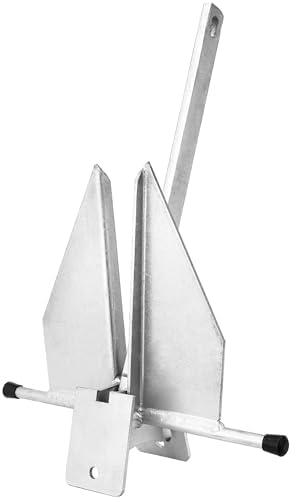
A fluke style anchor sized from the maker’s chart is the default here, and it is the reason the pattern is so common on trailer boats. It stows flat, sets quickly in soft bottoms, and the smaller sizes are easy to handle from a low bow.
Owners Who Want the Whole Rode in One Box
An anchor kit that arrives with rope, a short length of chain and shackles already sized to the anchor removes the guesswork about diameters and connections. It is also usually the cheaper route than buying the pieces separately.

Pontoons and Boats That Anchor in Wind
Where a length chart says one thing and experience says the boat still swings, a design that sets fast in both directions and resists breaking out is the better answer than simply adding weight. That is the case pontoon owners make for box style anchors.

Sizing Checklist in One Table
Use this as the order of operations rather than as a sizing chart in itself. The actual numbers belong to the manufacturer of the anchor you are buying, and every step below is about getting to their table with the right information in hand.
| Step | What you need | Where it comes from | Common mistake |
|---|---|---|---|
| 1. Boat length | Length overall, not waterline | Your registration or hull data | Using waterline length |
| 2. Displacement class | Light, medium or heavy | Builder spec sheet | Ignoring gear and fuel weight |
| 3. Anchor type | Fluke, plow, claw or box | Your usual bottom type | Buying on price alone |
| 4. Model chart | That model’s length table | Fortress or Lewmar selection guide | Applying one brand’s chart to another |
Do Not Forget the Rode
An anchor that is correctly sized and badly rigged still drags. Holding power depends on the anchor lying flat on the bottom, and that depends on scope and on the chain between the anchor and the rope. Undersize either one and you have paid for holding power you will not see.
Rope diameter, chain length and total rode length have their own sizing logic, and it is worth reading before you order. Our guides to anchor rope and rode and to chain cover what the anchor makers assume you have attached to their product.
Frequently Asked Questions
Is there a simple pound per foot rule for anchor size? No reliable one. Anchor makers size by model against boat length and displacement, not by a universal ratio, because holding power comes from blade area and design rather than weight. Use the chart published for the anchor you are buying.
Where can I find an official anchor size chart? Fortress publishes a selection guide at fortressanchors.com and Lewmar publishes selection and dimension sheets for its Delta, CQR and Claw anchors at lewmar.com. Both list boat length overall against model.
Should I size up for a pontoon boat? Generally yes. Pontoons are light for their length but catch a lot of wind through the deck, rails and bimini, so many owners find a length based recommendation marginal and step up or switch to a fast setting design.
Does a heavier anchor always hold better? Not within a type comparison. An aluminum fluke anchor can hold more in sand than a heavier steel anchor of a different design. Weight helps an anchor set, but the burying area and the shank geometry do the holding.
Do I need two anchors? Many owners carry a main anchor sized from the chart plus a lighter second one for a lunch stop or a sandbar. Two anchors also let you set bow and stern so the boat cannot swing in a crowded anchorage.
What if my boat length falls between two sizes on the chart? Take the larger one, especially if your boat is heavy, tall sided or often anchored in open water. Fortress specifically advises going one or two sizes up for storm conditions.
The Bottom Line
Sizing an anchor is not guesswork, it is a lookup. Decide the anchor type that suits your bottom, gather your length overall and displacement class, and read the model’s published chart from Fortress or Lewmar rather than a forum consensus. If you are still deciding which design to buy in the first place, start with our boat anchor buying guide and then come back to the sizing table.