Last updated: August 20, 2026
Almost every anchor complaint comes down to the same afternoon. You drop the hook off a sandbar, the boat swings, and twenty minutes later you are fifty yards downwind of where you started, hauling everything back in while somebody holds a beverage and watches. The anchor did not fail. It was the wrong shape for that bottom, or it never had enough line out to lie flat and bite in the first place.
This guide covers how to pick a boat anchor for a trailerable boat or pontoon, starting with the part most buying guides skip: the bottom you actually anchor on. After that comes sizing from a published manufacturer table rather than a guess, and the rode setup that decides whether the anchor gets a chance to work at all.
This article contains affiliate links. If you buy through them, we may earn a commission at no extra cost to you. Learn more.
Quick Answer
What is the best boat anchor?
- Sand and firm mud, which covers most lakes and coastal flats: a fluke anchor, the style most people call a Danforth.
- Mixed, weedy or rocky bottoms where a fluke skates: a claw or plow style that can reset when the boat swings.
- Sandbars, rafting up and pontoons that swing broadside: a folding box anchor, which sets fast and needs less line out.
- Rock, rubble and small utility boats: a folding grapnel, which snags structure instead of burying itself.
Bottom line: match the anchor to the bottom first, then size it from the manufacturer’s own chart for your boat length.
Bottom Type Decides the Anchor, Not the Boat
Anchors hold in one of two ways. Burying anchors dig into soft ground and hold through the resistance of the material packed around them, which is why they work in sand and mud and disappoint in rock. Hooking anchors grab structure instead, so they hold on rock and rubble and slide uselessly across a clean sand bottom. Knowing which one you need starts with knowing where you anchor.
West Marine’s anchor selection advisor and Fisheries Supply both organize their anchor guidance by bottom type for exactly this reason. If you fish one lake with a soft mud bottom, one anchor covers your whole season. If you run a coastal inlet one weekend and a rocky reservoir the next, plan on two, because no single hook is good everywhere.
Anchor Types Trailer Boat Owners Actually Use
Four styles cover almost every trailerable boat, pontoon and jon boat on the water. The differences are in how they set, how they behave when the boat swings through the wind, and how much locker space they eat. Weight matters, but shape matters more, and a heavier anchor of the wrong type still drags.
Sand and Firm Mud: Fluke Anchor
A fluke anchor has two flat triangular plates that pivot and dig in as the rode comes tight. It stores flat, it is the lightest anchor for a given amount of holding power in sand, and it is the default hook on most bowriders and center consoles. It is also the style most likely to pull out and need a reset if the boat swings a full turn on a current change.

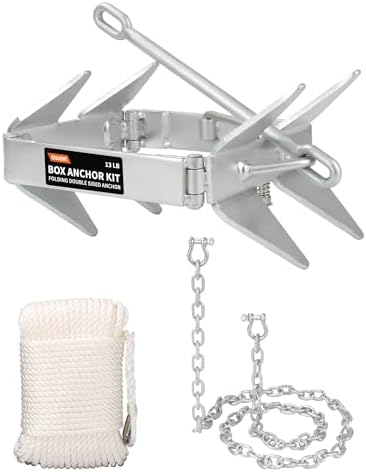
Sandbars and Rafting Up: Box Anchor
A box anchor folds flat for storage and opens into a rigid frame that drops straight down and sets on its own weight rather than needing a long horizontal pull. Pontoon owners like it because a pontoon lies broadside to the wind and swings, and a box anchor is far less bothered by that than a fluke.
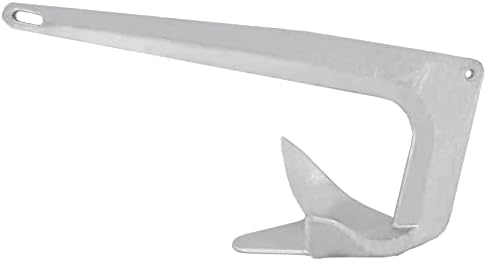
Mixed, Weedy and Rocky Bottoms: Claw
A claw anchor, the three-tined shape most people know as a Bruce style, is the generalist. It gives up some raw holding power in clean sand compared with a fluke of the same weight, and it earns that back by resetting quickly when the load direction changes and by finding purchase in mixed ground.
Small Boats, Structure and Backup Duty: Grapnel
A folding grapnel is a set of hooks on a shank, built to catch rock, rubble or timber. On a clean sand or mud bottom it has very little to offer, so treat it as a jon boat or dinghy anchor and as a second hook for structure, not as the only anchor aboard a family boat.

Buying the Whole Package at Once
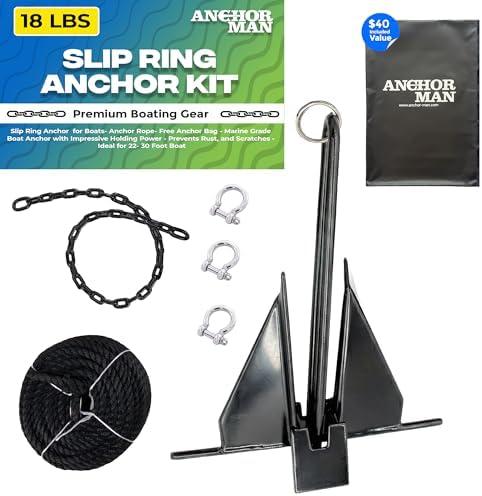
Anchor kits bundle the hook with rope, a short length of chain and the shackles, which saves working out the connections yourself. The tradeoff is that kit rope is usually sized for the smallest boat in the range, so check the length and diameter against the water you anchor in before assuming it is enough.
Sizing: Use the Manufacturer Table, Not a Guess
Every serious anchor maker publishes a sizing chart that ties model to boat length, and those charts are the only numbers worth trusting. Fortress publishes a selection guide that lists its FX-7 for boats roughly 16 to 27 feet and steps up from there by length. Lewmar publishes a comparable table for its Delta and Claw anchors by length overall.
Read the fine print on whichever chart you use. Fortress notes that its recommendations assume average windage, moderate protection from open water and about 30 knots of wind, and advises stepping up a size or two for storm conditions. Lewmar’s guidance adds displacement to the picture, telling heavier boats at the top of a size band to take the next model up. A heavy pontoon with a lot of side area is exactly that case.
Anchor Styles Compared
| Style | Best bottom | Resets when the boat swings | Stows |
|---|---|---|---|
| Fluke (Danforth style) | Sand, firm mud | Fair, can pull free first | Flat, easy in a locker |
| Box anchor | Sand, mud, sandbars | Good, sets straight down | Folds flat, bulky open |
| Claw (Bruce style) | Mixed, weed, some rock | Good | Awkward shape, bow roller friendly |
| Grapnel | Rock, rubble, structure | Poor on soft ground | Folds small, jon boat sized |
Rode Matters as Much as the Anchor
An anchor only works when the pull on it is close to horizontal, and that is the job of the rode, meaning the rope and chain between the boat and the hook. Too little line out and you are lifting the shank instead of dragging it into the bottom, which is why so many anchors that get blamed for dragging were simply never given a chance to set.
Fortress publishes concrete guidance here: three-strand nylon, six to twelve feet of chain, a minimum scope of five to one, and at least six feet of chain for every 25 feet of water depth. Scope is the ratio between the length of rode you have out and the depth of the water plus your bow height. Our anchor rope and rode guide works through length, diameter and chain in more detail.
Common Mistakes When Buying a Boat Anchor
The first is buying by weight alone. A heavier anchor of the wrong style holds worse than a lighter one that suits the bottom, and it is harder to retrieve by hand off a small bow. Start with the shape, then use the maker’s chart to land on a size.
The second is buying an anchor and reusing an old, short rode. If the rope came with a previous boat and nobody knows how long it is, measure it before you rely on it. The third is skipping the chain entirely to save locker weight, which removes the part that keeps the pull horizontal and lets the shank lift the moment the boat rises on a wake.
Frequently Asked Questions
What size anchor do I need for my boat? Take the size from the anchor maker’s published chart for your boat length, not from a general rule. Fortress and Lewmar both publish selection tables by length overall, and both advise stepping up for heavier boats or rougher conditions.
What is the best anchor for a pontoon boat? Most pontoon owners end up with a box anchor, because a pontoon presents a lot of side area to the wind and swings on its rode. A box anchor sets on its own weight and does not need the long horizontal pull a fluke anchor wants.
Do I really need chain on a small boat anchor? A short length of chain between the anchor and the rope helps keep the pull horizontal and protects the line where it drags on the bottom. Fortress recommends six to twelve feet of chain in its published rode guidance.
How much anchor line should I let out? Enough to reach a scope that the anchor maker recommends, which Fortress puts at a minimum of five to one. Measure from the bow roller to the bottom, not from the water surface, since bow height is part of the calculation.
Should I carry two anchors? If you anchor on more than one kind of bottom, yes. A fluke for sand and a claw or grapnel for rock and structure covers most trailer boat owners, and the second anchor is also your backup if the first one gets stuck and has to be cut loose.
Galvanized or stainless? Galvanized is the working standard and costs far less to replace when an anchor gets fouled and abandoned. Stainless looks better on a bow roller and resists staining, which matters more on a boat that stays in a slip than on a trailer boat.
The Bottom Line
Pick the anchor for the bottom you actually anchor on, then size it from the manufacturer’s own chart rather than a rule of thumb, and give it a rode long enough to work. A fluke covers sand and firm mud, a box anchor suits pontoons and sandbar days, a claw handles mixed ground, and a grapnel is for rock and small boats. If you are still deciding between shapes, our anchor types explainer walks through how each one holds, and the fluke anchor guide covers the style most trailer boats end up with.