
Last updated: August 20, 2026
The waterline stain is the one that makes a well kept boat look neglected. Everything above it can be waxed and gleaming, and there is still a yellow brown band running the length of the hull where the boat sat in the water. Scrubbing does nothing. People scrub anyway, for hours, and end up dulling the gelcoat around a stain that has not moved.
That band is not dirt, which is why soap and effort fail. This guide covers what the stain actually is, how acid based hull cleaners remove it without abrasion, how to apply one without wrecking the trim or yourself, and how to slow it down for next season.
This article contains affiliate links. If you buy through them, we may earn a commission at no extra cost to you. Learn more.
Quick Answer
How do you remove a waterline stain from a boat hull?
- Use an acid based hull cleaner, not soap and not a scouring pad.
- Wash and rinse the area first so the cleaner works on the stain instead of on dirt.
- Work in shade on a cool hull, in small sections, and keep the surface wet.
- Gloves and eye protection every time, and keep it off aluminum trim and glass.
Bottom line: dissolve the stain chemically, rinse thoroughly, then wax the band so the next one takes longer to form.
What the Waterline Stain Actually Is
The band is a mix of mineral deposits, tannins from decaying vegetation, algae residue and whatever else is suspended in the water your boat sits in. Over weeks it bonds into the microscopic pores of gelcoat, which is why it looks like a coating but behaves like a dye. Abrasion removes gelcoat, not stain.
Tea colored water from marshes and rivers stains fastest, which is why two identical boats in different slips can look years apart. That also means the fix is chemical. Acid based hull cleaners break the bond so the deposits release and rinse away, without you removing any material at all.
How Hull Cleaners Work and Which Format to Buy
Most hull cleaners use an acid, commonly oxalic or a similar formulation, in either a liquid, a gel or a spray. The chemistry is the same across formats. What differs is dwell time, meaning how long the product stays put on a vertical surface before it runs off, which is the practical difference at the boat.
Liquid, Gel and Spray
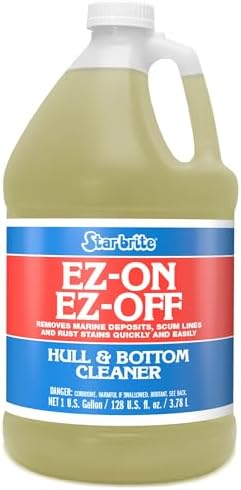
Liquids are the classic wipe on and rinse off products, economical for a full hull. Gels and thickened sprays cling to vertical surfaces and are the easier choice on a topsides band or a spot repair. Star brite sells both an instant hull cleaner gel spray and a hull and bottom cleaner, and MaryKate’s On and Off is a long established hull and bottom product.

What the Label Tells You
Read the surface list before anything else. Products differ on whether they are safe for painted surfaces, anodized aluminum, inflatable tubes and bottom paint, and the manufacturer’s own instructions carry the dwell time and dilution. Follow those rather than a routine you read somewhere, since concentrations differ between products.
Applying It Without Damage
Wash the hull first with a regular boat wash and rinse it well. A hull cleaner spent on road dust and bug residue is wasted, and the stain underneath comes out patchy. Then wet the surrounding area so any runoff is immediately diluted rather than sitting on trim or a decal.
Work in shade on a cool hull, in sections roughly a body width wide, and do not let the product dry on the surface. Apply, let it work for the time on the label, then rinse thoroughly with plenty of fresh water. Repeat a section rather than leaving a strong product on longer than the label allows.
Protect Yourself and the Trim
Chemical gloves, eye protection and long sleeves, every time, including for the quick touch up you were not planning to bother with. Never mix a hull cleaner with any other product, particularly anything containing bleach. Keep it off polished and anodized aluminum, glass, and bare metal fittings unless the label specifically clears them.
Where You Are Allowed to Do This
In water hull cleaning and the runoff from a driveway wash are both commonly regulated, and marinas often have their own rules on top. Rinse water carrying dissolved stain, and especially anything carrying bottom paint residue, is the part that agencies care about. Check before you start rather than after.
The practical answer for a trailerable boat is to do the job at home over a surface where runoff is controlled, or at a marina wash pad built for it. It is also easier work, since the hull is at chest height on the trailer instead of underwater.
Choosing by Situation
The right product depends on how heavy the stain is and what the hull is made of. The table below sorts the choice by situation, and every row assumes you have read the label’s surface list for the specific product before it touches the boat.
| Situation | Format to reach for | Technique | Watch out for |
|---|---|---|---|
| Light seasonal band | Spray or gel | Section by section, short dwell | Letting it dry on the surface |
| Heavy tannin staining | Liquid hull and bottom cleaner | Repeat passes, keep it wet | Extending dwell past the label |
| Aluminum hull | Aluminum specific product | Wet before and rinse constantly | Gelcoat products can etch metal |
| Painted or wrapped hull | Only if the label clears it | Test an unseen area first | Lifting decals and edges |
Keeping the Stain Off Longer
Once the hull is clean, wax or seal the waterline band specifically. Bare gelcoat is porous and grabs the stain again immediately, while a waxed band holds it off measurably longer and releases what does stick with far less work. It is the same reasoning as sealing grout.
For a boat in a slip, a rinse and a wipe of the band on the way out is worth more than a heroic cleanup in October. Trailered boats have it easier, since a rinse after each trip prevents the stain from ever settling. Our boat wax guide covers what to put on afterward, and heavier growth is a different problem covered in our barnacle removal guide.

Frequently Asked Questions
Will vinegar remove a boat waterline stain? It is a weak acid and it may lighten a fresh, light stain. On a season of tannin staining it is not strong enough, which is why dedicated hull cleaners use a stronger acid formulation.
Do I need to scrub with a hull cleaner? No, and scrubbing hard is how gelcoat gets dulled. The product does the work chemically. A soft applicator to spread it and a thorough rinse is all the mechanical effort needed.
Is hull cleaner safe on bottom paint? That depends entirely on the product and the paint. Check the label’s surface list, and test a small hidden area before treating a full bottom, since ablative paints react differently than hard paints.
Can I use it on an aluminum boat? Use an aluminum specific cleaner instead. Products formulated for gelcoat can etch or discolor bare and anodized aluminum, which is covered in our aluminum boat cleaner guide.
How often should I clean the waterline? For a boat in a slip, once or twice a season plus a rinse when you head out. For a trailered boat, a rinse after each trip usually keeps the band from ever developing.
What protective equipment do I need? Chemical gloves, eye protection and covered arms. Rinse any skin contact immediately with fresh water, and never mix hull cleaner with other cleaning products.
The Bottom Line
A waterline stain comes off chemically or not at all, so reach for an acid based hull cleaner in the format that suits your hull, wash first, work cool and in shade, and rinse thoroughly. Wear gloves and eye protection, respect the label’s surface list, check where you are allowed to do the job, and wax the band afterward so the next one takes longer. For the rest of the cleaning shelf, start with our boat cleaner overview.