Last updated: August 20, 2026
Most boat owners buy one bottle labeled boat cleaner and then wonder why it takes the bugs off the bow but does nothing to the brown line at the waterline, and why the seats look worse a month after they used it. There is no single product for a boat, because a boat is four different materials pretending to be one object.
This guide sorts the shelf into what each product is actually for: a general wash for the whole boat, an acid based cleaner for waterline stains, a dedicated vinyl cleaner for the seats, and a cleaner sized to aluminum. Get the categories right and the work drops by half.
This article contains affiliate links. If you buy through them, we may earn a commission at no extra cost to you. Learn more.
Quick Answer
Which boat cleaner do you actually need?
- A wax safe boat wash for the routine rinse after every trip.
- A hull cleaner for the waterline stain, which a regular wash will never touch.
- A vinyl specific cleaner for seats, because household cleaners dry the material out.
- An aluminum cleaner for toons and jon boats, which needs a different chemistry entirely.
Bottom line: buy by surface rather than by the word boat on the label, and check local rules before washing anything in the water.
Start With the Routine Wash
The workhorse product is a wax safe boat wash used after every trip. Its job is to lift salt, bug splatter, dirt and fish blood before any of it sits and etches. It is mild by design, which is exactly why it will not remove a waterline stain, and why using it constantly is what keeps the harder jobs rare.
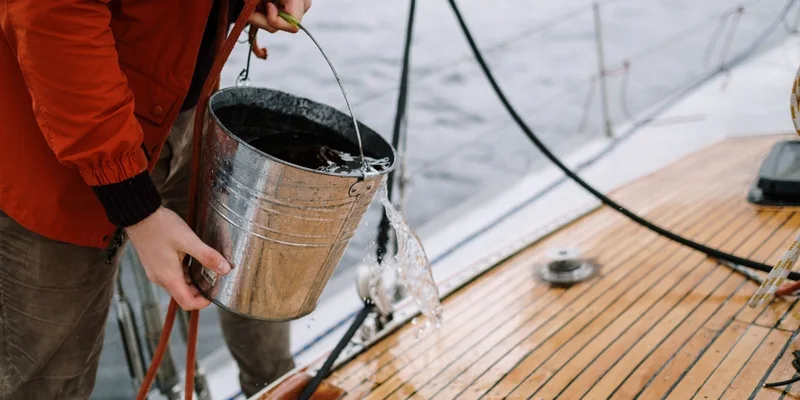
Look for a wash that states it will not strip wax, since a strong detergent takes off the protection you paid for last spring. Mix it in a bucket, work top down so runoff never crosses a clean panel, and rinse before it dries. Star brite and 3M Marine both sell general boat washes in this category.

Do It in the Driveway
Washing at home rather than in the slip lets you use fresh water, and it keeps soap out of the lake. Many marinas and municipalities restrict in water cleaning and what may go down a storm drain, so check your local rules rather than assuming.
The Waterline Stain Is a Different Product
That yellow brown band along the boot stripe is mineral and organic staining that a soap will not lift no matter how long you scrub. It needs an acid based hull cleaner, usually oxalic or a similar formula, which dissolves the stain rather than abrading it. These are wipe on or spray on products that work chemically while you wait.
Because they are acids, treat them like it. Gloves and eye protection, no bare skin, never mix them with anything else, and keep them off polished aluminum trim and anodized parts unless the label says otherwise. Star brite and MaryKate both sell hull and bottom cleaners in this category, and our hull cleaner guide goes deeper on technique.

Vinyl Seats Need Their Own Bottle
Marine vinyl is a coated fabric with plasticizers in it, and the reason seats crack is that those plasticizers leave. Harsh household cleaners, bleach based sprays and degreasers accelerate exactly that, which is why a seat can look brilliant after a deep clean and crazed a season later.
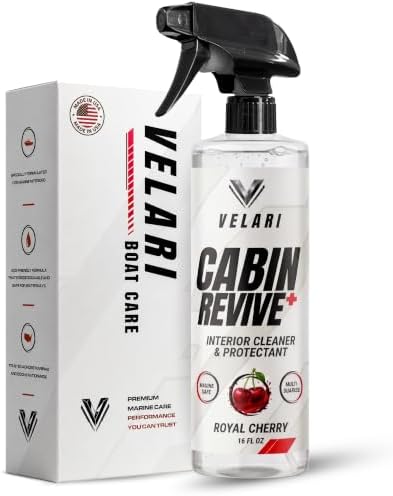
Use a cleaner formulated for marine vinyl, then follow it with a protectant that includes ultraviolet inhibitors. That two step is the whole maintenance program for seats. 303, Star brite and Meguiar’s all sell marine vinyl products, and the detail on mildew spotting and technique is in our vinyl seat cleaner guide.
Aluminum Is Not Fiberglass
Pontoon logs, jon boats and aluminum trailer parts oxidize rather than stain, and the gray chalky film needs a cleaner built for aluminum. These are typically acidic brighteners that lift oxidation and restore the metal, and they are aggressive enough to damage gelcoat, glass and painted surfaces if they run where they should not.
Mask or wet down anything below the work area, wear gloves and eye protection, and work in shade so the product does not flash dry on hot metal. Star brite sells an aluminum cleaner and restorer aimed at pontoons and jon boats. The full method, including why you rinse constantly, is in our aluminum boat cleaner guide.

What Goes in the Cleaning Bucket
The kit is smaller than the shelf suggests. Two buckets, a soft brush on a telescoping handle, a couple of microfiber towels, a dedicated deck brush, gloves and eye protection. Skip the household sponge with the green scouring side, which is a reliable way to dull gelcoat.
| Product | Use it on | Frequency | Handling |
|---|---|---|---|
| Boat wash | Whole boat, gelcoat and canvas | Every trip | Mild, wax safe formulas preferred |
| Hull cleaner | Waterline stain, below the stripe | Seasonally or as needed | Acidic, gloves and eye protection |
| Vinyl cleaner | Seats, bolsters, upholstery | Monthly plus a protectant | Avoid bleach and degreasers |
| Aluminum cleaner | Toons, jon boats, trailer parts | Once or twice a season | Keep off gelcoat and glass |
| Deck cleaner | Nonskid, carpet, fish blood | As needed | Rinse thoroughly, watch runoff |
Cleaning Is Half the Job
Cleaning removes what is on the surface, and it does nothing to stop the next round. Gelcoat that has been cleaned back to white oxidizes again quickly if it is left bare, which is why the wash is followed by a wax or a sealant and vinyl is followed by a protectant with ultraviolet inhibitors.
If the gelcoat still looks dull and chalky after washing, that is oxidation rather than dirt, and it needs a compound or polish step before wax will make any difference. Our boat wax guide covers the paste, liquid and ceramic spray options and when each one is worth the afternoon.

Frequently Asked Questions
Can I use car wash soap on a boat? For a light rinse it will not ruin anything, but it is not formulated for salt, waterline staining or marine gelcoat, and some car soaps strip wax. A marine wash costs little and behaves better.
Will household bleach clean my boat? It kills mildew and it damages vinyl, stitching and some fabrics while doing it. Use a marine mildew product on canvas and vinyl instead, and keep bleach off anything you want to keep supple.
Why does the waterline stain come back so fast? Because it is mineral and organic staining from sitting in the water, not dirt. Removing it with a hull cleaner and then protecting the area with wax slows its return, but a boat in a slip will always redevelop it.
What is a good all in one boat cleaner? A wax safe boat wash covers the routine job across the whole boat. There is no single product that also handles waterline stains, aluminum oxidation and vinyl care, since those need different chemistry.
Can I wash my boat at the slip? Sometimes, and often with restrictions on what may enter the water. Check the marina rules and your local ordinances, because in water cleaning and storm drain runoff are commonly regulated.
Do I need a pressure washer? Not for routine washing, and it can drive water into seams and lift decals or loose gelcoat if used carelessly. A hose, a soft brush and the right product handle almost everything.
The Bottom Line
Buy boat cleaners by surface, not by the word boat on the bottle: a wax safe wash for the routine job, an acid based hull cleaner for the waterline, a marine vinyl cleaner plus protectant for the seats, and an aluminum cleaner for toons and jon boats. Wear gloves with the acidic products, check local rules before washing in the water, and follow the wash with protection. Next, our boat wax guide covers what goes on after the boat is clean.