
Last updated: August 20, 2026
There is a particular kind of boat owner regret that arrives about a season after a really thorough seat cleaning. The vinyl came up brilliant white with a strong household cleaner and a stiff brush, and now it feels stiff, the sheen is gone, and there are hairline cracks along the seams where the seat folds.
Marine vinyl is a coated fabric that stays supple because of plasticizers held inside it, and most of what damages seats is the cleaning rather than the sun alone. This guide covers what is safe on vinyl, how to deal with black mildew spots and stubborn pink staining, and the protectant step that most owners skip.
This article contains affiliate links. If you buy through them, we may earn a commission at no extra cost to you. Learn more.
Quick Answer
What is the safest cleaner for vinyl boat seats?
- A cleaner formulated for marine vinyl, used with a soft brush and plenty of rinsing.
- Skip bleach, household degreasers, acetone and magic eraser style pads, all of which strip or abrade the topcoat.
- Treat black mildew spots with a marine mildew product made for vinyl and canvas.
- Finish with a protectant containing ultraviolet inhibitors, every time.
Bottom line: clean gently and often, protect afterward, and accept that some stains live under the surface rather than on it.
Why Seats Crack in the First Place
Marine vinyl is a plastic coating over a fabric backing, kept flexible by plasticizers within the material. Sun drives those out slowly. Aggressive solvents, bleach and strong degreasers pull them out quickly, and once they are gone the coating goes hard and splits along the places that flex, which is why the seams go first.
That is the whole reason vinyl specific products exist. They lift dirt without attacking the topcoat, and the protectant that follows adds ultraviolet inhibitors back to the surface. Regular gentle cleaning beats occasional aggressive cleaning by a wide margin, and it is far less work in total.
The Routine That Keeps Seats Alive
Wipe the seats down with a marine vinyl cleaner and a soft brush every few weeks in season, then rinse and dry them. Suntan lotion, fish slime, spilled drinks and hand oils are what feed mildew and what stains permanently if they sit, so the timing matters more than the strength of the product.
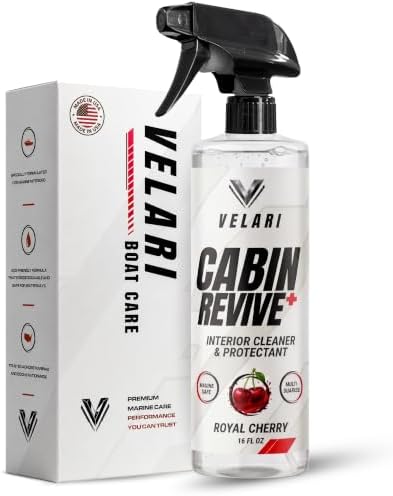
Work the brush lightly into the grain, which is where the dirt actually hides, then wipe with a clean microfiber rather than letting the residue dry in place. 303, Star brite and Meguiar’s all sell marine vinyl cleaners, and any of them beats a household spray by a distance.
What Not to Use
Bleach, ammonia based glass cleaner, brake cleaner, acetone, kitchen degreasers and abrasive melamine pads all remove more than dirt. So does a stiff bristled deck brush. If a product is not sold for marine vinyl, assume it is a bad idea and test it somewhere hidden before you find out on the captain’s chair.
Black Spots and Pink Staining
Black speckling is mildew, and it takes hold in the grain and along stitching where moisture lingers under a cover. A marine mildew product formulated for vinyl and canvas will lift most of it if you catch it early, applied with a soft brush and rinsed thoroughly rather than left to sit.
The Pink Stain Is a Different Animal
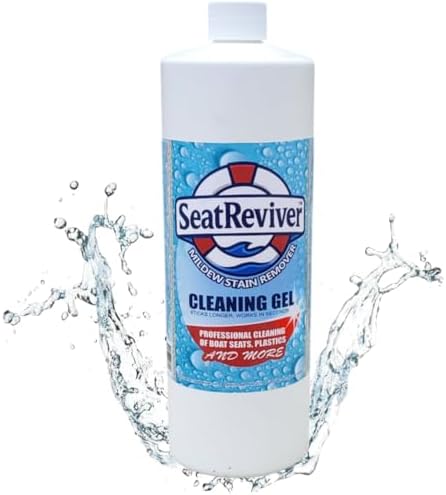
Pink or salmon discoloration on white vinyl is commonly attributed to a bacterium that grows in the foam and backing beneath the surface, feeding on what soaks through. Because the source is under the topcoat, cleaners applied on top often lighten it and rarely remove it for good. Some owners have success with dedicated pink stain removers, and severely affected panels are usually a reupholstery job.
The Protectant Step
Cleaning removes what is on the seat. A protectant is what slows the next round, adding ultraviolet inhibitors that take the sun’s hit instead of the vinyl. Applied over a clean, dry seat with a microfiber cloth, it also makes the next cleaning easier because dirt sits on the film rather than in the grain.
Choose a matte or satin marine protectant rather than a glossy automotive dressing, since a slick seat is genuinely unpleasant on a moving boat. Reapply through the season on the schedule the manufacturer prints, and do it more often on a boat that lives uncovered in the sun.

Which Product for Which Problem
Most seat problems fall into four categories, and using the wrong bottle is what turns a small job into new upholstery. The table matches the problem to the product, and every row assumes a soft brush, a thorough rinse and a protectant afterward.
| Problem | Reach for | Method | Avoid |
|---|---|---|---|
| General grime and sunscreen | Marine vinyl cleaner | Soft brush in the grain, rinse, dry | Degreasers and stiff brushes |
| Black mildew spots | Marine mildew remover | Apply, brush lightly, rinse well | Household bleach |
| Pink or salmon staining | Dedicated pink stain product | Follow the label, expect partial results | Repeated harsh scrubbing |
| Dull, chalky vinyl | Cleaner then protectant | Clean, dry fully, apply thin coat | Glossy automotive dressings |
Stop the Damage Between Cleanings
Most seat damage happens while the boat is parked. Water pooling in a seat crease, a wet cover trapping humidity, and hours of direct sun on an uncovered deck do more harm than a season of actual use. Ventilation and drainage are what a seat needs during the week.
Dry the seats before covering, leave the cover propped so air moves rather than sealing moisture in, and use fitted seat covers on the boats that sit outside. Our boat seat cover guide covers the fitted options, and stubborn canvas and vinyl mildew is handled in our mildew remover guide.

Frequently Asked Questions
Can I use a magic eraser on boat seats? It works by abrasion, which means it takes off the topcoat along with the stain. Seats cleaned that way look great briefly and go chalky and porous afterward, so keep melamine pads off vinyl.
Is bleach safe on marine vinyl? It kills mildew and damages the vinyl, the thread and the foam while doing it. Use a marine mildew product formulated for vinyl and canvas instead, and rinse thoroughly whichever you use.
How do I get rid of pink stains on white seats? Pink staining usually originates beneath the surface, so surface cleaners often lighten rather than remove it. Dedicated pink stain products are worth a try, and badly affected panels typically need reupholstering.
How often should I clean vinyl boat seats? Lightly every few weeks in season, and immediately after sunscreen, fish or spilled drinks. Frequent gentle cleaning does far less damage than an annual aggressive one.
Do I really need a protectant? It is the step that slows sun damage and makes the next clean easier, and it takes a few minutes across a whole boat. Choose a marine protectant with ultraviolet inhibitors in a matte finish.
What about mildew under a cover? That is trapped moisture. Dry the seats before covering, prop the cover so air can move, and check under it after heavy rain rather than assuming the boat is dry.
The Bottom Line
Vinyl boat seats last when they are cleaned gently and often with a marine vinyl product, kept away from bleach, degreasers and abrasive pads, and finished with a protectant carrying ultraviolet inhibitors. Treat black mildew early, accept that pink staining comes from beneath the surface, and fix the drainage and ventilation that cause the problem while the boat is parked. For the rest of the cleaning shelf, see our boat cleaner overview.