Last updated: August 20, 2026
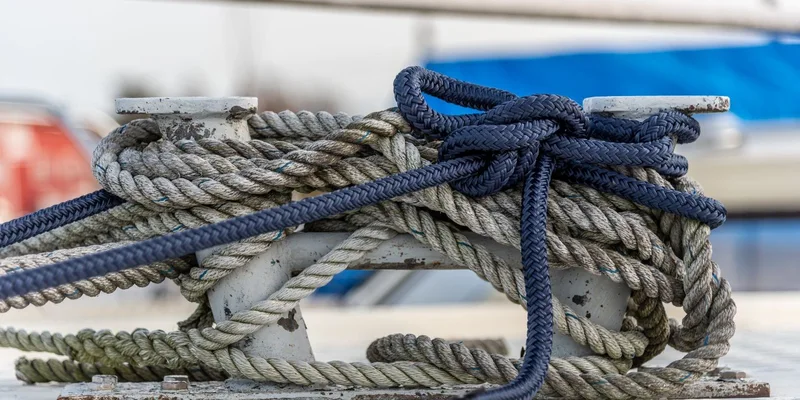
A slip with any fetch in it turns dock lines into a hammer. Every wake and every gust loads the line, the boat snaps up against it, and the shock goes straight into a cleat, a bow eye or a dock ring. Owners hear it as a bang at two in the morning and see it later as a cracked cleat base or a chafed line that failed at the chock.
Bungee dock lines and snubbers take that shock out of the system. Instead of stopping the boat abruptly, they let it move a short distance and pull it back gently. This guide covers the two ways that is engineered, which one suits a lift, a floating dock or a fixed dock, and where a bungee line is the wrong choice.
This article contains affiliate links. If you buy through them, we may earn a commission at no extra cost to you. Learn more.
Quick Answer
Do you need bungee dock lines?
- Yes if your slip gets wakes, wind chop or a big tide swing. The stretch absorbs the jerk.
- Two designs exist: a bungee built inside the rope, and a separate snubber added to normal line.
- Buy by boat length and line diameter, the same way you size a regular dock line.
- They complement fenders, they do not replace them, and they need a backup line at exposed docks.
Bottom line: bungee dock lines are worth it wherever the boat surges, and worth skipping in a calm protected slip where plain nylon already does the job.
What Shock Absorption Actually Does
Nylon dock line already stretches a little, which is why it is the standard material. In a slip with real surge, that stretch is not enough. The boat reaches the end of the line at speed, the line goes bar tight, and all the energy transfers into the hardware at both ends in a fraction of a second.
A bungee element extends the distance over which that energy is absorbed. Peak load at the cleat drops, the noise goes away, and the line stops sawing back and forth through the chock. Extreme Max describes its BoatTector bungee dock lines as eliminating the jerking and tugging that ordinary lines produce, with the bungee encased deep inside the rope so it stretches as the boat drifts and gently pulls it back.
Integrated Bungee or Separate Snubber
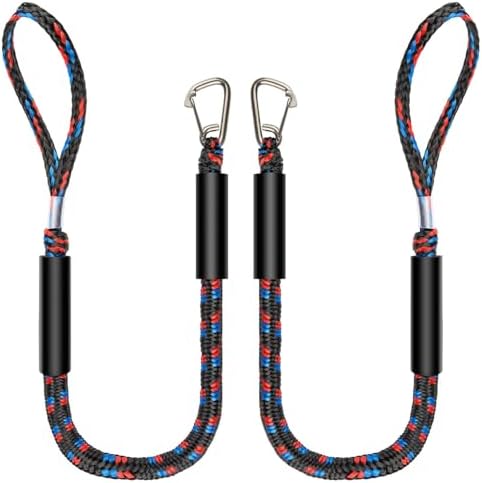
Two approaches solve the same problem. An integrated bungee dock line has the elastic core built into the rope, so it looks and cleats like a normal line. A snubber is a separate rubber or spring device that clips into an ordinary dock line and takes up the shock in one spot.
Which One Suits Your Dock
Integrated lines are tidier, hold their shape, and are the easier choice if you are replacing tired dock lines anyway. Snubbers are cheaper and let you keep good rope you already own, and they are easy to move between the boat and a trailer or a mooring. If your existing lines are sound, start with snubbers. If they are stiff and chafed, replace them with bungee lines and be done.
Sizing Bungee Dock Lines
Size the same way you would size plain dock lines: by rope diameter matched to boat length and weight, and by length matched to your slip geometry. A bungee line that is too light for the boat bottoms out its stretch on every surge, which puts you back where you started.
Length matters more here than with plain line because the stretch changes the working length. A bungee line sized for a short spring line on a floating dock behaves differently on a fixed dock with a large tide range, where you need enough line for the boat to fall away from the dock without the bungee reaching its limit.
Bungee Dock Lines by Situation
Below are the four cases owners actually buy for. Check the boat length and line diameter stated in the listing, and count how many lines your slip needs before ordering, since almost nobody gets away with one.
A Slip With Wakes and Wind Chop
A full set of integrated bungee dock lines is the straightforward upgrade for a boat that surges in its slip. Buy in pairs so bow and stern lines behave the same way, and size the diameter to the boat rather than to what looks strong.

Keeping Good Rope You Already Own
A separate snubber threads onto an existing nylon line and does the shock absorbing in one place. It is the lower cost route and the one that lets you experiment before committing to a whole new set of lines.

Fixed Docks and Big Water Level Swings
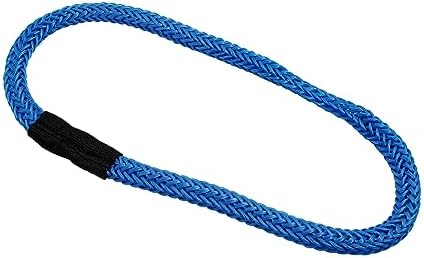
Where the water level changes a lot, an extension loop added to a bungee line gives you the extra working length without buying a longer line for every slip you visit. It also lets one set of lines cover both a home slip and a visitor dock.
Personal Watercraft and Small Boats on a Lift or Float
Lighter craft need shorter, lighter bungee lines, and a personal watercraft tied with heavy dock line barely stretches it at all. Look for lines sold specifically for a personal watercraft or a small boat rather than scaling down a large boat’s set.
Where Bungee Lines Fit and Where They Do Not
Shock absorbing line is a solution to surge, not a universal upgrade. This table sets out the docking situations where it earns its place and the ones where plain nylon or a different fix is the better answer.
| Situation | Bungee line | Why | Better alternative |
|---|---|---|---|
| Floating dock, calm water | Optional | Little relative motion | Plain nylon dock lines |
| Fixed dock, tidal range | Useful | Absorbs the tug as level changes | Longer lines plus a snubber |
| Slip exposed to wakes | Recommended | Stops repeated snap loading | Add spring lines too |
| Storm preparation | Not on its own | Stretch can allow contact | Multiple sized lines, chafe gear |
Rigging Them So They Work
A bungee line only absorbs shock if it has room to stretch. Cleating it bar tight defeats the whole mechanism, so leave the line at the length where the boat sits comfortably off the dock and let the elastic take up the movement. That is the opposite of how most people cleat a plain line.
Chafe protection still matters. The line moves through the chock more, not less, so a chafe sleeve or a length of hose at the contact point is worth adding. Sun is the other enemy, since ultraviolet exposure degrades the elastic core over seasons, and a line that has lost its stretch should be retired rather than left in service looking fine.
Keep a Backup Line
At an exposed dock, or any time weather is coming, add a conventional line alongside the bungee one, set slightly longer so it does nothing until the bungee reaches its limit. That gives you a hard stop if the elastic is overwhelmed, which is the situation where a stretchy line alone lets the hull touch the dock.
Frequently Asked Questions
Are bungee dock lines strong enough on their own? For everyday use in a normal slip, yes, when sized for the boat. For storm conditions or an exposed dock, add conventional lines set slightly longer as a backup so there is a hard stop behind the stretch.
What size bungee dock line do I need? Size by rope diameter against boat length and weight, exactly as you would a plain dock line, and pick a length that suits your slip. Listings state the boat length range they are intended for.
Bungee line or a separate snubber? Integrated lines are neater and better if your existing rope is worn out. Snubbers are cheaper and let you keep good line, and they move easily between docks.
How long do bungee dock lines last? The elastic core degrades with sun exposure over seasons, faster than the rope around it. If a line no longer springs back, replace it rather than leaving it in place.
Do they work on a boat lift? They help with the slack side of a lift and with personal watercraft floats, but on a lift the boat is mostly out of the water and shock loading is far less of a factor.
Will bungee lines stop my boat hitting the dock? No, fenders do that. Bungee lines reduce shock loading on cleats and lines, so they work alongside properly placed boat fenders rather than instead of them.
The Bottom Line
If your boat bangs against its lines every time a wake rolls through, bungee dock lines or snubbers are a small purchase that protects cleats, rope and sleep. Size them like normal dock lines, leave them slack enough to stretch, and add a plain backup line when weather is coming. For the full sizing logic behind diameter, length and how many lines a slip needs, read our dock lines guide.