Last updated: August 20, 2026
Pontoons drag anchor more than any other boat on the lake, and their owners usually blame the anchor. It is rarely the anchor’s fault alone. A pontoon presents an enormous flat side to the wind, sits high on the water with almost no keel to resist sideways push, and gets anchored with a short line thrown over the bow rail by someone standing on the deck.
Change those things and the same anchor holds. This guide covers why a toon behaves differently at anchor, how to set one so it actually digs in, and which anchor styles suit the soft lake bottoms most pontoons spend their summers over.
This article contains affiliate links. If you buy through them, we may earn a commission at no extra cost to you. Learn more.
Quick Answer
Why does a pontoon boat keep dragging anchor?
- Too little line out, which lifts the anchor shank upward instead of pulling it flat along the bottom.
- The wrong anchor style for a soft, muddy or weedy lake bottom.
- A pontoon’s big flat profile catching wind that a V-hull would shrug off.
- Anchoring from the side or the rail instead of a bow cleat, which lets the boat swing broadside.
Bottom line: more line and the right bottom-matched anchor solve most pontoon dragging.
Why Pontoons Are Harder to Anchor
A pontoon is essentially a flat deck on two or three tubes, with a bimini and often a full enclosure standing above it. That is a large sail area, very little underwater profile, and a shallow draft that gives the wind almost nothing to push against. In a crosswind the boat slides sideways rather than lying head to wind the way a deeper hull does.
That sideways load is what pulls an anchor out. The anchor may have set perfectly, then the boat swings, the pull direction changes, and the anchor breaks free and has to reset itself, which it may or may not manage in a soft bottom. It is a load-direction problem more than a weight problem.
Scope Is the Setting Most Owners Get Wrong
An anchor holds because the pull on it is nearly horizontal, dragging the flukes deeper into the bottom. Let out too little line and the pull angles upward, which is exactly the direction that lifts an anchor out. Scope, the ratio of line length to water depth, is what controls that angle.
Anchor manufacturers publish their own scope recommendations, and they differ by anchor type: Slide Anchor, which makes the box anchor style popular with pontoon owners, states that its design needs considerably more line than a conventional pontoon anchor line in order for the arms to reach the correct angle. Follow the maker’s published guidance for the anchor you own rather than a number remembered from a forum.
Measure Depth Before You Drop
You cannot set scope without knowing the depth, and a lot of pontoon anchoring happens by eye. Check the depth where you intend to sit, allow for wind shift moving you into deeper water, and let out line accordingly. A marked rode, with depth markers along its length, turns this from guesswork into a glance.
Anchor Style Follows the Bottom
Most pontoons live on lakes and slow rivers with soft mud, sand or weed, which is a very different problem from rock or hard sand. Box anchors are widely used by pontoon owners on those bottoms because they sink in and hold from any pull direction, which matters on a boat that swings.
Fluke style anchors hold extremely well in sand and mud when they set, but they are more dependent on the pull direction staying consistent, so a swinging pontoon can trip one out. Grapnel and river anchors are compact and suit rocky or brushy bottoms where a fluke would foul, and shallow water stake-out poles are a different tool entirely, covered in our anchor pole guide.
Setting It Properly
Motor slowly up to the spot, note the wind direction, then drop the anchor over the bow and back down away from it while paying out line steadily. Dropping the whole rode in a pile on top of the anchor is the classic mistake and it leaves the line tangled around the flukes rather than stretched out along the bottom.
When you have the scope you want, cleat the line off at the bow and let the boat settle back until the rode comes tight. Then watch a fixed point on shore for a minute. If your position relative to it keeps changing, the anchor has not set, so retrieve it and try again rather than letting out more line and hoping.
Bow Cleat, Not the Rail
Tie off to a bow cleat so the pull comes from the front of the boat. Anchoring from the side rail or a rear cleat lets the pontoon lie broadside to the wind, which multiplies the load on the anchor and makes for an uncomfortable, rolling afternoon. Never tie an anchor to a rail fitting that was designed to hold a fender.
What to Have Aboard
Soft Lake Bottoms and a Swinging Boat
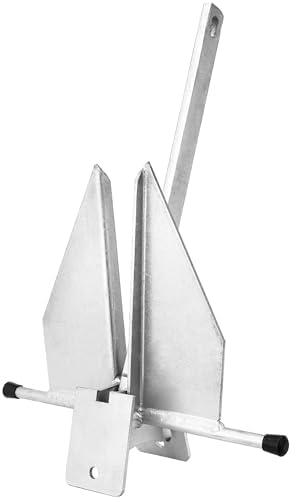
The box anchor style is the pontoon favorite for exactly this: it sets fast in mud and weed, holds regardless of which way the boat swings, and folds flat for storage under a bench. Follow the maker’s scope guidance, since this style needs more line than owners expect.

Sand Bottoms and General Use
A fluke anchor is the versatile choice where the bottom is sand or firm mud and the boat is not swinging much. It stows flat, it is light for its holding power, and it is the anchor most pontoon owners already have, as our boat anchor guide explains.
The Rode That Makes It Work
Anchor line with depth markings takes the guesswork out of scope, and a length of chain between the line and the anchor helps keep the pull horizontal at the bottom. Buy a rode long enough for the deepest water you anchor in, with scope factored in, not just for the average depth.

Holding Position for a Beach Day
Where the water is shallow and the bottom is soft, a stake-out pole or a second anchor off the stern stops the boat from swinging over a sandbar and into a neighbor. Two points of attachment turn a nervous afternoon into a relaxed one.

Matching Anchor to Bottom
Find the bottom you actually anchor over, then check the anchor you own against the row. Many pontoon dragging complaints resolve the moment the boat carries a second anchor for the other kind of bottom.
| Bottom | Works well | Struggles | Note |
|---|---|---|---|
| Soft mud and weed | Box anchor | Light grapnel | Needs generous scope per the maker |
| Sand and firm mud | Fluke anchor | River or mushroom in wind | Sensitive to changing pull direction |
| Rock and brush | Grapnel or river anchor | Fluke, which fouls | Plan how you will free a snagged anchor |
| Shallow sandbar | Stake-out pole, bow and stern | Any single bow anchor | Two points stop the swing |
Anchoring Etiquette and Safety
Give other anchored boats room for their swing circle, not just their current position, since everyone moves when the wind shifts. Anchor outside channels and away from ramps, and think about what happens if the anchor lets go while everyone is swimming off the back.
Keep the anchor line clear of swimmers and never anchor by the stern alone in current or where waves could come over the transom. Local and state rules on where you may anchor vary, so check with your state boating agency.
Retrieving Without a Fight
Motor slowly forward along the rode until you are above the anchor, taking in line as the boat moves. The change in pull direction usually breaks it out with far less effort than hauling from a standstill. If it stays stuck, stop pulling by hand, because a fouled anchor and a hard tug is a good way to hurt someone.
Frequently Asked Questions
What kind of anchor is best for a pontoon boat? On the soft mud and weed bottoms most pontoons sit over, box anchors are the popular choice because they set quickly and hold regardless of which way the boat swings. Fluke anchors work well in sand when the pull direction stays consistent.
Why does my pontoon keep dragging anchor? Usually too little line out, which angles the pull upward and lifts the anchor. Wind on a pontoon’s large flat profile and anchoring from a side rail instead of a bow cleat both make it worse.
How much anchor line do I need for a pontoon? Enough to keep the pull along the bottom rather than upward, and the exact ratio depends on the anchor. Follow the scope guidance published by your anchor’s manufacturer, since box anchors in particular call for more line than owners expect.
Should I use two anchors on a pontoon? On a sandbar or in a crowded cove, a bow and stern setup stops the boat from swinging into neighbors. In open water with room to swing, one properly set bow anchor is simpler and safer.
Can I anchor a pontoon from the rear? Not from the stern alone in current or where waves could come over the transom. Anchoring from a stern cleat as the second point of a two-anchor setup in calm, shallow water is a different situation and is common practice on sandbars.
Do I need chain on a pontoon anchor rode? A length of chain between line and anchor helps keep the pull horizontal and protects the line from abrasion on the bottom. Check the anchor manufacturer’s guidance for their design.
The Bottom Line
A pontoon drags because of wind on a flat boat, a short rode and an anchor that does not suit the bottom. Fix the scope first, follow the anchor maker’s published guidance, tie off at the bow, and back down to set before you trust it. Read also our box anchor guide for the pontoon favorite, our boat anchor guide for the wider comparison, and our anchor pole guide for shallow water days.