Last updated: August 20, 2026
The jack wheel is the part of a boat trailer that does the least glamorous work and takes the most abuse. It gets dunked at every launch, dragged sideways across gravel while somebody muscles the tongue around, and then left to sit in a puddle for eight months. When it finally seizes, moving an unhitched trailer by hand goes from mildly annoying to genuinely difficult.
This guide covers the difference between a swivel jack, a fixed jack and a drop leg jack, why the wheel style matters more than most people expect on a soft driveway, and how to check that a replacement will actually fit the tongue you have. It also covers the single most common cause of a destroyed jack, which is forgetting to raise it.
This article contains affiliate links. If you buy through them, we may earn a commission at no extra cost to you. Learn more.
Quick Answer
Which trailer jack wheel should you fit?
- Swivel jack: pivots up out of the way for towing, the standard choice on most boat trailers.
- Fixed jack: no pivot, so it needs enough ground clearance or a removable pin, but there is less to seize.
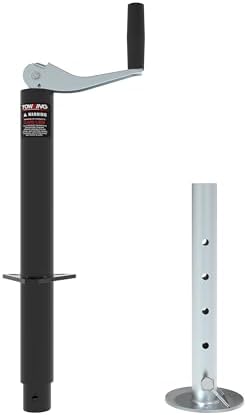
- Drop leg jack: an inner leg that pins at height, giving you a lot of lift range without endless cranking.
- Dual wheels and larger diameter roll far better on grass, gravel and soft ground than a single small wheel.
Bottom line: match the jack’s lift capacity and mount style to your tongue, then choose wheel size for the surface you actually park on.
Swivel, Fixed or Drop Leg
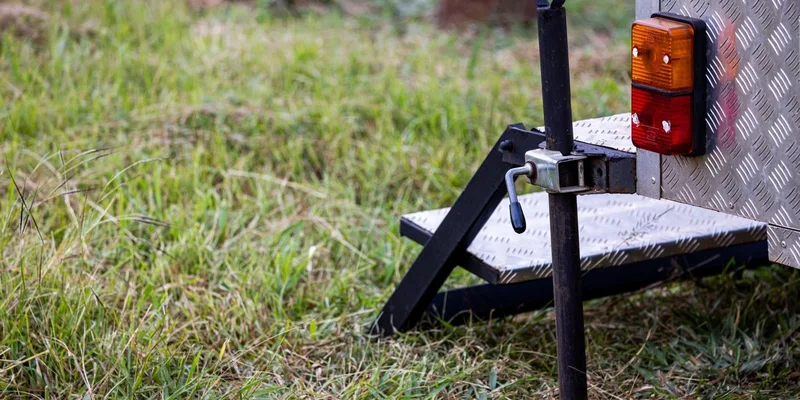
A swivel jack has a pivot at the mounting collar so the whole leg rotates up parallel to the tongue for towing. A fixed jack does not pivot, so the wheel either has enough road clearance or the leg pulls out on a pin. A drop leg jack has an inner leg that drops and pins, adding lift range without cranking the whole distance.
For most boat trailers the swivel jack is the default, and it is what the majority of trailers leave the factory with. Fulton, for example, lists a swivel marine trailer tongue jack with a dual wheel and a bolt-on side mount in its marine range.
When a Drop Leg Earns Its Place
Drop leg jacks make sense when the height difference between hitched and parked is large, such as a tall tow vehicle paired with a trailer that gets parked on a low stand. Instead of cranking through the full range twice per outing, you pin the inner leg roughly where you need it and crank only the last stretch.
Capacity and Travel: The Two Numbers to Match
Every jack is published with a lift capacity in pounds and a travel figure in inches, and both matter. Capacity has to cover the tongue weight of your loaded trailer, not the total weight of the rig. Travel decides whether the jack can raise the coupler high enough to clear your hitch ball and low enough to sit level when parked.
Fulton publishes marine and utility jacks across a wide capacity range, from a few hundred pounds up to several thousand, and lists the travel for each model, such as 12 inches on its side mount swivel jack. Read the figures on the model you are considering rather than assuming jacks of the same physical size share a rating.
Finding Your Tongue Weight
Tongue weight is a share of the loaded trailer weight rather than a number you can guess from the hull spec sheet. A tongue weight scale, or a trip over a certified scale with and without the tongue supported, gives you the real figure. Once you know it, choosing a jack capacity with headroom is straightforward.
Mounting: Bolt-On, Weld-On and Tube Size
Jacks mount three common ways. A bolt-on side mount clamps to the side of a rectangular tongue, a bolt-through mount passes fasteners through the tongue, and a weld-on collar is permanent. Bolt-on is the usual replacement path because it does not require a welder and can be repositioned.
The number that decides fitment is the tongue tube size the mount accepts. Fulton’s marine jacks, for instance, are listed to fit trailer frames up to 3 by 5 inches on the side mount models. Measure the actual tongue with a tape at the mounting point, since a tongue that looks like a standard size often is not.
Sidewind or Topwind
Sidewind cranks are the norm on boat trailers because the handle clears the coupler and the winch stand. Topwind puts the handle on the top of the jack, which is easier on the wrist but can foul on a bow eye or a winch post depending on how the tongue is laid out. Look at what is above your jack before switching.
Jack Wheel Picks by Situation
The Standard Replacement
A swivel jack with a bolt-on side mount and a wheel suited to your capacity covers most boat trailers. Confirm the tongue size the mount accepts and the lift capacity against your measured tongue weight before ordering.

Grass, Gravel and Soft Driveways
A single narrow wheel digs in on anything softer than concrete. A dual wheel or a larger diameter wheel spreads the load and rolls over gravel instead of plowing through it, which is the difference between repositioning a trailer by hand and giving up.

Big Height Differences
A drop leg jack with a pinned inner leg saves a great deal of cranking when the coupler needs to travel a long way between hitched and parked.
Replacing Only the Wheel
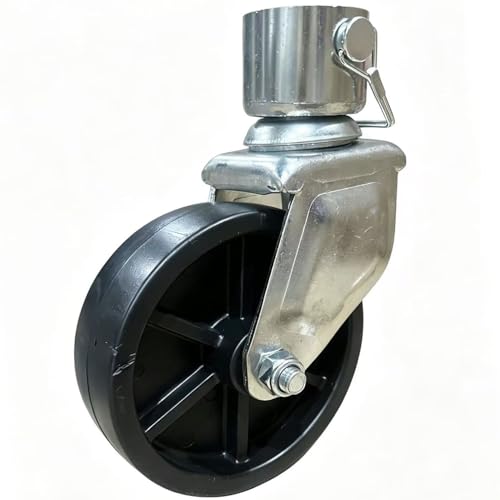
If the jack screw still turns freely and the mount is solid, a replacement caster wheel is a far smaller job than a whole jack. Match the wheel diameter, the fork width and the pin diameter to the parts you are removing.
Comparing the Three Jack Styles
| Jack style | Stows for towing | Lift range | Best for |
|---|---|---|---|
| Swivel | Pivots up alongside the tongue | Set by the screw travel | Most boat trailers, the default |
| Fixed | Stays down, or pulls out on a pin | Set by the screw travel | High clearance trailers, fewer moving parts |
| Drop leg | Pivots or pulls, inner leg pins | Long, with less cranking | Tall tow vehicles, low parking stands |
Keeping a Jack Alive in Salt Water
The jack goes in the water at every launch on most ramps, and the screw thread inside is where corrosion does its damage. Rinse the whole assembly with fresh water after saltwater use, then work the crank through its range so any trapped water drains rather than sitting in the tube.
Grease matters more here than almost anywhere else on the trailer. A marine grade grease on the screw and at the caster pivot, applied a couple of times a season, is the difference between a jack that lasts years and one that seizes the first spring after purchase. If the crank has become stiff, address it then rather than forcing it.
The Mistake That Kills Jacks
Towing with the jack still down is the classic one. The wheel catches the first driveway apron or speed hump and the leg bends or shears at the mount. Make raising and swiveling the jack part of the same fixed checklist as the safety chains and the lights, so it is never a thing you remember halfway down the road.
Frequently Asked Questions
What size trailer jack do I need? One whose published lift capacity comfortably exceeds your loaded tongue weight, and whose travel raises the coupler clear of your hitch ball. Measure the tongue tube as well, since the mount is sold to fit a specific range of frame sizes.
Can I replace just the jack wheel? Yes, if the screw still turns freely and the mounting is sound. Match the wheel diameter, fork width and pin diameter to the parts coming off, and grease the pivot when you fit the new one.
Swivel or fixed jack for a boat trailer? Swivel is the usual answer because it lifts clear of driveway aprons and ramps for towing. A fixed jack has fewer parts to seize but relies on either enough ground clearance or a pull pin arrangement.
What is a drop leg jack for? It has an inner leg that pins at a chosen height, so you get a long total lift range without cranking through all of it. Useful with a tall tow vehicle or when the trailer parks on a low stand.
Why has my jack seized? Almost always water in the screw tube plus salt and no grease. Rinsing after saltwater use, working the crank through its range so it drains, and greasing the screw a couple of times a season prevents most of it.
Sidewind or topwind handle? Sidewind is standard on boat trailers because the handle clears the coupler and winch stand. Check what sits above your jack before choosing a topwind, since a bow eye or winch post can foul the handle.
The Bottom Line
Buy the jack on two published numbers, lift capacity against your measured tongue weight and travel against the height you need, then confirm the mount fits your tongue tube. Choose a dual or larger wheel if you park anywhere softer than concrete, grease the screw, and make raising the jack part of your fixed departure routine. While the trailer is unhitched, the other thing keeping it still matters: see our guide to trailer wheel chocks.