Last updated: August 20, 2026
A boat trailer with the tongue jack down and no chocks under the wheels is a heavy object held in place by friction and optimism. On a flat concrete driveway that is usually fine. On a sloped launch ramp, a gravel lot, or the moment somebody climbs aboard and shifts a few hundred pounds toward the stern, it stops being fine very quickly.
Chocks are the cheapest safety item on the whole rig and the one people most often improvise with a chunk of firewood. This guide covers the styles that exist, which ones grip on which surfaces, and what to look for so a chock actually holds instead of skating out from under the tire.
This article contains affiliate links. If you buy through them, we may earn a commission at no extra cost to you. Learn more.
Quick Answer
Which trailer wheel chocks actually hold a boat trailer?
- Rubber wedge chocks grip best on concrete and asphalt and are the sensible default for a driveway or a ramp.
- Molded plastic chocks are light and cheap, and they suit smaller trailers on level ground.
- Wheel dock or cradle style chocks hold both directions and stay put better than a single wedge.
- Tandem axle trailers can use a scissor style chock that wedges between the two tires and stops rocking.
Bottom line: buy a pair sized to your tire, chock both directions on any slope, and pick rubber if the surface is smooth.
Why One Chock Is Not Enough
A single chock only resists movement in one direction, and a parked trailer can roll either way depending on how the load shifts. Chocking downhill of the tire covers the obvious case, but somebody stepping onto the bow or the tongue jack settling can push the trailer the other way. Two chocks per axle, one fore and one aft, is the habit worth building.
The second reason is redundancy. Chocks skate. A wedge on wet concrete, on gravel, or on a ramp coated in the slime that grows below the waterline can slide before it bites, and the second chock is what catches the trailer while the first one is figuring itself out.
Rubber, Plastic or Metal
Material decides grip more than shape does. Solid rubber chocks have a high friction face against smooth concrete and enough mass that they stay where you put them, which is why they are the usual recommendation for driveways, ramps and paved lots. They are also heavy, which is exactly why they work.
Molded plastic chocks are light, inexpensive and easy to store in a small trailer box, and they are perfectly adequate under a light aluminum boat trailer on level ground. On a slope or a wet surface they are the ones most likely to slide, so they are a poor choice as your only pair if you park anywhere with a grade.
Aluminum and Steel Chocks
Metal chocks are durable and often lighter than rubber for their size, but a bare metal face on smooth concrete has less grip than rubber does. Look for a rubberized or textured contact surface if you go this route, and treat corrosion resistance as a real consideration on a trailer that lives at a saltwater ramp.
Sizing Chocks to Your Tire
A chock that is too small rides up rather than blocking, and a chock that is too large may not seat against the tread at all. Manufacturers list a tire diameter range or a maximum tire size for each chock, and that published range is what you match your trailer tires against.
The relevant measurement is the tire the chock will sit against, not the trailer’s overall weight. Small boat trailers with 8, 10 or 12 inch wheels need correspondingly small chocks, while a tandem axle trailer under a larger boat with 14 or 15 inch wheels needs something with real height to it.
Weight Rating and Grade
Some chocks are also published with a maximum vehicle weight or a maximum grade they are rated for. Where the maker states those numbers, use them. Where they do not, err upward in size and use two per wheel rather than assuming a small chock will handle a slope.
Chock Picks by Situation
The Everyday Pair
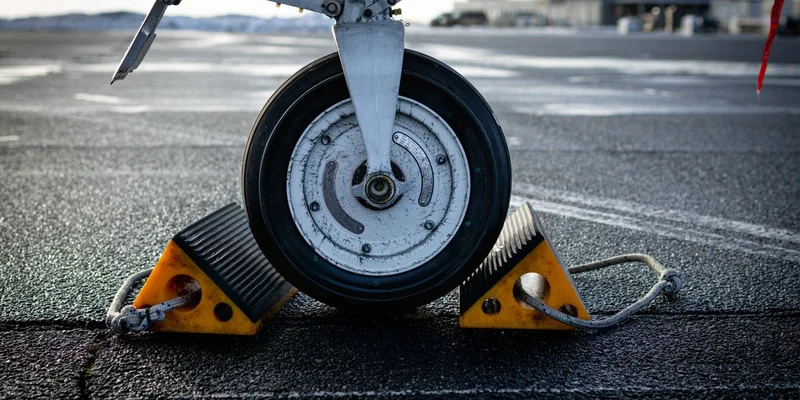
Two solid rubber wedge chocks with a molded tread face and a rope or handle cover the majority of boat trailers on concrete and asphalt. The handle matters more than it sounds, because retrieving a chock from under a tire without one means kneeling in ramp grit.

Gravel, Grass and Soft Ground
On loose surfaces a chock with an aggressive underside or spikes bites into the ground rather than skating along the top of it, which is where smooth rubber struggles.

Tandem Axle Trailers
A scissor or X style chock wedges between the two tires of a tandem axle and tightens against both, which stops the fore and aft rocking that a single external wedge does not address.

Chocking Both Directions
A pair of chocks joined by a length of rope or a cable makes it hard to drive off with one still under a tire, and they store as a single unit rather than two loose lumps rolling around the truck bed.

Comparing the Common Styles
| Chock style | Grip on smooth concrete | Grip on gravel or grass | Best for |
|---|---|---|---|
| Solid rubber wedge | Strong, heavy enough to stay put | Moderate, can skate on loose stone | Driveways, ramps, paved lots |
| Molded plastic | Adequate on level ground | Poor, tends to slide | Light trailers, flat surfaces |
| Spiked or toothed base | Moderate | Strong, bites into the surface | Gravel lots, grass storage |
| Scissor or X style | Holds between the tires | Holds between the tires | Tandem axle trailers |
Using Chocks at the Ramp
The ramp is where chocks earn their keep and where they are least often used. If you are prepping the boat with the trailer unhitched, or if anyone is climbing aboard while the rig sits on a grade, chock the wheels first. It takes ten seconds and it addresses the one scenario where a rolling trailer has water in front of it.
Set the chock snug against the tread rather than a hand’s width away, so the trailer cannot pick up any speed before it makes contact. On a wet ramp, look for a dry patch of concrete if there is one, since the algae film below the waterline is genuinely slippery under both tires and chocks.
Storage on the Trailer
Chocks that live in the tow vehicle get left in the tow vehicle. A small deck box, a bracket on the trailer frame, or a bag clipped to the winch stand keeps them with the rig, which is the only reliable way to make sure they are there when the trailer is parked away from home.
Frequently Asked Questions
How many wheel chocks do I need for a boat trailer? At least two, placed fore and aft of the same tire so the trailer is blocked in both directions. On a tandem axle trailer or a noticeable slope, four is the sensible number rather than the cautious one.
What size wheel chock do I need? Match your tire diameter against the tire size range the chock maker publishes for that model. Small trailers with 8 to 12 inch wheels need small chocks; larger tandem trailers with 14 or 15 inch wheels need a taller chock to block properly.
Are rubber chocks better than plastic? On smooth concrete and on any grade, yes. Rubber has more friction and more mass, so it stays put. Plastic chocks are light and cheap and are fine under a small trailer on level ground.
Do I need chocks if the trailer is hitched to the truck? They are still worth using on a slope, particularly if people are moving around on the boat. Hitched to a vehicle in park with its own brake set, the risk is lower, but chocks cost nothing to deploy.
What is an X chock for? It fits between the two tires of a tandem axle and expands against both, which stops the trailer rocking fore and aft as people move around. It works alongside external chocks rather than replacing them.
Will chocks work on a wet launch ramp? Less well than on dry concrete, because the algae film below the waterline is slippery for tires and chocks alike. Use two, set them snug against the tread, and place them on the driest concrete available.
The Bottom Line
Buy a pair of chocks sized to your actual tires, pick rubber for paved surfaces and a toothed base for gravel, and use two so the trailer is blocked in both directions. Keep them on the trailer rather than in the truck, set them against the tread rather than near it, and add a scissor chock if you run a tandem axle. Tires and chocks are a package deal, so check our guide to boat trailer tires while you are under there.