Last updated: August 20, 2026
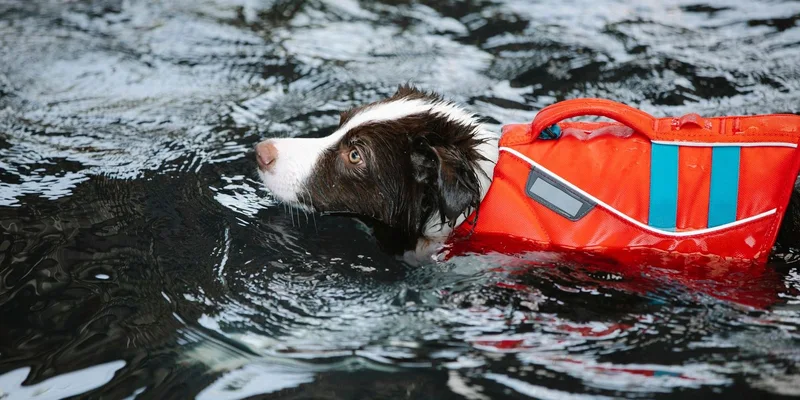
Dogs are strong swimmers right up until they are not. A lab that crosses the cove twice without complaint can still get into trouble in current, in cold water, or after a long day when it goes over the side unexpectedly and has to swim to a hull it cannot climb. The jacket is less about buoyancy than about the handle on top of it.
This guide covers how dog life jackets are sized, why the grab handle placement matters more than the color, where the flotation should sit on the body, and how to get a dog back aboard once it is wearing one. Everything below assumes a boat with freeboard, because that is the part owners underestimate.
This article contains affiliate links. If you buy through them, we may earn a commission at no extra cost to you. Learn more.
Quick Answer
What makes a good dog life jacket?
- A strong grab handle over the shoulders, positioned so a lifted dog stays level rather than tipping nose down.
- Sizing by chest girth and weight together, not by breed name.
- Flotation along both flanks plus under the chest, with a front float for dogs that swim low.
- Bright color and reflective trim, because a dark dog in chop is nearly invisible.
Bottom line: measure the chest girth, buy for the handle and the strap layout, and plan the way the dog gets back aboard before the first trip.
Why the Handle Is the Real Feature
Getting a wet dog out of the water and over a gunwale is heavy, awkward work, and a soaked retriever is a lot of weight to lift by the collar. A proper dog vest gives you a rigid handle over the shoulders, sewn into load bearing webbing, so you can lift with your legs from a stable position rather than reaching down and hauling on fur.
Handle placement decides how the dog hangs. A handle set too far back tips the dog nose down as it comes up, which panics the animal and makes it thrash. Look for a handle centered over the shoulders or a two handle layout, and check that the webbing it is attached to wraps the body rather than being stitched to the outer fabric alone.
How to Size a Dog Life Jacket
Size by measurement, not by breed. The number that matters most is chest girth, taken with a soft tape around the deepest part of the ribcage just behind the front legs. Weight is the secondary check, and neck girth matters for jackets with a closed neck opening. Manufacturers publish a size chart per model, so use that chart rather than a general one.
The Two Common Sizing Mistakes
The first is buying up so the dog can grow into it, which leaves a jacket that rotates around the body in the water and slips forward over the head when you lift. The second is ignoring body shape. Deep chested breeds and barrel chested breeds can share a weight but need different girth sizes, which is why the chart is built around measurement.

Where the Flotation Should Sit
A dog swims with its rear end low, so a vest that puts all its foam along the back does very little once the animal tires. What holds a tired dog in a natural swimming position is flotation along both flanks and under the belly, which supports the ribcage and keeps the spine level rather than propping up only the shoulders.
A front or chin float is the addition worth looking for on short muzzled dogs, older dogs and poor swimmers. It lifts the head clear of chop, which is exactly where a struggling dog gets into trouble. Long legged strong swimmers usually need less of it, and some dislike the way it pushes under the jaw, so match the feature to the animal.
Straps and Buckles
Look for two belly straps rather than one, since a single strap lets the jacket pivot. Buckles should be side release and sized so wet hands can work them, and the strap ends should have keepers so loose webbing does not catch on a cleat or a ladder rung.

Comparing the Common Styles
Dog vests fall into a few recognizable patterns, and the right one depends on how much time your dog spends actually swimming versus riding along. The table sorts the styles by what they are built to do rather than by brand.
| Style | Flotation layout | Best suited to | Watch out for |
|---|---|---|---|
| Vest with chin float | Flanks, belly and front | Short muzzles, seniors, weak swimmers | Some dogs resist the front float |
| Flat panel vest | Back and flanks | Strong swimmers, warm days | Less support once the dog tires |
| Neoprene wrap vest | Full body wrap | Cold water, long days aboard | Hot in summer sun |
| Ripstop harness style | Flanks with lift handles | Big dogs that need lifting aboard | Check handle stitching to webbing |
Getting the Dog Back Aboard
Decide this before you leave the ramp. Lifting a soaked seventy pound dog straight up over the gunwale from the swim platform is possible with a good handle and two people, and unpleasant with one. On a pontoon or a boat with a low transom the job is far easier, which is why boarding gear is the other half of the purchase.
Dog ramps and wide step ladders let a dog climb rather than be hoisted, and most dogs learn them faster than owners expect if you practice at a dock instead of in open water. Our pontoon ladder guide covers the wide step and dog friendly options, and the same reasoning applies to any boat with a low reboarding point.
A Practice Run Is Worth It
Fit the jacket at home, let the dog wear it around the yard, then try a controlled swim off a beach or a dock before the first real trip. A dog that has already been lifted by the handle once will not fight it in an actual emergency, and you will find out then whether the straps stay put or the jacket rotates.

Frequently Asked Questions
Are dog life jackets Coast Guard approved? No, and none claim to be. Coast Guard approval covers devices for people, so pet vests are judged on construction, handle strength and fit instead. The human requirements for your boat are published at uscgboating.org.
Does my dog need a life jacket if it can swim? Swimming ability is not the issue. Cold water, current, fatigue and an unplanned fall from a moving boat are, and the handle is what lets you recover the dog quickly regardless of how well it swims.
How do I measure my dog for a life jacket? Measure chest girth around the deepest part of the ribcage behind the front legs, then check that against the weight range on that model’s size chart. Neck girth matters for closed neck designs.
Should a dog wear the jacket all day on the boat? On hot days a heavy neoprene wrap can overheat a dog, so a lighter panel style is the better all day choice. Whichever you use, offer shade and water and take it off when the boat is docked.
What color should I choose? Bright orange, yellow or lime with reflective trim. A black or brown dog in chop is very hard to see, and the color of the jacket is what you will actually be scanning for.
Will the jacket help my dog get back on the boat? Only through the handle. Climbing back aboard is a separate problem solved by a ramp or a wide step ladder, and it is worth practicing at a dock before you need it.
The Bottom Line
Buy a dog life jacket for the handle and the fit first, then for the flotation layout that matches how your dog swims. Measure chest girth against the specific model’s chart, choose two belly straps over one, pick a bright color, and sort out how the dog gets back aboard before the first trip rather than during it. For the human side of the locker, our life jacket guide covers what everyone else should be wearing.