Last updated: August 20, 2026
A throwable device is the piece of safety gear most likely to be aboard and least likely to be usable. It is under the seat, under the cooler, under a coil of anchor line, with no line attached to it and nobody aboard who knows it is there. In the thirty seconds that matter, none of that helps.
Ring buoys and horseshoe buoys fix the two things a foam cushion does not: they are visible in the water, and they are designed to have a line attached so you can pull someone back rather than hope they can swim to you. This guide covers sizing, mounting, line, and where the rules actually come from.
This article contains affiliate links. If you buy through them, we may earn a commission at no extra cost to you. Learn more.
Quick Answer
What size life ring does a boat need?
- Coast Guard approved ring buoys are sold in twenty, twenty four and thirty inch outside diameters.
- Larger rings are easier to see and hold, smaller rings are easier to throw accurately.
- A ring with no line attached is only a float, so buy floating throw line with it.
- Carriage requirements for throwables are published at uscgboating.org, not invented here.
Bottom line: pick the size you can throw accurately, mount it where it can be grabbed in one motion, and attach floating line.
Ring Buoy or Horseshoe Buoy
A ring buoy is a closed circle, easy to throw, easy to see, and simple to stow on a bracket. A horseshoe buoy is open at one side, which makes it easier for a person in the water to get into without lifting it over their head, particularly if they are wearing bulky clothing or are already tired.
Both are throwable flotation, and both are sold in Coast Guard approved versions. The horseshoe is more common on sailboats and larger cruisers where it hangs on a stern rail, while the ring is the more usual choice on trailerable powerboats because it stows flat.
How They Differ From a Throwable Cushion
A square throwable cushion is cheap, stows anywhere and is what most small boats carry. It works, but it is harder to see in chop, harder to hold onto with cold hands, and awkward to attach a line to. A ring is visible, grippable and made to be tethered.
If your boat currently carries only a cushion, our guide to Type IV throwable devices compares the options side by side.
Sizing: Twenty, Twenty Four or Thirty
Coast Guard approved ring buoys are manufactured in twenty, twenty four and thirty inch outside diameters, and marine suppliers list them in exactly those three sizes. Larger rings float higher, are easier to spot from the helm and give a swimmer more to hold. Smaller rings are lighter and easier to throw where you aim.
For most trailerable boats the twenty four inch ring is the sensible middle ground. A twenty inch ring suits a small boat with limited stowage, and thirty inch rings are usually seen on larger vessels and at docks and pools rather than on a runabout.
Throwing Accuracy Beats Size
A ring that lands ten feet downwind of the person in the water is worse than a smaller one that lands within reach. Whoever is likely to make the throw should be able to handle the ring one handed, and that argues for the smaller sizes on a boat where the crew includes lighter or less strong people.
Practice throwing once. It takes two minutes at the dock, and it teaches you that the line, not the ring, is the part that snags.
Line, and Why the Ring Is Useless Without It
A ring on its own reaches the person in the water and then stays there. With floating line attached, you can pull them back to the boat without maneuvering the hull and propeller toward someone in the water, which is the entire point of the device.
Use floating line, usually polypropylene, so it stays on the surface instead of sinking under the hull and finding the propeller. Buy the length the ring manufacturer specifies or supplies, coil it so it pays out cleanly, and secure the bitter end to the boat.
Storing the Line So It Deploys
Line that has been stuffed into a locker will knot on the way out and stop the ring halfway. Store it coiled in a bag or flaked on a bracket so it runs free, and check it at the start of each season alongside the rest of your gear.
Some rings ship with a line already attached in a stowage pouch, which removes the guesswork. If yours does not, attach the line at the ring’s designated attachment point rather than tying around the body of the ring.
Mounting and Stowage
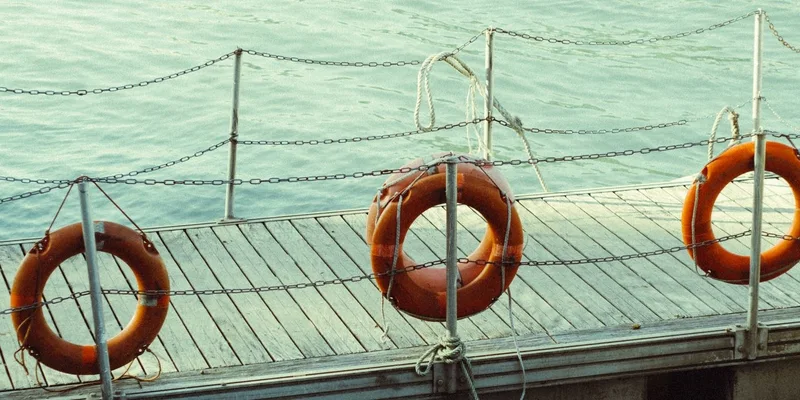
The ring has to be reachable in one motion by someone standing at the helm or in the cockpit. That means a bracket, a rail mount or an open cradle on deck, not a locker under a cushion. Any device that requires two steps and a latch is a device that gets used too late.
Brackets are sold to match ring sizes, so buy them together. On a boat with no rail, a horizontal bracket on the transom or a bulkhead works, and on pontoons the fence rail is the natural place.
| Option | Size range | Best for | Watch for |
|---|---|---|---|
| Ring buoy | 20, 24 or 30 inch | Powerboats, docks, general use | Needs a bracket to stow openly |
| Horseshoe buoy | Adult sizing per model | Rail mounted on cruisers and sailboats | Bulkier to stow flat |
| Throwable cushion | Standard square | Small boats with little stowage | Hard to see, awkward to tether |
| Throw bag | Rope length varies | Rivers and fast water | Supplement, not a substitute |
Picks by Situation
The Standard Powerboat Setup
A Coast Guard approved ring in the middle size with floating line and a matching bracket covers most trailerable boats. Buy the three parts together so the bracket actually fits the ring.

Rail Mounted on a Cruiser
Horseshoe buoys on a stern rail bracket are the traditional arrangement on larger boats, and they are easier for a tired swimmer to get into than a closed ring.

The Line and the Bracket
Floating polypropylene throw line and a purpose made holder are the two accessories that turn a stored ring into a usable one. Neither costs much and both decide whether the ring works.


What the Rules Actually Say
Federal carriage requirements for throwable flotation on recreational vessels are published by the Coast Guard at uscgboating.org, and that is the source to check rather than a figure quoted on a forum. Approval status is printed on the device itself, and the correct term to look for on the label is Coast Guard approved.
State rules add to the federal baseline and differ from one another, including on inspections and on what must be carried in specific waters. Check your state boating agency for the local picture before assuming the federal minimum is the whole answer.
Approved Is Not the Same as Adequate
Meeting a carriage requirement and being genuinely prepared are two different standards. A boat that carries the minimum device buried in a locker satisfies an inspection and fails a real recovery. Mount it in the open, attach line to it, and tell your crew it is there.
Pair it with the tools that make recovery workable, particularly a boat hook for reaching a person or a line at the hull side without leaning out over the water.
Frequently Asked Questions
What size life ring should I buy? Coast Guard approved rings come in twenty, twenty four and thirty inch diameters. Twenty four inches suits most trailerable boats, with twenty inches for tight stowage and thirty inches more common on larger vessels and docks.
Is a life ring required on my boat? Throwable device requirements for recreational vessels are published at uscgboating.org, and states add their own rules. Check both rather than relying on a number quoted online.
Ring buoy or horseshoe buoy? A ring is easier to throw and stow flat. A horseshoe is easier for a swimmer to get into, which is why it is common on rail brackets aboard larger boats.
What kind of rope goes on a life ring? Floating line, typically polypropylene, so it stays on the surface rather than sinking toward the propeller. Use the length the manufacturer supplies or specifies and secure the bitter end aboard.
Where should I mount it? Somewhere it can be grabbed in one motion from the helm or cockpit, in an open bracket or cradle. A device inside a latched locker is too slow to be useful.
Does a throwable cushion count instead? Cushions are a recognized category of throwable device, but they are harder to see and hold and awkward to tether. Many owners carry both.
The Bottom Line
Choose the ring size your crew can throw accurately, buy the bracket and the floating line at the same time, and mount the whole thing where a hand can reach it without moving anything else. Check the carriage rules at uscgboating.org and with your state agency rather than trusting a quoted figure. Compare device types in our Type IV throwable guide and audit the rest of your gear with the safety equipment checklist.