Last updated: August 20, 2026
Plenty of trailer boats anchor on rope alone and get away with it most of the time. Then one afternoon the wind swings, the bow lifts on a wave, the anchor breaks free, and the same anchor that held fine an hour earlier will not reset. The missing piece is almost always chain, and specifically the short section of it that sits between the anchor and the rope.
Chain does two jobs that rope cannot. It keeps the pull on the anchor shank low and horizontal so the anchor digs instead of levering out, and it takes the abrasion where the rode drags across rock, shell and coral. This guide covers how much you actually need on a boat you tow, which grade to buy, and how to connect it without creating a weak link.
This article contains affiliate links. If you buy through them, we may earn a commission at no extra cost to you. Learn more.
Quick Answer
How much anchor chain do you actually need?
- Most trailerable boats run a short chain leader, not an all chain rode.
- The common rule of thumb is roughly one boat length of chain, with more for rocky bottoms.
- Grade 43 high test gives more working load than grade 30 at the same diameter, per West Marine’s rode advisor.
- Galvanized is the standard finish for anchoring, and the galvanizing is what buys you seasons.
Bottom line: a short galvanized chain leader between anchor and rope does most of the work, so buy the right grade and the right shackles rather than the most chain you can lift.
What the Chain Is Actually Doing
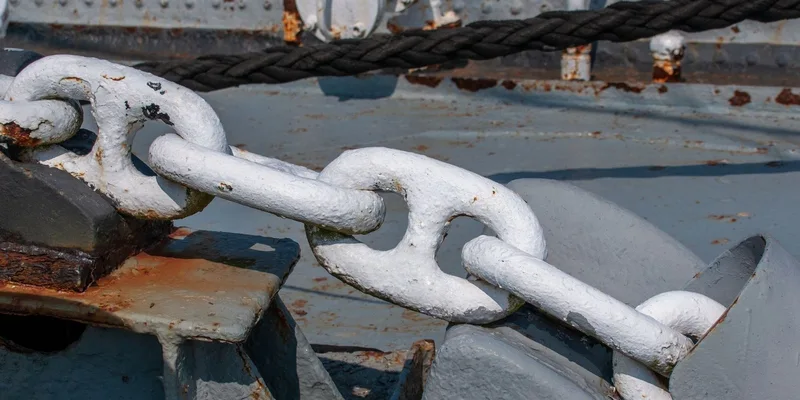
Chain lowers the angle of pull at the anchor. Rope floats up off the bottom under load, which lifts the shank and encourages the anchor to break out. Chain lies flat because it is heavy, so the same amount of scope produces a much lower pull angle at the anchor and a much better chance the anchor stays buried.
The second job is wear. The last stretch of rode is the part that saws across whatever is on the bottom, and nylon loses that argument to rock, shell and barnacle covered structure quickly. Chain in that position is a consumable that protects an expensive rope.
How Much Chain for a Trailerable Boat
Most owners of boats you can tow behind a truck run a chain leader rather than an all chain rode, because chain is heavy and a small bow locker fills fast. The rule of thumb repeated across marine retailers and anchoring guides is about one boat length of chain, with the honest caveat that many smaller boats do fine on considerably less.
When You Want More Than the Rule of Thumb
Rocky and coral bottoms argue for a longer leader because abrasion is the limiting factor, not weight. Deeper anchorages and exposed water argue for more chain because the extra weight in the catenary absorbs surge. A shallow lake bottom of sand and mud, anchored in light wind for an afternoon, is the case where a modest leader is genuinely enough.
Grade 30 or Grade 43: Which Chain to Buy
Two grades dominate the anchoring aisle. Grade 30, also sold as BBB or proof coil, is a low carbon steel chain with a short uniform link pitch. Grade 43, usually sold as G4 or high test, is high carbon steel. West Marine’s anchor rode advisor describes G4 as the preferred chain for anchoring and windlass use.
The practical difference is strength for weight. West Marine notes that high test chain has roughly twice the working load of BBB at the same diameter, which means you can drop a size and carry noticeably less weight for the same strength. On a boat where every pound in the bow locker matters, that is the whole argument.
Galvanized, Stainless or Coated
Hot dip galvanized is the default for anchor chain and the right choice for almost every trailer boat. Stainless looks better on a bow roller and costs a great deal more. Vinyl coated chain protects a gelcoat bow, but the coating traps water against the steel over time, so most owners who care about longevity stick with galvanized and accept the scuffs.
Chain and Connections by Situation
Below are the four pieces that make up a working chain leader. Buy them together rather than one at a time, because the failure point in a rode is almost always a connection somebody improvised from what was in the garage.
The Chain Leader Itself
A cut length of hot dip galvanized chain sized to your anchor and rope is the starting point. Chain size is matched to rope diameter and to the anchor, so use the sizing chart published by the chain or anchor supplier rather than guessing at a diameter that looks about right.

A Complete Rode If You Are Starting From Scratch
A prepackaged rode arrives with rope, chain and hardware already matched and spliced, which removes the sizing question entirely. For a first anchor setup on a trailer boat this is the least error prone route.

Shackles That Match the Chain
Galvanized anchor shackles connect the anchor to the chain and the chain to the rope thimble. Size the shackle to the chain, not to the eye it fits through, and seize the pin with wire or a cable tie so it cannot back out under repeated load.

A Snubber for Boats That Sit at Anchor
Chain transmits every shock straight to the bow fitting. A nylon snubber taken to a cleat takes that load off the chain and quiets the noise, which is the same principle behind stretch dock lines at a slip.
Chain Choices Side by Side
Use this to narrow down which chain and finish belongs on your boat before you look at diameters. The exact diameter should come from the sizing chart published by your anchor or chain supplier, matched to your rope and anchor.
| Option | Strength for weight | Typical use | Watch out for |
|---|---|---|---|
| Grade 30 BBB galvanized | Lower | Short leaders, older windlass gypsies | Heavier for the same strength |
| Grade 43 high test galvanized | Higher | General anchoring and windlass use | Confirm gypsy compatibility |
| Stainless chain | Varies by alloy | Show boats, visible bow rollers | Cost, and crevice corrosion |
| Vinyl coated chain | Same as base grade | Protecting gelcoat at the bow | Water trapped under the coating |
Connecting Chain to Rope Without a Weak Link
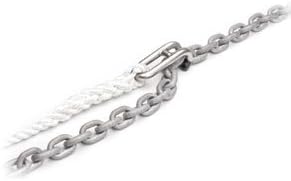
There are two accepted ways to join rope to chain. A rope to chain splice passes the nylon directly through the end links and is the neatest option if you run a windlass. A thimble in the rope eye shackled to the chain is simpler, easy to inspect, and the common choice on boats hauled by hand.
Whichever you use, the rule is that hardware store hooks, quick links and snap shackles have no place in a rode. They are not rated for this, they open under side load, and they are the part that fails while everything else looks fine.
Keeping a Chain Leader Alive
Galvanizing is sacrificial, so chain wears out from the anchor end where it drags. Rinse the rode with fresh water after salt water use, let it dry before it goes into a closed locker, and turn the chain end for end once the anchor end starts showing bare steel to get more life from the same length.
Inspect the shackles at the same time. Pins back out, seizing wire breaks, and a shackle that has been swinging on a bow roller all season may be worn thin on one side even though the chain beside it looks new.
Frequently Asked Questions
How much anchor chain does a trailer boat need? Most owners run a short chain leader rather than an all chain rode. The commonly repeated rule of thumb is roughly one boat length of chain, and rocky bottoms are the case for going longer.
Is grade 43 chain worth it over grade 30? Usually yes on a small boat. West Marine’s rode advisor describes high test G4 as the preferred anchoring chain and notes it carries about twice the working load of BBB at the same diameter, which lets you drop a size and save weight.
Can I anchor with rope only? You can, and many people do in sand and mud in light conditions. Without chain the pull angle at the anchor is higher, so the anchor is more likely to break out and the rope takes the abrasion on the bottom.
What size chain matches my anchor? Chain diameter is matched to the anchor and to the rope diameter, and suppliers publish that pairing in their rode sizing charts. Use the chart for the products you are buying rather than a general ratio.
Should I use stainless anchor chain? Only if appearance matters to you and the budget allows. Hot dip galvanized is the standard for anchoring, costs far less, and is what most sizing and strength guidance assumes.
How do I stop the chain from banging at anchor? Run a nylon snubber from a cleat to the chain and let the chain go slack behind it. The stretch absorbs surge and the noise moves off the bow fitting.
The Bottom Line
Chain is the cheapest upgrade in the anchoring system and the one that makes a correctly sized anchor behave like one. Buy a galvanized leader in the grade that suits your boat, size it from the supplier’s chart, and connect it with proper shackles rather than improvised hardware. If you have not sized the anchor itself yet, start with our guide to anchor size by boat length and pair the chain to it afterward.