Last updated: August 20, 2026
Most boat owners buy the brush last and regret it first. The cleaner gets researched, the wax gets compared, and then the actual scrubbing happens with a stiff yard brush on a broom handle that leaves fine scratch marks across the gelcoat and falls apart by August. A brush is a cheap tool that determines how good the expensive products look.
There are really only three decisions: bristle stiffness, head shape, and how the pole attaches and extends. Get those right for the surfaces on your boat and washing goes from a two-hour fight to a forty-minute rinse. This guide walks through each one from the perspective of a trailerable boat with gelcoat topsides, vinyl seats and maybe a pontoon deck.
This article contains affiliate links. If you buy through them, we may earn a commission at no extra cost to you. Learn more.
Quick Answer
Which boat brush should you buy?
- Soft bristles for waxed gelcoat, vinyl and canvas, where scratching is the risk.
- Medium bristles as the one-brush choice for a general deck wash on most trailerable boats.
- Stiff bristles only for nonskid, carpet and bare aluminum, never for shiny topsides.
- A telescoping pole with a flow-through fitting turns a bucket job into a hose job.
Bottom line: buy soft plus medium and use stiff only where a scratch will never show.
Bristle Stiffness Is the Whole Decision
Bristle stiffness controls the trade-off between how much dirt the brush lifts and how much it marks the surface. Soft bristles flex around the grime and rely on the cleaner to do the work. Stiff bristles dig into texture and shift what soft ones cannot, and on a smooth waxed surface they leave a haze of fine scratches you only see in low sun.
Most brushes are sold by color code or by a soft, medium and stiff label, but the codes are not standardized across brands. Press the bristles against your palm in the store, or read the description for what the maker says it is intended for, rather than trusting a color you remember from another brand.
Where Each Stiffness Belongs
Soft goes on waxed hull sides, vinyl seats, canvas and windshields. Medium handles a general deck wash and light textured surfaces. Stiff belongs on nonskid patterns, marine carpet and the inside of a wet well, all places where a fine scratch pattern will never be visible. Bare aluminum on a jon boat or a pontoon deck also tolerates stiffer bristles than gelcoat does.
Head Shape and Size
A wide rectangular head covers a large flat topside quickly and is the default for washing down a hull. A narrower head or an angled corner brush reaches into the places a wide head skates over: around cleats, into the corners of a cockpit, along rub rails and under a gunwale where the dirt line always forms.
Look at whether the head has bumpers or a soft edge around it, because the plastic housing is what actually scratches most hulls when the brush tips over on its edge. A protective bumper strip costs nothing and prevents the exact damage the soft bristles were chosen to avoid.
Poles, Fittings and Reach
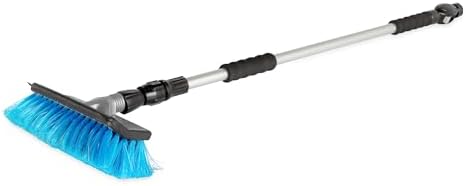
The pole decides whether you can wash the whole boat from the ground or spend the day on a step stool. A telescoping handle that locks at multiple lengths lets you reach the cabin top and then shorten down for the cockpit without swapping tools, and the lock mechanism is the part that fails first on cheap ones.
Flow-through poles that accept a garden hose feed water right at the bristles, which means less bucket carrying and a rinse happening at the same time as the scrub. Check the thread fitting matches a standard hose, and check the brush head attachment, since some brands use a proprietary connector that limits which heads you can add later.
Choosing by Situation
One Brush for a General Deck Wash
If you buy only one, make it a medium bristle deck brush with a bumper edge. It is safe enough on a waxed hull with plenty of soap and lubrication, and it has enough bite for the deck, the transom and the areas where the trailer throws road grime up the sides.

Waxed Topsides and Vinyl You Do Not Want Marked
A dedicated soft bristle brush is the one that protects the wax you spent a weekend applying. Keep it separate from the stiff brush, store it head up so the bristles do not take a set, and rinse it out before it dries so grit does not stay in the base of the bristles.

Nonskid, Carpet and Bare Aluminum
Textured nonskid and marine carpet hold dirt down inside the pattern, and only a stiffer bristle will lift it out. This is also the right brush for pontoon decking and for scrubbing an aluminum hull with a cleaner made for the metal, jobs where the surface has no gloss to protect.

Washing Without Carrying Buckets
A flow-through pole with a hose fitting, ideally with a soap dispenser or a foam attachment, changes the rhythm of the whole job. Water arrives at the bristles, the surface never dries between scrub and rinse, and spotting on a hot day drops noticeably.
Matching Bristle to Surface
The table below is the version to keep in mind at the store. When a surface appears in two rows, choose the softer option first and step up only if the dirt genuinely will not move.
| Bristle | Best on | Keep off | Typical head |
|---|---|---|---|
| Soft | Waxed gelcoat, vinyl, canvas, windows | Ground-in nonskid dirt | Wide with bumper edge |
| Medium | General deck wash, transom, hull sides | Freshly polished show finish | Wide, general purpose |
| Stiff | Nonskid, carpet, wet well, bare aluminum | Any glossy topside | Narrower, deeper bristle |
| Corner or detail | Cleats, rub rail, cockpit corners | Large flat areas, too slow | Angled or narrow head |
Habits That Make Brushes Last
Grit trapped at the base of the bristles is what turns a soft brush into a scratching tool. Rinse the head out thoroughly after every wash, especially after a trip where the boat picked up sand at the ramp, and give it a shake before storing it so water is not sitting in the housing.
Store brushes hanging or head up rather than resting on the bristles, since a brush left standing on its head takes a permanent bend and loses its even contact. Keeping the stiff brush physically separate from the soft one also prevents the most common mistake, which is grabbing the wrong brush for the hull side in a hurry.
Do Not Wash a Hot, Dry Boat
Scrubbing a dry surface drags whatever dirt is on it across the gelcoat. Rinse first, keep the surface wet through the whole wash, and work in shade or early in the day. Half the scratches blamed on brushes come from the surface being dry rather than the bristles being wrong.
Frequently Asked Questions
What bristle stiffness should I use on gelcoat? Soft for a waxed, glossy hull side and medium for a general wash where the boat is genuinely dirty. Stiff bristles can leave a fine scratch pattern on gelcoat that shows up as haze in low sunlight.
Can I use a household broom on my boat? It will work and it will also usually mark the finish, because household bristles are chosen for sweeping rather than for a waxed surface, and the head has no protective bumper. A marine brush costs little and avoids the problem.
Are flow-through poles worth it? On most trailerable boats, yes. Water at the bristles keeps the surface wet through the scrub, cuts down on bucket trips and reduces water spotting on a hot day. Check that the hose fitting is a standard thread before buying.
How long should a boat brush pole be? Long enough to reach the center of the deck and the top of the hull side from the ground beside the trailer, which for most trailerable boats means a telescoping pole rather than a fixed handle. Being able to shorten it for cockpit work matters as much as the maximum length.
How do I stop my brush from scratching? Rinse the head after every use so sand does not stay in the bristle base, never scrub a dry surface, keep the soft brush away from nonskid duty, and pick a head with a bumper edge so the plastic housing cannot touch the hull.
Do I need more than one brush? Two covers almost every boat: a soft brush for waxed topsides and vinyl, and a stiff one for nonskid, carpet and the wet well. A small corner brush is the useful third if your cockpit has a lot of hardware to work around.
The Bottom Line
Buy for the softest surface on your boat first, add a stiff brush for the textured areas, and put both on a telescoping flow-through pole so the wash happens from the ground with water at the bristles. Rinse the heads out and store them off the bristles and they will outlast several bottles of cleaner. Read also our boat cleaner guide for what goes in the bucket, our hull cleaner guide for the waterline stain, and our boat carpet cleaner guide for the cockpit floor.