Last updated: August 20, 2026
Every marine battery on the shelf claims to be built for boats, and most of them are telling some version of the truth. The problem is that a battery designed to crank an outboard and a battery designed to run a trolling motor all afternoon are different products that happen to look identical from three feet away.
Deep cycle is the category you want for accessory and trolling duty, and inside that category the real choice is chemistry: flooded, AGM, gel or lithium. Each one has a job it does better than the others, and one of them is almost certainly wrong for your boat. Here is how to tell which.
This article contains affiliate links. If you buy through them, we may earn a commission at no extra cost to you. Learn more.
Quick Answer
Which deep cycle marine battery should you buy?
- AGM is the default for most boat owners: sealed, spill resistant, no watering, handles vibration.
- Flooded costs the least up front but needs venting, upright mounting and water checks.
- Gel is niche now, tolerant of deep discharge but fussy about charging.
- Lithium is the lightest and steadiest under load, at the highest purchase cost and with charger requirements.
Bottom line: pick AGM unless weight or budget pushes you to lithium or flooded, and match the charger to whatever you choose.
What Deep Cycle Actually Means
A deep cycle battery is built to be discharged well down and recharged, over and over, without the internal damage that pattern does to a starting battery. Thicker plates and different internal construction trade away the huge instantaneous current a starter needs in exchange for endurance.
That is why the ratings differ. Starting batteries are sold on cranking amps, deep cycle batteries on amp hours and sometimes reserve minutes. If you are comparing two batteries and only one publishes an amp hour rating, you are not comparing two deep cycle batteries.
Dual Purpose Sits in the Middle
Dual purpose batteries compromise between the two jobs and suit small boats with a single battery that starts the engine and runs the accessories. They are worse at both jobs than a dedicated battery, but on a jon boat with one tray, one battery is the realistic answer. Our marine battery overview covers where each type belongs.
Flooded Lead Acid
Flooded batteries are the traditional choice and still the cheapest way to buy amp hours. The cells are filled with liquid electrolyte, which means they must be mounted upright, kept in a vented box and topped up with distilled water at intervals. Do that and they last well.
The reasons owners move away from them are practical rather than technical. Water checks get forgotten, vented boxes take space, and a flooded battery that tips or vibrates loose in a rough crossing makes a mess that corrodes everything it touches. On a trailered boat that gets bounced regularly, sealed batteries are simply less trouble.

AGM: The Default for Most Boats
AGM batteries hold their electrolyte in a glass mat, which makes them sealed, spill resistant and far more tolerant of vibration than a flooded battery. There is no watering, no acid to spill and no special orientation to worry about, which is why AGM has become the standard recommendation for trolling and accessory duty.
They accept charge faster than flooded batteries and self discharge more slowly over winter storage, which matters on a boat that sits from October to April. The price sits above flooded and well below lithium, and for the majority of owners that is the sweet spot.

Gel: The Specialist
Gel batteries suspend the electrolyte in a thick gel, giving good deep discharge tolerance and full sealing. They were popular before AGM matured and still have a following, but they are particular about charging voltage and can be damaged by a charger set for flooded or AGM profiles.
For most boat owners the honest advice is to skip gel unless you have a specific reason and a charger with a gel setting. AGM does nearly everything gel does, with fewer ways to get it wrong and much wider availability on the shelf.
Lithium Iron Phosphate
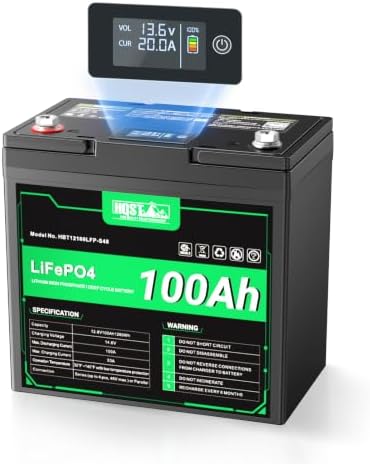
Lithium is dramatically lighter for the same capacity, holds voltage steadily as it discharges rather than sagging, and accepts charge quickly. On a boat where bow weight matters or where the motor noticeably weakens through the afternoon, those are real advantages rather than spec sheet ones.
The barriers are cost and compatibility. You need a lithium capable charger, and you should confirm your trolling motor manufacturer supports lithium with your model. Cold weather charging also has limits that lead acid does not share, which matters for shoulder season boating. Our lithium comparison goes through the numbers side.
Chemistry Compared
The table below is the short version of everything above. If you are undecided between two rows, the deciding question is usually whether the battery lives somewhere you can reach it easily and keep it upright and vented.
| Chemistry | Maintenance | Best for | Watch for |
|---|---|---|---|
| Flooded | Water checks, must vent | Lowest cost per amp hour | Spills, upright mounting only |
| AGM | None, sealed | Most trolling and house duty | Dislikes chronic undercharging |
| Gel | None, sealed | Deep discharge specialists | Needs a gel charge profile |
| Lithium | None, sealed | Weight and steady output | Charger and cold weather limits |
Size, Group and Mounting
Group size is the case footprint and terminal layout, not the capacity. Group 24, 27 and 31 are the common marine sizes in ascending order, and a larger case usually carries more amp hours and more weight. Capacity still varies between brands inside a group, so read the amp hour rating rather than assuming.
Measure the compartment, the tray and the hold down strap before ordering, because a case that does not fit the box is the most common return in this category. Our guide to boxes, trays and venting covers matching the two and what flooded batteries specifically require.
Charging Is Part of the Purchase
Every chemistry on this page wants a different charge profile, and using the wrong one is the fastest way to shorten a battery’s life. Buy the charger alongside the battery, or at minimum confirm your existing charger has a setting for what you are about to install.
Mounting and connecting an onboard charger is wiring work, and that belongs with a marine technician rather than a weekend project. Choosing the charger is a buying decision and our onboard charger guide covers bank counts and amps per bank.
Frequently Asked Questions
Is AGM better than a flooded marine battery? For most boat owners, yes. AGM is sealed, spill resistant, tolerates vibration and needs no watering, which suits a trailered boat that gets bounced. Flooded batteries still deliver the lowest cost per amp hour if you can keep them upright, vented and maintained.
Can I use a deep cycle battery to start my outboard? A true deep cycle is not designed for high cranking loads, so it is a poor choice as a dedicated starting battery. If you only have room for one, look at a dual purpose battery instead and accept that it compromises on both jobs.
How long does a deep cycle marine battery last? Service life depends far more on how deeply you discharge it and how quickly you recharge than on the brand. Batteries that are run flat and left sitting fail early, and batteries that get charged promptly after every trip last far longer.
Do I need a special charger for AGM? You need a charger with an AGM setting or an AGM specific profile. Many modern marine chargers cover flooded, AGM, gel and lithium with a selector, and choosing the right one matters more than the brand on the case.
Is lithium worth it for a deep cycle setup? It is if weight matters or you want steady output through a full day. It is not if the boat has room for lead acid and the budget is the constraint. Confirm your trolling motor maker supports lithium before switching.
The Bottom Line
AGM is the sensible default for deep cycle duty on most boats, flooded still wins on cost if you can maintain it, gel is a specialist and lithium buys weight savings and steady output at a price. Whatever you choose, buy the matching charger and confirm the group size fits your box. Next, the trolling motor battery guide matches capacity to your setup, and the marine battery overview covers starting and dual purpose types.