Last updated: August 20, 2026
An outboard is the easiest engine on the water to winterize and the one owners most often half-finish. It looks simple from the outside, a cowling and a leg, so the job gets treated as a quick flush and a cover. Then spring arrives with a milky gear oil sample, a stuck carburetor, or a water pump that never got the chance to drain properly.
The full outboard winterization is a short sequence with one rule attached: your engine manual outranks every general guide, including this one. What follows is the standard order for a trailerable outboard, what each step is actually protecting, and the places where two-stroke and four-stroke owners do things differently.
This article contains affiliate links. If you buy through them, we may earn a commission at no extra cost to you. Learn more.
Quick Answer
How do you winterize an outboard motor?
- Add fuel stabilizer, then run the engine on muffs so treated fuel reaches the carburetor or injectors.
- Flush with fresh water while it runs, then fog the engine following the method in your manual.
- Change the engine oil and filter on a four-stroke, and change the lower unit gear oil on any outboard.
- Grease the fittings, leave the engine tilted fully down so it drains, and store it that way.
Bottom line: gear oil, fogging and storing the leg vertical are the three steps that prevent the expensive failures. The manual decides the fogging method for your specific engine.
What Outboard Winterization Protects
Three things are at risk over a winter. Fuel degrades and leaves deposits in small passages. Bare cylinder walls sit exposed to damp air and develop surface corrosion. Water trapped in the gearcase or cooling passages freezes and expands. Every step below targets one of those three, which is why skipping one step usually shows up as one specific failure.
Storage conditions change the emphasis, not the list. An outboard stored in a heated garage still needs treated fuel and fresh gear oil. An outboard on a trailer in a freezing driveway needs all of that plus a genuinely drained leg, which happens only when the engine is tilted fully down.
Step One: Treat the Fuel First
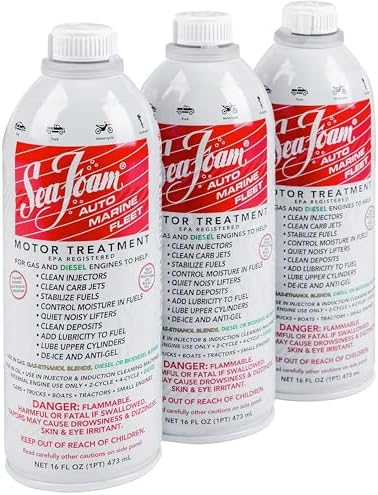
Add a marine fuel stabilizer to the tank at the dose on the bottle before the final run. Treated fuel has to physically reach the carburetor bowls or the injectors, and that only happens if the engine runs afterward. Topping the tank up at the same time reduces the air space where condensation forms over a long sit.
Portable tank setups get treated the same way, with one extra option. Some owners run the engine until the fuel line and bowls are empty instead, which is a valid approach on a small carbureted outboard. Doing both, treated fuel through the system and then a controlled shutdown, is what most manuals describe.
Step Two: Flush With Fresh Water
Clamp a set of motor muffs over the water intakes on the lower unit, turn the hose on before you start the engine, and let it run at idle until the powerhead reaches operating temperature. Confirm the telltale stream is flowing the whole time. Never run an outboard without a water supply, even briefly, because the impeller depends on it.
A salt water season makes this step non-negotiable, but fresh water boats benefit too, since silt and mineral deposits build up in cooling passages regardless. Camco, Attwood and Seachoice all sell dual feed flushers, and a full walkthrough is in our engine flushing guide.

Step Three: Fog the Engine
Fogging oil coats the cylinder walls and internal surfaces with a film that stops surface corrosion during storage. It is applied while the engine is running, through the air intake, through the spark plug holes, or through a dedicated fogging port, depending on the engine. The engine typically stalls or is shut down as the fog takes over.
Why the Manual Decides This Step
Fogging is the one step where general advice can genuinely cause harm. Some newer four-strokes have a specific procedure, some direct-injected two-strokes handle it differently, and a few engines are documented as not needing it at all. Manufacturers publish these manuals as free downloads by model and serial number, and it is worth ten minutes to read the storage section before you spray anything.

Step Four: Change the Gear Oil
Drain the lower unit through the lower drain screw with the vent screw removed, and inspect what comes out. Clean gear oil is a uniform color. Milky or coffee-colored oil means water is getting past a seal, and metallic glitter means something is wearing inside. Refill from the bottom until oil appears at the vent, then close the vent screw first.
Doing this in fall rather than spring is deliberate. Water left in a gearcase all winter can freeze and crack the housing, and finding a bad seal in October gives you months to schedule the repair instead of losing the first weekend of the season to it.
Step Five: Oil, Grease and Storage Position
Four-stroke outboards get an engine oil and filter change at winterization, so acidic used oil is not sitting against bearings for months. Two-strokes skip that and instead get the oil tank topped up or drained per the manual. Both get grease at the fittings on the swivel bracket, tilt tube and steering.
Then leave the engine tilted fully down for storage. That vertical position lets the gearcase and cooling passages drain by gravity. An outboard stored tilted up holds water in the leg, which is the single most avoidable freeze failure on a trailer boat.
Two-Stroke and Four-Stroke Differences
| Step | Two-stroke | Four-stroke | Notes |
|---|---|---|---|
| Fuel treatment | Yes | Yes | Add before the final run |
| Fresh water flush | Yes | Yes | Muffs on, hose on before start |
| Fogging | Per manual | Per manual | Method differs by engine family |
| Engine oil change | No crankcase oil | Yes, oil and filter | Filter by serial number |
| Gear oil change | Yes | Yes | Inspect for water and metal |
| Storage position | Tilted fully down | Tilted fully down | Lets the leg drain |
Mistakes That Show Up in Spring
Storing the engine tilted up is the classic one, and it is entirely avoidable. The second is running the engine on muffs without confirming the telltale stream, which can cook an impeller in the time it takes to walk to the cowling. The third is skipping the gear oil because the boat only saw a few trips.
The fourth is a cover problem rather than an engine problem. A tight, unvented cover over a warm engine traps moisture against exactly the metal you just coated in fogging oil. A vented outboard cover, or leaving the cowling ventilated under a boat cover, avoids that.
Frequently Asked Questions
Do I really need to fog a modern four-stroke outboard? Check the storage section of your engine manual. Some manufacturers specify a fogging procedure, some specify a different internal protection method, and a few say it is not required. This is one of the few maintenance questions where doing what a general guide says instead of the manual can cause a problem.
Should the outboard be tilted up or down for winter storage? Fully down. That vertical position lets water drain out of the gearcase and cooling passages by gravity. Tilted up traps water in the leg, where it can freeze and crack the housing.
Can I winterize an outboard without running it? Partially. You can change gear oil, grease fittings and store it vertical without running the engine. Fuel treatment and fogging both need the engine running to distribute anything, so a no-run winterization leaves the fuel system and cylinders unprotected.
How long should I run the engine on muffs? Long enough to reach operating temperature and circulate treated fuel, which is usually several minutes at idle rather than a quick start and stop. Watch the telltale the entire time and shut down immediately if the stream stops.
What does milky gear oil mean? Water has entered the lower unit past a seal. It is a repair, not something an oil change fixes, and it is worth having looked at before the next season rather than running the drive with water in it.
Does a small portable outboard need all of this? A short-shaft kicker still needs treated fuel or a drained fuel system, fresh gear oil, and storage in a position that lets it drain. The steps scale down but they do not disappear.
The Bottom Line
Winterizing an outboard is five steps in order: treat the fuel and run it through, flush on muffs, fog per the manual, change the gear oil and the engine oil on a four-stroke, then grease the fittings and store the engine tilted fully down. The one non-negotiable is reading your manual’s storage section before you fog anything. For the rest of the boat, see our full winterization checklist, and if you need the hardware, our motor muffs guide covers what fits what.