Last updated: August 20, 2026
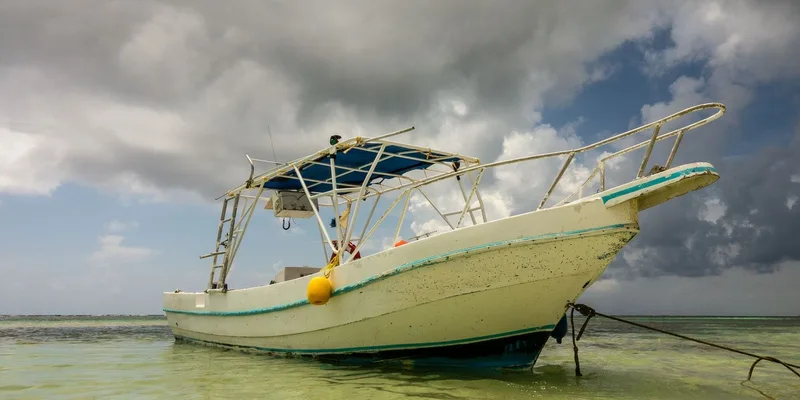
Sandbar days expose the limits of a conventional anchor fast. You are in four feet of water with boats rafted on both sides, nobody has room to fall back on a long rode, and the fluke anchor that works fine in open water keeps skipping because it never gets the horizontal pull it needs. Somebody ends up standing in the water holding the bow.
The box anchor was designed for exactly that situation. It drops straight down, sets on its own weight and geometry rather than on a long drag, and folds flat when you are done. This guide covers when it is the right call, when it is not, and what to look for when buying one.
This article contains affiliate links. If you buy through them, we may earn a commission at no extra cost to you. Learn more.
Quick Answer
Is a box anchor worth it?
- Yes for pontoons and deck boats, which swing broadside in wind and pull a fluke anchor loose.
- Yes for sandbars, rafting up and crowded anchorages where there is no room for a long rode.
- Slide Anchor states its Box Anchor uses about half the line of a traditional anchor, which is the whole point of the design.
- No if your locker is tiny, since a box anchor is bulky when open and heavy for its size.
Bottom line: buy a box anchor for short scope, soft bottoms and boats that swing, not as a general purpose hook.
What a Box Anchor Does Differently
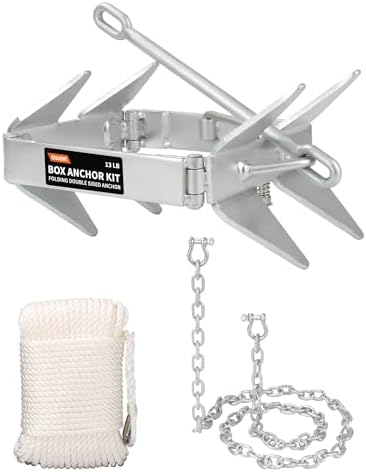
A box anchor is a hinged steel frame with flukes on both sides. Folded, it lies almost flat. Opened, it becomes a rigid cage that falls to the bottom in whatever orientation it lands and digs in on either face, so it does not need to be dragged horizontally to trip and set the way a fluke anchor does.
That geometry produces two practical advantages. It sets almost immediately after it hits bottom, and it can take load from a wide range of directions without pulling out, which matters when a boat swings a full circle on a wind shift. Slide Anchor, which markets its version as the original Box Anchor, states the design uses roughly half the line of a traditional anchor.
Why Pontoon Owners End Up With One
A pontoon presents a tall, flat side to the wind and very little underwater shape to resist it, so it sails around on its rode instead of lying quietly head to wind. Every one of those swings changes the load direction on the anchor, and a buried fluke that has packed sand on one face does not enjoy being pulled sideways.
A box anchor holds on either face and does not care much which way the load comes from, so it stays put through the swinging rather than tripping and resetting each time. That is the single most common reason pontoon and deck boat owners switch, and it is why our pontoon anchoring guide puts it at the top of the list.
Choosing the Right Size and Finish
Box anchors are sold in a small number of sizes tied to boat length, and the makers publish those ranges. Slide Anchor lists boat length ranges for each of its Box Anchor sizes, and Seachoice does the same for its Fold-and-Hold version, so pick from the chart for your length rather than by weight alone.
Galvanized or Stainless
Hot dip galvanized is the normal choice and the one most owners buy, since a box anchor spends its life being dropped on hard ground and dragged across a swim platform. Stainless versions exist for boats where the anchor is visible on deck and staining matters, at a significant step up in cost.
Storage and Handling
The one genuine downside is bulk. A box anchor folds flat but stays wide, and it is heavy in the hand compared with an aluminum fluke of similar holding power. An anchor bag is close to mandatory unless you enjoy the sound of galvanized steel against a fiberglass locker.

Box Anchor Versus a Fluke
| Factor | Box anchor | Fluke anchor | Why it matters |
|---|---|---|---|
| Setting | Drops and sets vertically | Needs a horizontal drag to trip | Crowded anchorages have no room to fall back |
| Line required | Less, per the maker | More, scope driven | Short scope is the point of the design |
| Boats that swing | Holds through direction changes | Can pull out and reset | Pontoons and deck boats swing constantly |
| Stowage | Folds flat but wide and heavy | Flat and light | Small anchor lockers favor the fluke |
Rope, Chain and Retrieval
A box anchor still needs a proper rode. Because the design does not depend on a long horizontal pull, the line requirement is lower than for a burying anchor, but the rope should still be nylon for its stretch and the connection should still be a rated, seized shackle rather than a snap hook.
Retrieval is where the design pays off again. Motor up over the anchor, pull straight up, and the frame lifts out cleanly instead of fighting you the way a deeply buried fluke does. Our rode guide covers rope diameter and chain length, both of which come from published manufacturer guidance rather than guesswork.

Where a Box Anchor Is the Wrong Tool
On rock and rubble it has nothing to bury in and nothing purpose built to hook, so a grapnel does that job better. In very deep water the weight becomes awkward to handle by hand off a small bow, and on a boat with a shallow anchor compartment it simply may not fit next to everything else.
It is also not the anchor to leave a boat unattended on overnight without understanding your conditions. Any anchor is a temporary arrangement that assumes somebody is aboard and paying attention, and a rafted-up sandbar setup in particular is not an overnight mooring.
Frequently Asked Questions
Does a box anchor really need less line? Slide Anchor states its Box Anchor uses about half the line of a traditional anchor, because the design sets vertically instead of needing a long horizontal drag. Follow whatever the maker of your specific anchor publishes.
What size box anchor do I need? Use the maker’s boat length chart. Slide Anchor and Seachoice both publish length ranges for each size in their box anchor lines, and those ranges are the numbers to buy on.
Is a box anchor good for a pontoon boat? It is the style most pontoon owners settle on, because a pontoon swings broadside in wind and a box anchor holds through those direction changes instead of tripping out like a fluke can.
Will a box anchor hold on rock? Not well. It is designed to bite into sand, mud and gravel. For rock, rubble and structure, a folding grapnel is the right tool, as covered in our anchor types explainer.
Do I still need chain with a box anchor? A short chain leader still protects the rope from abrasion on the bottom and adds weight at the anchor end. Check the maker’s own rode recommendation, since it differs from standard fluke anchor guidance.
How do I stop it from scratching the boat? Use a padded anchor bag. A folded box anchor slides around a locker or a swim platform and the galvanized frame marks gelcoat quickly if it is loose.
The Bottom Line
A box anchor solves a specific problem well: setting fast on a soft bottom with limited line out, on a boat that swings. That describes pontoons, deck boats and anybody who spends weekends rafted up on a sandbar. It is bulky, it is heavy, and it is not the answer on rock, so size it from the maker’s chart and treat it as one tool rather than the only anchor aboard. For the wider view, see our boat anchor buying guide.