Last updated: August 20, 2026
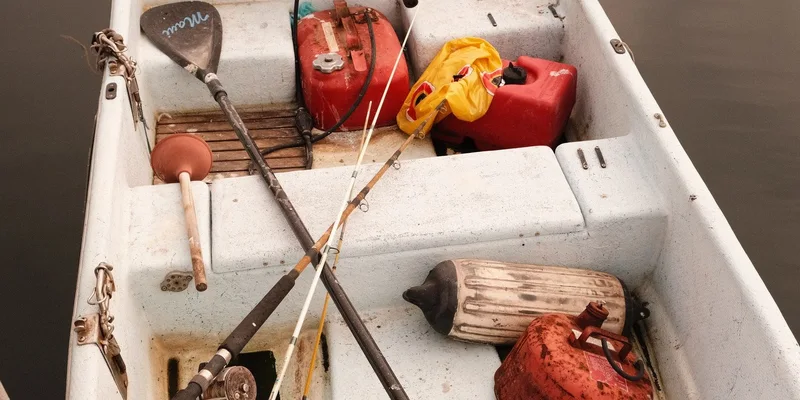
Boat fuel sits. That is the whole problem in one sentence. A car burns through a tank every week or two, while a boat can go from a September outing to a May launch on the same gasoline, and modern ethanol-blended fuel is not designed to sit that long. What comes out the other end is gum in the carburetor bowls, water at the bottom of the tank, and a no-start on the first nice weekend.
Fuel stabilizer is the cheapest insurance in boating, and also one of the most confusing shelves in the store, because the labels blur together. This guide separates what these products actually do, which formulation to buy for storage versus for every fill-up, and where the ethanol story genuinely matters versus where it is marketing.
This article contains affiliate links. If you buy through them, we may earn a commission at no extra cost to you. Learn more.
Quick Answer
Which fuel stabilizer should you use in a boat?
- For winter storage: a marine storage stabilizer, dosed per the label, added before the last run of the season.
- For every fill-up: an in-season marine treatment that also cleans injectors and manages water.
- For water in the tank: an enzyme or demulsifier-type marine treatment, not a generic gas-line antifreeze.
- For two-strokes and small kickers: the same treatments apply, only the tank volume changes.
Bottom line: buy a treatment sold specifically for marine use, dose by the tank size on the label, and add it before the engine runs, not after shutdown.
What Fuel Stabilizer Actually Does
Stabilizers slow the chemical breakdown of gasoline. Left alone, fuel oxidizes and forms gums and varnish that coat the small passages in carburetors and injectors. A stabilizer adds antioxidants and detergents that delay that reaction, so fuel that sits for a season is closer to what went into the tank than what would otherwise be there.
What a stabilizer does not do is repair fuel that has already gone bad or reverse phase separation once it has happened. It is preventive, added to good fuel before storage. Fuel that is already varnished or has separated water at the bottom of the tank is a drain and dispose job, not an additive job.
Why Ethanol Matters on a Boat
Ethanol attracts water, and boats live in humid air with tanks that breathe. Enough absorbed water and the ethanol and water drop out of the gasoline as a separate layer at the bottom of the tank, which is phase separation. That layer is what the fuel pickup finds first on the next start, which is why the engine will not run.
Fuel choice matters here as much as the additive. The EPA publishes at epa.gov that E15 is not approved for use in marine engines, so the pump label is part of the maintenance routine. Where ethanol-free gasoline is available it removes the water attraction issue at the source, though the fuel still oxidizes and still benefits from a stabilizer.
Storage Stabilizer or In-Season Treatment
These are two different jobs and often two different bottles. A storage stabilizer is dosed heavier and aimed squarely at keeping fuel usable through a long sit. An in-season treatment is dosed at every fill-up and leans harder on detergency, keeping injectors and valves clean while you actually use the boat.
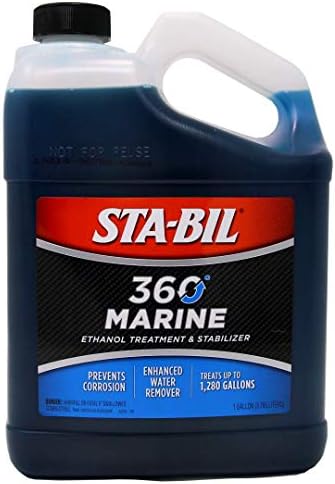
Plenty of owners use one all-purpose marine treatment year round and simply increase the dose for storage as the label directs. STA-BIL 360 Marine, for instance, is sold as a combined ethanol treatment and fuel stabilizer for marine engines, and Star brite offers marine formulations in the same category. Read the dosing table on the back rather than assuming.

Enzyme Treatments and Water Handling
A second family of marine additives focuses on water rather than oxidation. These are the enzyme and demulsifier-type products marketed for ethanol problems, and their pitch is helping small amounts of water disperse and burn off through the engine instead of collecting at the bottom of the tank.
They do not replace a fuel water separator. A separator filter is the mechanical answer, it catches water before the engine does, and its element is a scheduled replacement item by engine part number. Treat additives as support for the separator, not as a substitute for one.

How Much and When to Add It
Dose by the label, which is written in fluid ounces per gallon of fuel or as gallons treated per bottle. Overdosing is not a shortcut to better protection and underdosing leaves fuel unprotected. Then top the tank up, because a nearly empty tank has more air space for condensation to form in over a long sit.
Timing is the part people get wrong. Add the stabilizer to the tank, then run the engine for several minutes so treated fuel physically reaches the carburetor bowls, the fuel lines and the injectors. Stabilizer sitting in a tank does nothing for the components downstream of it.
Which Type Fits Your Situation
| Type | Main job | When to add | Best for |
|---|---|---|---|
| Storage stabilizer | Slows fuel oxidation | Before the last run of the season | Winter layup, long storage |
| In-season treatment | Detergency and corrosion control | Every fill-up | Boats used regularly |
| Enzyme or water treatment | Helps disperse absorbed water | Per label, often each fill | Humid climates, ethanol fuel |
| Two-stroke oil with additive | Lubrication plus fuel treatment | Mixed with fuel as usual | Premix two-stroke outboards |
Buying by Tank Size
Bottle sizes are marketed by how many gallons they treat, so match the bottle to your realistic annual fuel use rather than to your tank capacity alone. A small aluminum boat with a portable tank goes through very little, while a pontoon with a large built-in tank that gets filled several times a season goes through a lot.
Bigger containers are usually the better value per treated gallon, but only if you use them within their shelf life. An opened bottle that sits for years in a hot garage is not the same product it was, so buying the size you will actually finish in a season or two is the practical choice.

Mistakes That Waste the Money You Just Spent
The most common is adding stabilizer after the last run instead of before it. Treated fuel that never reaches the carburetor or the injectors leaves the exact components that varnish most easily completely unprotected. Add it, then run the engine.
The second is treating fuel that has already gone bad and hoping. The third is storing a half-empty tank, which invites condensation all winter. The fourth is using an automotive stabilizer in a boat, which may handle oxidation but is not formulated around the water and corrosion issues a marine fuel system faces.
Frequently Asked Questions
How long does treated fuel actually last in a boat? Product labels state a protection period, typically counted in months or up to a couple of years depending on the formulation and dose. Treat those figures as the manufacturer’s claim on the bottle you buy, and plan around a single winter rather than multiple seasons of storage.
Should the tank be full or empty for winter? Most engine manufacturers recommend storing with a full, treated tank, since a nearly empty tank has more air space for condensation. Follow your specific engine manual, because some portable tank setups are handled differently.
Can I use car fuel stabilizer in a boat? It will address oxidation, but marine formulations are built around the conditions a boat fuel system actually faces, including humidity, corrosion in the tank and ethanol-related water pickup. Given the small cost difference, the marine product is the sensible buy.
Is ethanol-free gas worth the extra cost for a boat? If it is available near you, it removes the water attraction that causes phase separation, which is the failure mode most owners are trying to avoid. It still oxidizes over a winter, so it still gets a stabilizer before storage.
What happens if fuel phase separates? A layer of water and ethanol settles at the bottom of the tank, and that is what the fuel pickup draws first. No additive reverses it. The fix is draining and properly disposing of the fuel, then dealing with whatever it left in the fuel system.
Do two-stroke outboards need fuel stabilizer too? Yes. Premix two-strokes face the same fuel oxidation and water issues, and some two-stroke oils include fuel treatment in the formula. Check whether yours does before adding a second product on top.
The Bottom Line
Buy a treatment sold specifically for marine engines, choose between a storage stabilizer and an in-season formulation based on how you use the boat, dose it by the label, and add it before the final run so treated fuel reaches everything downstream of the tank. Then top the tank up. The rest of the layup sequence is in our boat winterization checklist, and the engine-side steps are covered in our outboard winterizing walkthrough.