Last updated: August 20, 2026
A trailered boat spends most of its life pointed straight at the sun. Gelcoat that looked deep and glossy in the showroom turns dull, then chalky, and by the third season a wipe with a dark rag comes away white. That chalk is oxidation, and the wax layer is the only thing standing between your hull and the UV that causes it.
The confusing part is the shelf. Paste wax, liquid wax, polish with wax in it, and now ceramic spray coatings all promise the same shine, and they behave very differently once they are on the boat. This guide sorts out which product suits which situation, how the labels actually differ, and where owners waste a weekend on the wrong step.
This article contains affiliate links. If you buy through them, we may earn a commission at no extra cost to you. Learn more.
Quick Answer
Which boat wax should you use, paste, liquid or ceramic spray?
- Paste wax gives the thickest, longest lasting film and takes the most arm work, so it suits a once a season full hull job.
- Liquid marine wax and polymer polish spread faster over a big topside area and are easier to buff by machine.
- Ceramic spray coatings are a top up product, best applied over already clean, already corrected gelcoat rather than instead of it.
- Chalky, oxidized gelcoat needs compound or polish first. Wax on top of oxidation just seals in the dull.
Bottom line: pick the product by how oxidized your gelcoat is right now, then by how much time you want to spend, not by the shine claim on the bottle.
What Boat Wax Actually Does for Gelcoat
Wax lays a sacrificial film over the gelcoat that takes the UV, salt spray, and waterline grime instead of the surface underneath. Gelcoat is pigmented polyester resin, and once UV breaks down the resin at the surface, the loose pigment is the chalk you see on your rag. Wax slows that breakdown and makes dirt release easier.
That is why the honest way to think about waxing is maintenance, not cosmetics. The shine is the side effect. The reason to keep a film on the hull is that restoring badly oxidized gelcoat later means compounding, which removes material, and gelcoat is a finite layer that you cannot compound forever.
Paste, Liquid and Ceramic Spray Compared
Paste, liquid and spray products differ mainly in film thickness, working time, and how forgiving they are in sun. Paste carries the most solids and lasts longest per coat. Liquid covers a big hull faster with less effort. Ceramic sprays flash off quickly and shed water impressively, but they need a genuinely clean surface to bond to.
| Type | Effort per coat | Typical use case | Watch out for |
|---|---|---|---|
| Paste wax | Highest, mostly by hand or buffer | Full spring detail on a trailered hull | Dries hard in direct sun, work small panels |
| Liquid wax | Moderate, spreads fast | Large topsides, pontoon fences, mid season refresh | Thin film, needs more frequent reapplication |
| Polymer polish | Moderate | Owners who want water beading and slickness | Not a substitute for compounding oxidation |
| Ceramic spray | Lowest, wipe on and buff | Top up between full details, quick after a wash | Bonds poorly over old wax or chalk |
Boat Wax by Situation
The Widest Recommended Starting Point
Meguiar’s Flagship Premium Marine Wax is one of the most commonly stocked marine waxes on Amazon, sold as a combined cleaner wax in a liquid that can be applied by hand or machine. For an owner who wants one bottle that handles a moderately weathered hull without a separate compounding stage, it is the default first buy.

Owners Who Want Water to Bead and Dirt to Release
Star brite’s Premium Marine Polish is a polymer polish built around the brand’s PTEF additive, aimed at UV protection and a slick finish rather than at cutting oxidation. It suits gelcoat that is already in decent shape and gets washed often, which describes most trailered boats that live under a cover.

Longest Lasting Film per Application
A traditional carnauba and polymer paste wax is still the thickest film you can put on a hull in one pass, and Collinite’s marine paste waxes have a long standing reputation among owners who wax once and want it to carry the season. Expect more arm work and small working sections.

Quick Top Up After a Wash
A marine ceramic spray sealant is the low effort option for keeping protection topped up between full details, sprayed on a clean wet or dry surface and buffed off with a microfiber towel. Treat it as a maintenance layer over corrected gelcoat, not as a rescue for a chalky hull.

Applying It Without Wrecking Your Shoulder
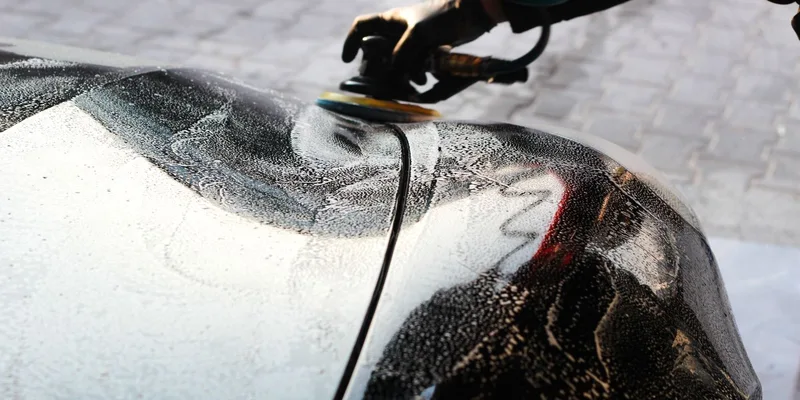
A dual action orbital polisher with foam finishing pads turns a full topside wax from a weekend into an afternoon, and it applies a more even film than a hand pad on a large flat surface. Foam pads and a slow speed are enough for wax, the aggressive cutting pads belong with compound.

Wax Is Not Compound, and That Matters
Compound and polish contain abrasives that level the damaged surface layer. Wax contains no meaningful abrasive and only adds a film on top. Put wax over chalky gelcoat and you get a slightly darker, still dull hull that sheds water for a few weeks. The order is clean, then correct, then protect.
How to Tell Which Stage You Need
Wash a test patch about the size of a dinner plate, dry it, and rub it with a clean dark cloth. If the cloth stays clean and the patch has gloss, you only need wax. If the cloth picks up white residue, that is oxidation and you need a cutting step before any wax goes on. Our boat polish and compound guide covers that stage.
The same test tells you when to stop. Once the cloth comes away clean and the patch reflects the tree line rather than glowing flat white, further compounding is only removing gelcoat you will want later. Deeper damage that survives compounding is a repair question rather than a detailing one.
How Often a Trailered Boat Needs Waxing
There is no universal interval, because exposure varies enormously between a boat stored indoors and one sitting uncovered in a Florida driveway. The practical trigger is the water behavior: when rain stops beading and starts sheeting flat across the topsides, the film has worn through and it is time for another coat.
Most trailer boat owners land on a full wax in spring, plus one lighter liquid or spray application partway through the season, and a wash and protect pass before storage. Salt water use pushes that toward more frequent top ups because salt film accelerates both dulling and hardware corrosion.
Where Owners Waste the Most Effort
The biggest waste is waxing a dirty hull. Waterline stain, exhaust soot and road film need a dedicated cleaner first, otherwise the wax pad simply grinds that grit across the gelcoat. A proper boat cleaner before the wax stage saves more time than any product upgrade.
The second is waxing in direct sun on a hot hull. Most marine waxes are designed to be applied to a cool surface in shade, because heat flashes off the carrier and leaves residue that is hard to buff. Working early morning, or bow to stern in the shadow line, makes removal far easier.
Surfaces That Should Not Get Hull Wax
Nonskid decks are the common mistake. Wax in the molded texture makes the deck slippery when wet and is difficult to remove from the pattern, so nonskid gets a dedicated nonskid product instead. Isinglass and clear vinyl windows also need their own polish rather than hull wax.
Unpainted aluminum, such as pontoon logs or a jon boat hull, is a different material with a different process and does not respond to gelcoat wax the way fiberglass does. That job is covered separately in our pontoon cleaning guide.
Frequently Asked Questions
Can I use car wax on a boat? You can, but marine products are formulated for gelcoat and for constant UV and salt exposure rather than for automotive clearcoat, and they generally carry more UV inhibitor. On a boat that lives outside, a marine specific wax is the better match.
Do I need to compound before waxing? Only if the gelcoat is oxidized. Rub a washed and dried test patch with a dark cloth; white residue on the cloth means compound or polish first, a clean cloth means you can go straight to wax.
How many coats of boat wax should I apply? One properly applied and fully buffed coat does most of the work. A second coat after the first has cured adds a little film thickness and evens out any thin spots, which is worth it on a hull that stays outdoors.
Is ceramic coating better than wax for a boat? Ceramic sprays typically shed water and resist staining longer than a wax film, but they are far more sensitive to surface prep and they do not fix oxidation. Many owners use a ceramic spray as a top up over a properly waxed and corrected hull.
Should I wax the bottom of my boat? Wax the hull sides and transom. Below the waterline on a trailered boat, a clean and smooth surface helps, but any area carrying antifouling paint should be left alone, since wax interferes with how that coating works.
Can I wax a pontoon boat? The fiberglass console, the furniture bases and any painted surfaces take normal marine wax. The aluminum logs and rails need an aluminum specific cleaner and protectant instead, because bare aluminum oxidizes differently than gelcoat.
The Bottom Line
Choosing boat wax is really choosing where your gelcoat is in its life. Dull and chalky means compound first and protect second, decent but thirsty means a liquid or paste wax now, and already glossy means a ceramic spray keeps it that way with the least effort. Match the product to that state, work in the shade, and one honest spring session will carry most trailered boats through the season. If your hull is past the wax stage, start with our polish and compound guide, and for scratches that survive compounding see the gelcoat scratch repair guide.